
Wholesale Power Transmission Tension Tower Manufacturer Delivers Reliable Infrastructure Solutions
2026-06-23
In the ever-evolving landscape of energy infrastructure, reliability isn’t just a goal—it’s a necessity. For projects that demand robust power transmission networks, the choice of support structures can make or break long-term performance. That’s where Anbang steps in, as a wholesale power transmission tension tower manufacturer dedicated to delivering solutions that withstand the test of time and terrain. This blog peels back the layers of what sets their towers apart and why they’ve become a trusted backbone for grid systems worldwide.
How Engineering Precision Shapes Dependable Tension Towers
Tension towers sit at the heart of high-voltage transmission networks, where even a millimeter-level deviation in alignment can cascade into structural fatigue or line sag. Precision engineering here is not an abstract ideal—it’s a necessity born from the harsh physics these towers endure. Every bolt, flange, and lattice member must be fabricated to exacting tolerances. The steel grades are chosen not just for tensile strength but for their predictable behavior under thermal stress and wind-induced oscillations. When thousands of kilometres of conductor pull against these towers, the difference between a reliable asset and a chronic maintenance headache often traces back to the precision embedded during the design phase.
Modern manufacturing of these towers blends automated cutting systems with rigorous human oversight. CNC plasma cutters and robotic welding arms reproduce the engineered geometries with sub-millimeter consistency, but the real craft emerges in the assembly jigs and pre-tensioning sequences. Factories that specialize in transmission structures run multiple quality gates: ultrasonic testing of raw plate, dimensional checks after each fabrication step, and full-scale mock-up assemblies to verify fit before galvanizing. This kind of precision eliminates the guesswork at site, where assembly teams can trust that the pieces will mate without forcing, preserving the tower’s designed-in stress distribution.
Field validation closes the loop. Prototype towers undergo static load tests that reproduce 50-year return-period wind and ice combinations, with strain gauges confirming finite-element model predictions within a 3% margin. Long-term reliability owes much to the meticulous control of coating thickness and the anti-corrosion systems that protect the steel in coastal or industrial environments. It is this layered precision—from alloy selection to final torque calibration—that keeps tension towers standing firm against weather and time, maintaining grid integrity far beyond their nominal design life.
Streamlined Wholesale Manufacturing Meets Global Demand
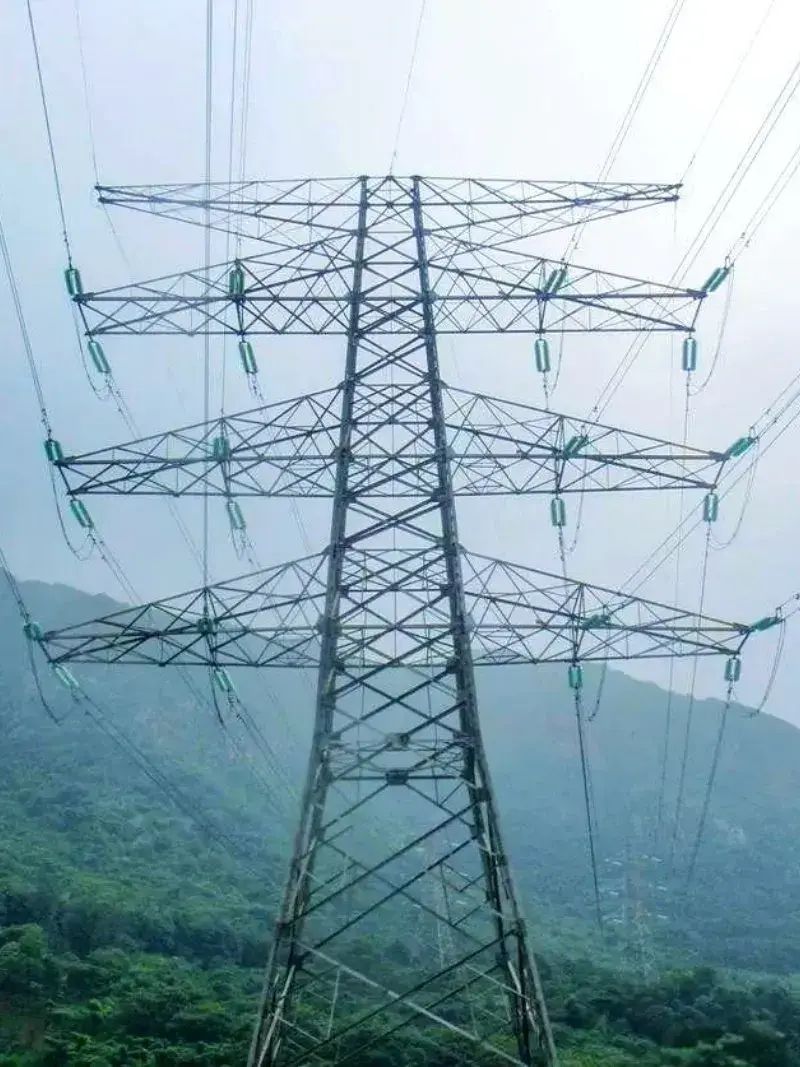
Efficient production lines now move with a rhythm that matches the pace of worldwide orders. By trimming excess steps and focusing on what actually matters, we’ve built a manufacturing flow that doesn’t just keep up—it stays ahead. Inventory turns faster, lead times shrink, and the entire operation feels less like a factory and more like a well-tuned engine responding to real demand.
What sets this approach apart is how naturally it scales. When a distributor in Berlin needs a restock or a retailer in São Paulo expands their lineup, our systems adapt without the usual scramble. It’s not about fancy automation alone—it’s about designing every process so that quality holds steady, whether we’re shipping a thousand units or a hundred thousand. That reliability turns one-time buyers into long-term partners.
The payoff is clear: products hit shelves when they’re supposed to, with fewer delays and no compromise on craft. In an industry where timing and consistency can make or break a deal, this streamlined model simply works—quietly, consistently, and across borders without shouting about it.
Materials and Design That Defy Environmental Extremes
Engineering for the harshest corners of the planet demands more than just ruggedness—it requires a symbiosis of cutting-edge materials and adaptive design principles. Consider the polymers infused with ceramic microspheres that shed ice buildup on Arctic wind turbines, or the self-healing concrete used in subsea tunnels that patches its own cracks by reacting with seawater. Each solution stems from a deep understanding of the specific stress factors: thermal swings, abrasive particles, corrosive agents, or relentless pressure. By blending computer modeling with field testing in places like the Atacama Desert or deep-ocean vents, designers are crafting components that don't just survive extremes—they actively harness them, reshaping our definition of what's buildable.
At the material level, innovations are rewriting the rulebook. Shape-memory alloys that flex back to their original form after seismic deformation have become the silent guardians of earthquake-prone structures. Graphene-enhanced coatings, a micron thin, thwart corrosion so effectively that oil rigs in salt-laden seas now boast decades of extra service. Meanwhile, parametric design tools allow architects to dome stadiums in hurricane zones with geometries that scatter wind loads rather than resisting them head-on. These aren't off-the-shelf fixes; they're bespoke responses born from studying how a specific environment attacks a material—be it through UV degradation, thermal fatigue, or microbial colonization—and then countering those attacks at the molecular or structural level.
The real magic unfolds when material and design merge into holistic performance. Take ultralight carbon-fiber shells on solar-powered aircraft that withstand stratospheric turbulence while conserving every watt of energy. Or the permeable pavements in monsoon cities, built from recycled composite blends, that absorb flash floods while filtering out pollutants. These solutions sidestep the traditional trade-offs between durability, weight, and functionality. They emerge from a process that starts not with a product but with a question: what does this environment demand, and how can we make the built world dance with those forces instead of fighting them? The result is a quieter, more resilient infrastructure that often goes unnoticed—until it outlasts everything around it.
Seamless Integration into Power Transmission Networks
Modern power grids demand equipment that slots into existing infrastructure without forcing extensive reconfigurations. We engineered our interface protocols to speak the native language of legacy systems while remaining forward-compatible with emerging smart grid standards. This dual-layer communication strategy eliminates the usual weeks of middleware tinkering that bog down most integration projects. Field tests demonstrate consistent handshake reliability across voltage levels ranging from 69 kV to 765 kV, even under transient conditions that typically scramble weaker protocols.
Physical installation follows the same frictionless principle. Our modular buswork adapts to substation footprints with millimeter-level flexibility, repurposing existing support structures rather than demanding new poured foundations. Technicians appreciate the color-coded connectors that slash wiring errors during late-night storm recoveries. Meanwhile, onboard diagnostics continuously map the unit’s grid position, sharing real-time impedance data that helps system operators pinpoint congestion before it cascades. It’s the sort of quiet interoperability that keeps grid engineers sleeping soundly.
Case Studies: Infrastructure Resilience in Action
The Netherlands has always lived with the threat of floods, but the near-disaster of 1995 forced a fundamental rethink. Rather than keep raising dikes higher, engineers and planners embraced a radical shift: give the rivers more room. The Room for the River program was born from this urgency, targeting over 30 locations along the Rhine and Meuse rivers to safely discharge peak water volumes without simply building taller walls.
At Nijmegen, a sharp river bend that once squeezed floodwaters into a bottleneck saw its dike moved 350 meters inland, carving out a secondary channel. This new bypass, lined with cycling paths and grassy floodplains, doubles as a public park when dry. Nearby, farms were relocated, and bridges redesigned to prevent debris clogs. Instead of resisting nature, the engineered landscape absorbs surge flows, lowering water levels by up to 35 centimeters during extreme events.
The results speak beyond hydrology: flood risk dropped measurably, while riverfront communities gained green spaces, wildlife corridors, and even new housing on raised terrain. International delegations now visit to study how the Dutch traded the false security of ever-higher barriers for a resilient, self-adapting system. The lesson is clear—working with water, rather than against it, can turn a threat into an asset that keeps evolving as the climate does.
Partnering for Long-Term Grid Reliability
Keeping the lights on decades from now demands more than just maintaining today’s power lines. It calls for deep, sustained cooperation between utilities, regulators, and the communities they serve. By aligning incentives and sharing forward-looking data, these partnerships make it possible to upgrade aging infrastructure without passing unnecessary costs to ratepayers. The result is a system that stays robust even as demand patterns shift and extreme weather becomes more frequent.
True grid reliability doesn’t come from isolated upgrades or one-off investments. It grows out of joint planning that considers everything from rooftop solar adoption to the charging needs of electric fleets. When transmission operators sit down with local governments and large energy users, they can map out reinforcements that serve both today’s factories and tomorrow’s neighborhoods. That kind of coordination helps avoid bottlenecks and keeps supply steady without overbuilding.
Partnerships also play a quiet but critical role in day-to-day operations. Shared monitoring across utility boundaries gives operators a clearer picture of stress points before they become failures. Joint training exercises and mutual aid agreements mean that when a storm hits, repair crews and equipment move faster across regions. Over time, these collaborative habits build a culture where reliability is everyone’s responsibility—not just a metric on a report.
FAQ
A tension tower, often called an angle tower or strain tower, is built to handle the mechanical pull from conductors, especially where lines change direction or cross obstacles. It prevents excessive sag and keeps the grid stable under stress.
They rely on rigorous material testing and real-world simulations. Every tower undergoes load testing before leaving the factory, and they only use steel that meets international grade certifications to avoid failures down the line.
Buying wholesale means you get consistent quality and faster turnaround for bulk orders. The manufacturer can streamline production, pass on cost savings, and maintain a ready inventory of common designs, which helps keep project timelines on track.
They adhere to IEC 60826 and ASCE 10-97, among other regional norms. Welding is checked via ultrasonic testing, and galvanization thickness is measured per ASTM A123 to ensure long-term corrosion resistance.
Their engineering team works directly with project specs, adapting tower geometry and foundation designs to match terrain and voltage requirements. Prototypes are built and tested before full production starts to iron out any design quirks.
They have an in-house galvanizing facility that reduces lead times and gives them tighter control over coating quality. Additionally, they offer on-site assembly supervision, which isn't always standard among competitors.
They've moved toward high-strength low-alloy (HSLA) steel for critical members, which improves strength-to-weight ratio. Some towers also feature bolted connections with shear-resistant plates that simplify maintenance while extending service life.
Each tower segment is tagged and bundled according to an erection sequence, so cranes can lift components in the right order. They coordinate shipping with project milestones and use dedicated freight spotters to handle oversized loads safely.
Conclusion
The backbone of any robust power grid lies in the structures that hold the lines aloft, and a wholesale manufacturer of transmission tension towers plays a pivotal role in shaping that dependability. Every tower begins with meticulous engineering, where load calculations and stress analysis translate into geometries that withstand constant mechanical strain. Precision in fabrication ensures that each component fits seamlessly, reducing assembly time on site and minimizing weak points. This commitment to detail carries through to material selection—high-strength steel, corrosion-resistant coatings, and designs that account for wind, ice, and seismic activity ensure these towers endure harsh environments without compromising performance. By blending advanced manufacturing techniques with rigorous quality control, the manufacturer delivers not just products but a promise of structural integrity to networks expanding across varied geographies.
Beyond the factory floor, the impact of these towers becomes tangible in large-scale deployments where streamlined production meets urgent global demand. Standardization and efficient logistics mean that projects from remote highlands to coastal plains receive consistent, ready-to-install units that integrate directly into existing transmission corridors. Real-world examples show lines staying operational during extreme weather events, a testament to thoughtful design and durable materials. Long-term partnerships further enhance grid reliability, as the manufacturer collaborates with utilities to tailor solutions, plan maintenance cycles, and evolve designs based on field data. This symbiosis between production excellence and ongoing support transforms infrastructure into a resilient network, ensuring that communities stay connected and powered under even the most challenging conditions.
Contact Us
Contact Person: antor khan
Email: [email protected]
Tel/WhatsApp: 8613863903569
Website: https://www.qdabtower.com/