
Wholesale Galvanized Tangent Tower Solutions for Reliable Transmission Projects
2026-11-17
Most transmission line failures don’t announce themselves in advance—they start with a coating that gives up too early or a tower that was never quite true to spec. For teams sourcing wholesale galvanized tangent towers, that’s the risk hiding behind a low unit price. Anbang takes a different route: engineered consistency, tighter galvanizing control, and supply volumes that match real project timelines. This post breaks down what to look for before you commit.
Bulk-Ordering Galvanized Tangent Towers Without Sacrificing Delivery Timelines
Placing a large order for galvanized tangent towers often raises concern about late deliveries, but the practical fix is to break the order into production-friendly batches before final drawings are fully closed. By releasing steel procurement for standard legs, crossarms, and base plates early, fabrication can start while the remaining connection details are still being finalized.
Galvanizing capacity is usually the real bottleneck, not tower cutting or welding. Arranging weekly galvanizing slots with the coating plant and staggering the dipping schedule keeps the line moving instead of letting finished steel pile up in the yard. Partial shipments also let field crews begin foundation and assembly work earlier, which often matters more than receiving every tower at once.
It helps to structure the contract around a rolling delivery window rather than one fixed date. This gives the fabricator room to sequence high-priority tangent towers first, adjust for weather or inspection delays, and still meet overall project milestones without slowing down the bulk order.
What Coastal and Industrial Corrosion Do to Standard Coatings
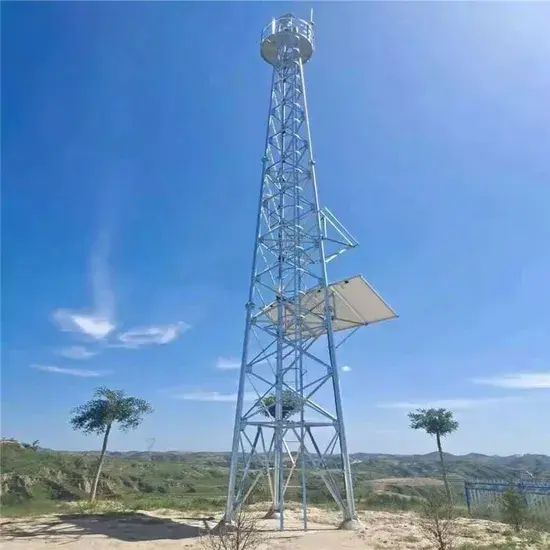
Coastal and industrial atmospheres attack standard coatings less through simple wetness than through the aggressive chemistry they deposit on the surface. Salt spray forces fine chloride particles into microscopic pores and pinholes, while sulfur oxides and nitrogen compounds from industrial exhaust mix with morning condensation to form a weak acid film. A typical general-purpose coating is formulated for routine outdoor weathering, so its resin and pigment package gives it little defense against that combination. Within months, microcracking and pinholes open just enough for moisture to reach the substrate.
Once penetration starts, the damage travels beneath the film rather than wearing it evenly from the top. Chlorides set up small electrochemical cells along the steel interface, producing rust that lifts the coating away in blisters and spreads from a single scribe or edge. The result looks different from ordinary chalking or fading: failure clusters near fasteners, weld seams, and areas where salty water can sit. Standard epoxies and alkyds without lamellar pigments or inhibitive chemistry struggle to interrupt that underfilm reaction.
Thermal cycling makes the problem worse. Coastal and industrial sites often swing between hot afternoons and cool, damp nights, causing the coating to expand and contract over a layer of salt crystals and corrosion by-products. Those deposits create osmotic pressure that pulls additional water through the film, even where the surface appears intact. Because a standard coating acts mainly as a physical barrier, once that barrier is breached the structure can corrode out of sight until there is measurable section loss.
Designing Straight-Line Transmission Segments Around Tower Loads and Terrain
Straight-line transmission segments rarely survive first contact with terrain. What begins as a clean tangent between two angle points quickly develops kinks once the profile is plotted. Rather than forcing equal spans, line designers spot tangent structures where side slopes are manageable, foundation access is workable, and the conductor’s weight span stays positive through the sagging and iced cases. A tower placed too close to a ridge may carry very little vertical load from one side, while the next span pulls upward under high wind or ice, producing uplift that a suspension assembly cannot accept without modification.
Tower loads shape the allowable spacing more than the line’s nominal voltage table suggests. On rolling ground, a small shift in structure position can swing the weight span from safe compression to negative. Wind span imbalances also shift crossarm and body forces, so the straight segment is often a series of deliberately unequal spans sized to keep suspension insulator swings and longitudinal unbalance within the tangent tower’s capability. Where the profile drops too sharply, a light angle or deadend tower may be inserted even though the route heading does not change.
Terrain also dictates how much of the line can remain truly straight. Sidehill construction increases grading and erosion control costs, while valley crossings create long spans with high tension that pull adjacent tangent structures out of alignment if one conductor breaks. In these sections, the straight-line alignment is less a geometric ideal and more a load-balancing exercise: each tower location is adjusted until the vertical, transverse, and longitudinal forces remain compatible with the structure family selected for the project.
Where Wholesale Pricing Meets Honest Surface Preparation
Most suppliers make you think you have to choose between a fair price and straight answers about surface prep. We never saw it that way. The products we stock at wholesale rates are the same ones we run on our own jobs, so the guidance comes from real use, not a catalog description.
That means when a basic disc will handle the work, we say so. When a specialty abrasive actually earns its higher cost, we explain the reason in plain terms. No inflated specs, no disguised upsell, no vague promises about performance.
What you end up with is contractor-grade material without the retail markup, and a clear sense of what you are buying before it shows up on your doorstep.
Pre-Shipment Inspection Points That Catch Galvanizing Defects Early
A quick pass over the load before crating catches most zinc problems that turn into site arguments later. Look for dull grey patches and bare spots along edges, ventilation holes, and inside corners where cleaning solution hides. If the surface feels rough or shows raised lumps, stop and mark those pieces—grinding them smooth now takes minutes, but repairing them after installation eats hours.
Check the drainage and venting details against the shop drawings, not just the coating color. Small holes that are slightly undersized or drilled at the wrong angle trap pre-treatment chemicals and create rust streaks within weeks. Measure the zinc thickness in three spots per member, especially near welds and cut ends, because those areas usually lose coating first. A handheld gauge gives you that answer before the crate is sealed.
White rust from stacked bundles that sat in rain or condensation is another early flag. If you lift a few spacers and see chalky white film between contact points, request dry storage or re-bundling with airflow before signing off.
Details That Keep Tangent Towers Upright in High-Wind and Soft-Soil Zones
The lower six levels of each Tangent tower are tied into a mat foundation thicker than most transfer slabs, with barrette piles driven past the compressible clay lenses that shift under seasonal moisture. The pile caps are not separate blocks; they fan out from the core walls so that overturning forces move directly into the ground instead of lingering in the frame.
At the upper third, the concrete perimeter columns taper and rotate slightly, breaking up vortex shedding along the north and south faces. Two liquid sloshing dampers sit inside the mechanical floors, tuned to different return periods, so a gust that excites one mass does not set up a rhythmic sway in the other.
The structural joints between the tower and its low-rise podium are left deliberately loose in the wind direction, allowing small lateral drift without cracking the stone cladding. Below grade, jet-grouted columns form a stiff box around the basement, limiting differential settlement where the soil profile changes from dense sand to soft silt over less than twenty meters.
FAQ
These towers are built for straight-line sections of a route, where they mainly handle vertical loads and routine weather stress. The hot-dip galvanized coating creates a tough zinc layer that shields the steel from moisture and airborne salts, which helps reduce maintenance in humid or coastal locations.
Bulk purchasing lets the manufacturer plan steel procurement and production runs more efficiently, lowering the cost per tower. It also keeps welding and drilling consistent across the batch, so on-site crews spend less time correcting or adjusting components.
Yes. Body height, crossarm length, and bolt patterns can be adjusted to match conductor clearances and insulation needs for lines ranging from 69 kV up to 500 kV. Structural calculations are revised for each configuration so the tower still meets the required wind and ice loads.
Hot-dip galvanizing typically follows ASTM A123 or ISO 1461. Coating thickness usually falls between 85 and 150 microns depending on the steel thickness. Traceable batch testing and inspection reports are also available when the contract calls for them.
Tangent towers are placed on straight sections and carry mainly vertical and transverse wind loads. Angle towers absorb the extra tension created when a line changes direction. Since tangent towers have a simpler load profile, they use less steel per kilometre and are faster to produce in large volumes.
For standard tangent tower designs, production usually takes between 30 and 60 days after drawings are approved. Custom configurations add time for detailing and prototype checks. Shipping can also affect the timeline, especially if the destination port requires special handling.
Hot-dip galvanizing performs reliably in rural, industrial, and coastal settings. The zinc layer corrodes much more slowly than bare steel and forms a stable patina over time. In highly acidic soils or areas with severe chemical exposure, an additional protective coating can be applied to the embedded sections.
Yes. Each order includes structural drawings, foundation reaction tables, and bolt torque specifications. If your utility or EPC contractor needs a specific format, the documentation can be prepared according to the project's naming and submission standards.
Conclusion
Buying galvanized tangent towers in volume should not push a project into late handover. The practical route is to have the fabricator phase production around stringing and foundation crews, so batches arrive when rights-of-way are ready. That removes pressure from delivery without sacrificing order size. Surface preparation often reveals more about long-term performance than zinc thickness alone. In coastal and industrial zones, chlorides and sulfur compounds strip standard coatings at connection points and base plates. A near-white blast profile, clean welds, and tested coating adhesion give the steel a legitimate chance. Before dispatch, inspectors need to probe drip marks, bare spots, uneven zinc build-up, and bolt-hole threads. Catching those issues in the yard avoids expensive field corrections and keeps the timeline intact.
Transmission routes may look flat, but straight-line tangent towers still experience sustained wind loads, conductor tension shifts, and soft ground movement. Engineering the tower around actual terrain profiles and soil reports makes wholesale pricing meaningful instead of merely cheap. Wider base plates, deeper anchors, and adjusted bracing patterns hold the structure when storms combine with weak subgrade. In high-wind regions, even small changes to panel geometry and fasteners reduce fatigue cracking and bolt loosening over time. The value of a reliable tangent tower purchase therefore comes from more than unit cost; it comes from batch delivery that matches construction progress, coatings that resist aggressive environments, and structural details that remain stable under local conditions. Those factors together keep transmission lines in service without early repairs, emergency re-tensioning, or replacement orders.
Contact Us
Contact Person: antor khan
Email: [email protected]
Tel/WhatsApp: 8613863903569
Website: https://www.qdabtower.com/