
Top Tamping Rammer Manufacturers That Deliver Superior Compaction
2026-10-29
If you've ever had to redo a compaction job because the base settled unevenly, you already know the tool matters as much as the technique. That's why we're highlighting the top tamping rammer manufacturers that deliver superior compaction—not just on paper, but on the job site. Among the names that consistently prove themselves is Dynamic. Here's what separates the best from the rest.
Manufacturers Setting the Standard for Deep Soil Compaction
Deep soil compaction isn't a task you can leave to guesswork. A handful of manufacturers have spent decades refining vibratory plate compactors and remote-controlled trench rollers, pushing hydraulic force and drum design far beyond what early jobsite equipment could manage. Their machines now deliver consistent density at depths exceeding four feet, which matters when you're backfilling utility trenches or preparing subgrades under heavy structural loads. The real differentiator comes down to how each builder balances centrifugal force, amplitude, and travel speed—subtle tuning that separates a passable lift from a properly locked-in soil profile.
What sets the leading names apart is less about raw horsepower and more about intelligent compaction feedback. Integrated sensors on the drum measure stiffness in real time, flagging soft zones before the operator moves to the next lift. This kind of onboard diagnostics used to be reserved for asphalt paving, but now it's standard on high-end trench rollers and padfoot compactors aimed at cohesive soils. Contractors who run these machines don't have to rely on spot-check density tests alone; the equipment itself gives a running map of compaction energy across the full work area.
Another edge comes from durability engineering that tolerates abrasive backfill and tight access work. Articulated joints, sealed drum bearings, and wear-resistant scraper bars are the quiet heroes here. Top manufacturers test their frames on brutal test loops—thousands of hours of oscillation and shock loading—before a single unit ships. That's why a well-maintained deep compaction rig from a recognized builder can hold its resale value and still deliver near-new performance after five seasons of trench work, while lesser-known copies often end up sidelined with cracked mounts or leaking eccentric housings.
Engineering Teams Behind the Most Durable Rammers
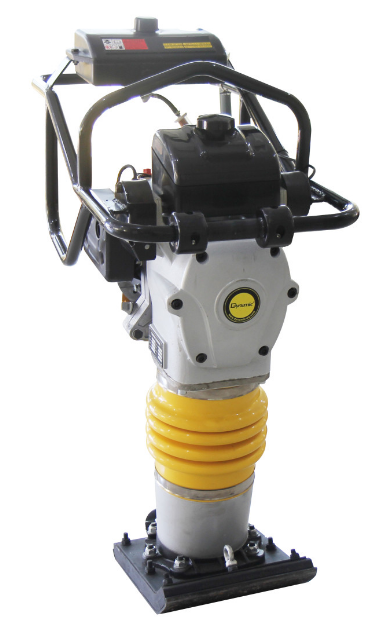
The durability of a rammer isn't decided on a drawing board alone. It comes from engineering groups that spend months on compaction sites, watching how operators actually use the machines in tight trenches and uneven soil. Their focus is on failure points: foot plates that crack under repeated impact, guide cylinders that wear from abrasive dust, and engine mounts that shake loose over hundreds of hours. By pairing field reports with strain-gauge data, these teams turn real abuse into design revisions.
Materials selection falls to a subset of engineers who treat every gram of the machine as a trade-off. They run accelerated life tests on cast aluminum alloys, high-strength steels, and polyurethane dampers, often pushing components well past the rated impact force. One common approach is to overbuild the rammer's lower assembly by 30–40% beyond expected loads, then validate that margin through salt-spray corrosion chambers and thermal cycling rigs. This is not about meeting a spec; it's about surviving the worst job site a contractor will throw at it.
The most durable rammers also benefit from teams that refuse to hand off a design after launch. Warranty return teardowns, used-oil analysis, and crack propagation monitoring feed a continuous loop back to the lab. When a new failure mode appears, such as a cracked bellows in high-silica environments, the engineering group goes back to the test rig, replicates it, and modifies the part or the process. That dedication to post-launch refinement is what separates a machine that lasts three seasons from one that lasts a decade.
Brands That Turn Uneven Ground into a Solid Base
A handful of brands have stopped treating rough terrain as a problem to be solved with bulkier soles or wider bases. Instead, they look at the way weight shifts across a surface, then build that movement into the product. The result isn't just a shoe or a tripod that tolerates a rocky trail—it's one that reads the ground and redistributes pressure before you even notice the imbalance.
What sets these companies apart is their refusal to rely on generic “all-terrain” labels. They test on actual construction sites, lava fields, and steep riverbanks, and they make small, almost invisible adjustments: an asymmetric lug pattern, a heel cup that rotates a few degrees, a chassis that flexes in one direction but locks in another. These details don't show up in ads, but they show up the moment you stand on loose gravel with a load in your hands.
The brands worth watching are the ones that treat stability as a system, not a feature. They pair a stable underfoot platform with materials that recover quickly after deformation, so the ground under you may shift, but your feet, your gear, or your equipment stay level. That's the difference between simply making contact with the ground and actually turning it into a reliable base.
What Separates Leading Rammer Builders from the Rest
Most rammer builders can follow a spec sheet. The ones worth hiring read the ground before they touch the throttle. They notice how moisture changes from the top inch to the next foot, how yesterday's rain still hides in low spots, and how a slightly different lift thickness will save you an hour of rework later. That kind of feel isn't taught in a manual—it's earned by someone who treats every pass as a small experiment, not just a repetition.
Then there's the matter of refusal. A leading builder doesn't pretend every soil hits refusal at the same point. They watch the machine's rhythm, listen for the change in impact sound, and know when one more pass is wasted energy. That judgment keeps projects moving without under-compacting or overworking the material. It also means they can explain why a certain area needs a different approach, which saves everyone from guesswork later.
Finally, the best ones leave the site cleaner than they found it—not as a gesture, but as a habit. They coil hoses, wipe down controls, and make sure the next crew isn't tripping over their mess. It sounds small, but it reflects a mindset: they're not just running a machine, they're owning the outcome. That's what separates a name on a bid sheet from a builder you call back without thinking twice.
The Names Contractors Trust for Consistent Density
On a jobsite, density isn't just a number on a gauge—it's the difference between a subgrade that holds up for decades and one that fails after the first heavy rain. That's why the names you hear repeated in site trailers and over morning coffee aren't the result of flashy brochures or trade-show giveaways. They belong to machines and materials that have earned their place by delivering the same tight compaction, lift after lift, without forcing the operator to fight the equipment.
What sets these trusted names apart is how they handle the messy reality of field work. Clay that's wetter than the spec, granular fill that shifts under the drum, a change in lift thickness halfway through the day—none of it throws off the result. The drums, plates, or rammers stay on target because their design accounts for variability, not just ideal conditions. Crews notice when they don't have to make constant adjustments or run extra passes just to be safe.
For a contractor, that kind of repeatability means fewer failed density tests, fewer callbacks, and less time spent reworking a section that should have been done right the first time. It also builds a quiet confidence: when a foreman sees one of these names on the side of a machine, he knows the compaction target will be met without drama. That's not brand loyalty as a habit—it's trust earned one consistent, measurable layer at a time.
Where Heavy-Duty Design Meets Real-World Performance
There’s a difference between looking tough and surviving a decade of potholed job sites. Our frames don’t just get thicker steel—they get reinforced at the exact stress points that fail first, based on thousands of hours of actual use rather than computer models alone.
That same principle carries into components like sealed pivot joints and oversized cooling systems. Instead of chasing peak numbers on a spec sheet, we dial in reliability under load, heat, and vibration. The result is equipment that keeps its cycle times consistent from the first shift to the ten-thousandth.
You’ll notice it most in the margins: a door latch that still closes solid after five years of dust, a hydraulic fitting that doesn’t weep, a cab that stays quiet enough to hear your radio over the engine. Heavy-duty design should disappear into the work—so you only think about it when someone asks what you’re running.
FAQ
Wacker Neuson and Mikasa have a long track record, but Bomag and Ammann also turn out machines that handle daily abuse without constant breakdowns.
Look at the impact force and shoe size. A well-built rammer transfers more energy per blow into the soil, so you get density in fewer passes. Also, the engine and spring system need to work together without lag.
Narrow trenches need a rammer with a slim shoe and good balance. Check the machine's width and stroke. If the shoe is too wide, you'll fight the trench walls and waste energy.
Yes. Weber MT and Husqvarna have put real effort into reducing handle vibration. That matters if your crew runs rammers all day, because hand-arm vibration syndrome is a serious issue.
Clean the air filter after every dusty shift and check the oil level before each start. Also, inspect the bellows and foot bolts weekly. Small leaks or loose bolts quickly turn into lost impact force.
Often, yes. A pricier unit from Wacker Neuson or Bomag usually has better parts availability and a stronger resale value. Cheaper clones can save money upfront but may leave you stranded when a seal or spring fails mid-project.
Four-stroke engines are cleaner and quieter, but many crews still prefer two-stroke rammers because they can run in any position without oil starvation. Honda and Robin engines are common and easy to service.
Multiquip and Wacker Neuson have dense dealer networks. That means you can get replacement shoes, springs, and engine parts quickly, often within a day, which keeps downtime short.
Conclusion
When a jobsite demands soil that won't settle or shift, the difference often comes down to which tamping rammer is running. The manufacturers that consistently earn repeat business aren't the ones with the loudest marketing—they're the ones whose machines hold stroke length, impact force, and shoe speed within tight tolerances long after the break-in period. Brands such as Wacker Neuson, Bomag, and Mikasa have built their reputations by treating deep soil compaction as an engineering problem rather than a production shortcut. Their designs pair a well-balanced guide handle with an isolated shoe plate, so the operator feels less vibration while the ground takes the full brunt of every blow. That translates into fewer soft spots under slab edges, around footings, and in trench backfill where density is non-negotiable.
What separates the leading rammer builders from the rest is how they handle the unglamorous details: sealed throttle assemblies, replaceable bellows, and engine mounts that don't crack after a season of rough handling. The teams behind the most durable rammers test their machines on uneven terrain, not just in clean shop conditions, and they spec air filters, carburetors, and recoil starters that field crews can actually service without calling a dealer. Contractors who need consistent density on every lift tend to stick with names like MBW, Bartell, and Atlas Copco, because those brands pair heavy-duty frames with real-world performance instead of spec-sheet inflation. When a rammer turns a patch of uneven ground into a solid base in a single pass, that's not luck—it's a manufacturer doing the boring engineering consistently.
Contact Us
Contact Person: Annie
Email: [email protected]
Tel/WhatsApp: 8613391442963
Website: https://www.dynamic-eq.com