
Top Magnet Wire Materials That Improve Conductivity and Reduce Energy Loss
2026-11-26
If your latest efficiency targets keep slipping, the conductor inside the winding may deserve more blame than the cooling system. Magnet wire materials set hard limits on conductivity, heat buildup, and energy loss long before a motor or transformer reaches the test bench. Small differences in copper purity, insulation layers, and surface quality can shift performance by more than most design tweaks. Huaying focuses on those material details so engineers get wire that behaves consistently under load. This guide breaks down the magnet wire options that actually help you cut losses and protect long-term reliability.
Why Oxygen-Free Copper Cuts Resistive Heating
Copper picks up oxygen during refining and casting. That oxygen reacts with the metal to form cuprous oxide and other microscopic inclusions. Those particles do not simply sit there; they scatter conduction electrons and force current to take a longer, more chaotic path through the grain structure. The result is higher electrical resistance, and resistance converts current into waste heat. Oxygen-free copper reduces these inclusions dramatically, so the conductive path stays cleaner and more direct.
The heating effect is not uniform. Oxide films and inclusions tend to gather at grain boundaries, creating small regions with higher local resistance. Under sustained load, those spots warm up faster than the surrounding metal, which can accelerate oxidation and degrade connections over time. With oxygen-free copper, there are far fewer oxide-rich boundaries to initiate that cycle, so temperature rise stays lower and more even across the conductor.
In practice, the difference becomes most visible in power-hungry or precision-sensitive systems. High-current connectors, voice coils, and bus bars run cooler when the conductor itself is not fighting the electron flow. Lower resistive heating also means less energy loss, tighter dimensional stability, and a reduced chance of thermal damage to nearby insulation or solder joints.
Silver-Plated Wire for Cleaner High-Frequency Performance
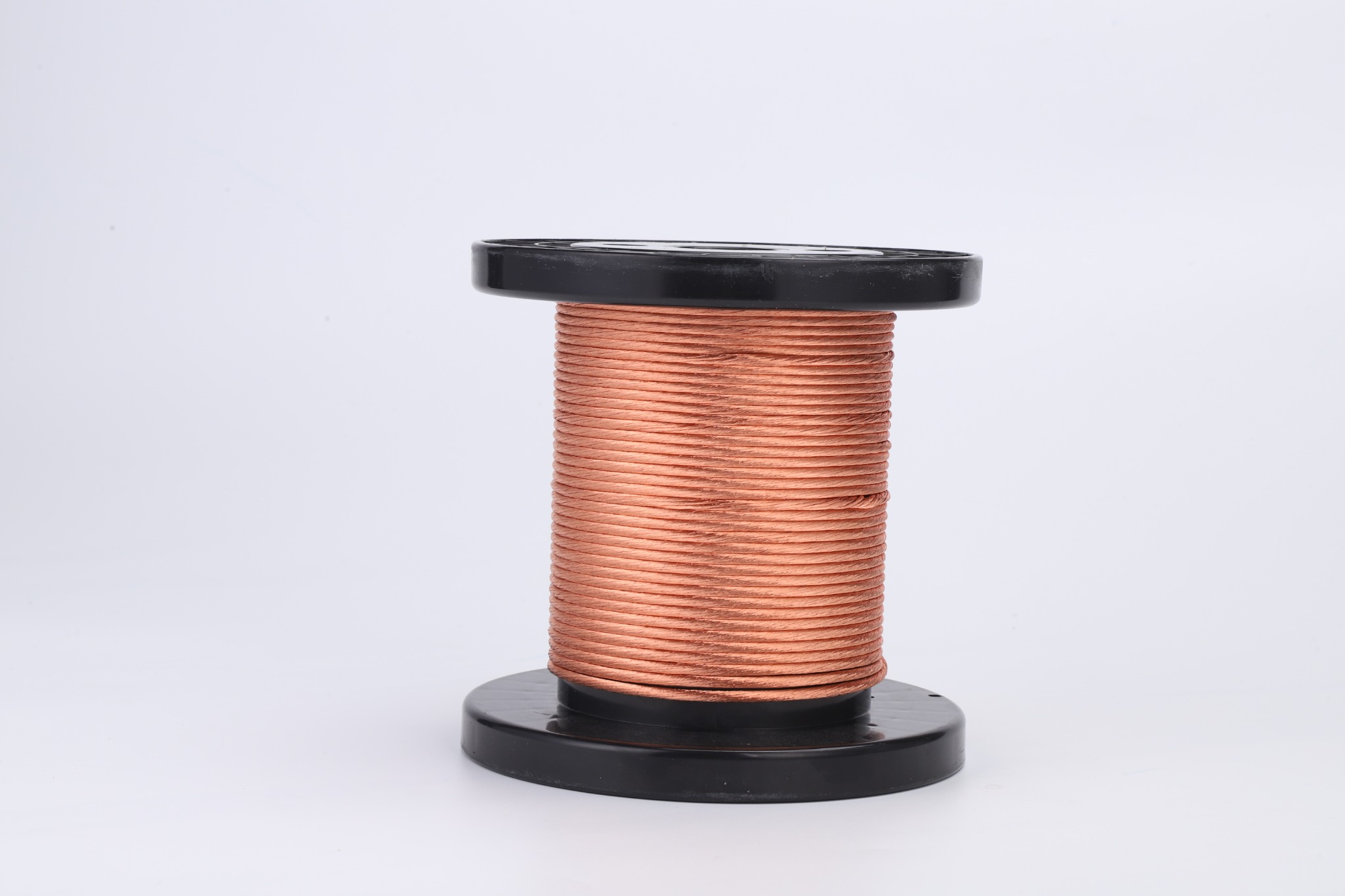
At higher frequencies, current crowds toward the outer surface of a conductor, so the plating material does much of the real work. Silver carries slightly better conductivity than copper, and that edge becomes noticeable in cables carrying RF, video, or digital audio signals. A well-applied silver layer keeps leading edges sharper and reduces the blur that can creep into fast transitions.
The practical payoff shows up in cleaner treble, less grainy texture, and a more stable soundstage rather than a bright or metallic tilt. Silver also resists oxidation better than bare copper, which helps terminations stay consistent over time. The difference is subtle in short runs, but in longer cable lengths or dense installations it can keep high-frequency losses from piling up.
Thin Enamel Coatings That Prevent Energy Leakage
Thin enamel layers have quietly become one of the most effective barriers against heat loss in modern construction. Unlike bulky insulation boards or reflective foils, these coatings work directly on the surface, filling microscopic pores and hairline cracks that would otherwise let conditioned air escape. A properly applied enamel film can reduce thermal bridging around window frames, metal studs, and joints where traditional methods often fall short.
What makes thin enamel different is its ability to form a continuous, low-permeability skin without adding significant weight or thickness. The resin base bonds tightly to concrete, steel, and wood, while ceramic or silica microspheres scatter radiant heat back toward its source. This dual approach, blocking both conductive and radiative losses, keeps interior temperatures more stable without relying on thick, space-consuming layers.
In retrofit projects, thin enamel coatings offer a practical path to better energy performance. They can be rolled or sprayed onto existing walls, roofs, and ductwork with minimal disruption. Over time, the reduction in heating and cooling demand often pays for the application itself, making the coating not just a surface treatment but a long-term safeguard against wasted energy.
Rectangular Profiles That Improve Winding Density
Packing round conductors into a slot means accepting that every turn touches its neighbors only at a single point. The air trapped in those voids can easily eat up 10–15% of the space that was meant for copper. Rectangular profiles remove that compromise by letting flat faces contact each other across the full width of the turn, so the winding becomes a dense stack rather than a collection of loosely packed cylinders.
That gain in fill factor changes what is possible in a constrained design. A coil wound with rectangular wire can carry more current in the same envelope, or hold the same current in a smaller core window. The turns also sit in stable, repeatable layers, which helps keep end turns low and gives heat a more direct path out of the winding. One detail matters during production: the corners of the profile need a controlled radius, not a sharp edge, otherwise the insulation can crack or thin under bending pressure.
The trade-off is real. Rectangular wire demands more careful tension control and slower forming around tight radii, so it is rarely the cheapest option at the prototype stage. In applications where slot depth and thermal margins dominate, however, the improved copper density usually pays for itself quickly.
Litz Wire Construction for Lower AC Resistance
The defining feature of Litz wire is its construction from many individually insulated strands, twisted together in carefully arranged bundles. This structure directly combats the increase in resistance that solid conductors suffer at higher frequencies. When alternating current flows through a solid wire, the magnetic field forces electrons toward the surface, leaving the core underused. By dividing the conductor into numerous small strands and transposing them so each strand spends an equal length at every position within the bundle, Litz wire forces current to distribute far more uniformly across the available copper.
The twisting pattern is not random; it follows a specific layering scheme, often with subgroups twisted one direction and then combined with other subgroups twisted the opposite way. This equalizes the impedance of each strand from an AC perspective, reducing both skin effect and proximity effect. The result is a conductor that behaves almost like a DC conductor even at frequencies where a solid equivalent would show a sharp rise in resistance.
In practice, the benefit depends on matching the strand diameter to the operating frequency range. Strands that are too thick fail to solve the skin effect, while strands that are too thin waste space on insulation and increase DC resistance. The most effective Litz constructions therefore focus not on simply adding more strands, but on arranging the right gauge and bundle geometry to keep AC losses close to the minimum possible for a given winding window.
Aluminum Windings That Reduce Overall System Loss
The shift toward aluminum conductors in modern transformers and motors often raises questions about raw conductivity, yet the real advantage emerges when looking at total system performance. Aluminum windings can be engineered with larger cross-sectional areas to match the resistance levels of copper while staying significantly lighter. This weight reduction eases mechanical stress on support structures and allows for more compact winding configurations, which in turn shortens the magnetic flux path. The result is a winding assembly that contributes less to stray load losses than a conventional copper design operating under the same thermal constraints.
Thermal behavior also plays a central role. Because aluminum dissipates heat differently and can be formed into continuous, high-purity strands, hot spots are less likely to develop under fluctuating loads. Lower hot spot temperatures mean insulation ages more slowly, so the winding maintains its designed resistance and efficiency over a longer service life. When losses remain stable instead of creeping upward with degradation, the entire distribution or drive system avoids the penalty of gradually increasing energy waste—a subtle but meaningful gain for facilities that track lifetime operating costs.
From a manufacturing perspective, aluminum’s ductility permits tighter fill factors in slot geometry, reducing the air gaps and eddy current regions that often plague heavier copper layouts. Combined with proper termination and oxide mitigation techniques, a well-designed aluminum winding can cut total system loss by optimizing not just the conductor itself, but every interface around it. This holistic approach shifts the conversation from simple conductivity comparisons to real-world efficiency gained across connections, cooling, and structural integration.
FAQ
Removing oxygen and other impurities lowers the resistance enough to cut heat generation in motor windings. That means less energy gets wasted as heat, and the wire stays more stable under continuous load. It costs more than standard copper, but the efficiency gain often justifies it in high-performance equipment.
Aluminum has roughly 60 percent of copper's conductivity, so you need a thicker gauge to carry the same current. The payoff is a major weight reduction, which helps in applications where mass matters more than a small efficiency loss. Proper termination is also critical because aluminum oxidizes quickly.
Yes, but mostly in specialized high-frequency or high-temperature equipment where even a small drop in resistance matters. Silver is the most conductive metal, so it can reduce losses in demanding windings. The cost keeps it out of everyday motors and transformers.
It combines the lighter weight of aluminum with a copper surface that eases termination and improves skin-effect performance at higher frequencies. The trade-off is slightly higher resistance than pure copper, but the weight and cost savings can be worth it in the right design.
The insulation does not carry current, but it influences how tightly windings can be packed and how well heat escapes. Thin, high-dielectric coatings allow more copper in the same slot area, lowering resistance. Better heat transfer also keeps the conductor cooler, which preserves conductivity.
Alloys with refined grain structures, composite conductors, and advanced thin-film insulations are being tested to lower resistance and improve thermal performance. Some designs use rectangular or ribbon-shaped wire to pack windings more tightly. The goal is usually the same: reduce the empty space and resistive loss inside a motor or transformer.
At high frequencies, current crowds toward the surface of the wire through the skin effect. That means the outer layer, including any plating or cladding, can dominate the effective resistance. A smooth, highly conductive surface with the right insulation can reduce losses even if the core material is less conductive.
Conclusion
Modern magnet wire design has moved well beyond simple copper round wire, with material and geometry choices now doing much of the heavy lifting in curbing energy loss. Oxygen-free copper remains a practical baseline because fewer impurities and less internal oxidation keep resistive heating lower under sustained load. Where high-frequency behavior matters, silver-plated conductors can make a noticeable difference by concentrating current near the surface, so the plating handles the skin effect while the copper core carries the body of the signal. At the same time, thin enamel coatings do more than insulate; newer low-loss films reduce dielectric leakage and allow tighter packing without adding unnecessary thermal barriers. Rectangular profiles also contribute here by using the available slot area more fully, raising winding density and giving heat a shorter path out of the coil.
Litz wire pushes the same thinking further. By splitting a conductor into many individually insulated strands and transposing them, it evens out current distribution and lowers AC resistance at medium to high frequencies, which is useful in inverters, wireless charging, and resonant converters. Aluminum windings, often overlooked, can reduce overall system loss in larger equipment where weight and cost drive the design more than absolute conductivity. A properly sized aluminum winding with clean terminations can operate at a lower current density per kilogram of conductor, and it can improve thermal behavior across the whole assembly in applications such as transformers or motor stators. The real gain comes from matching the material to the actual operating conditions rather than defaulting to one option for every design.
Contact Us
Contact Person: Mr. Zou
Email: [email protected]
Tel/WhatsApp: 8613929536496
Website: https://www.huayingwire.com