
Semi-Automatic Vacuum Circuit Breaker: Working Principle and Practical Applications
2026-11-16
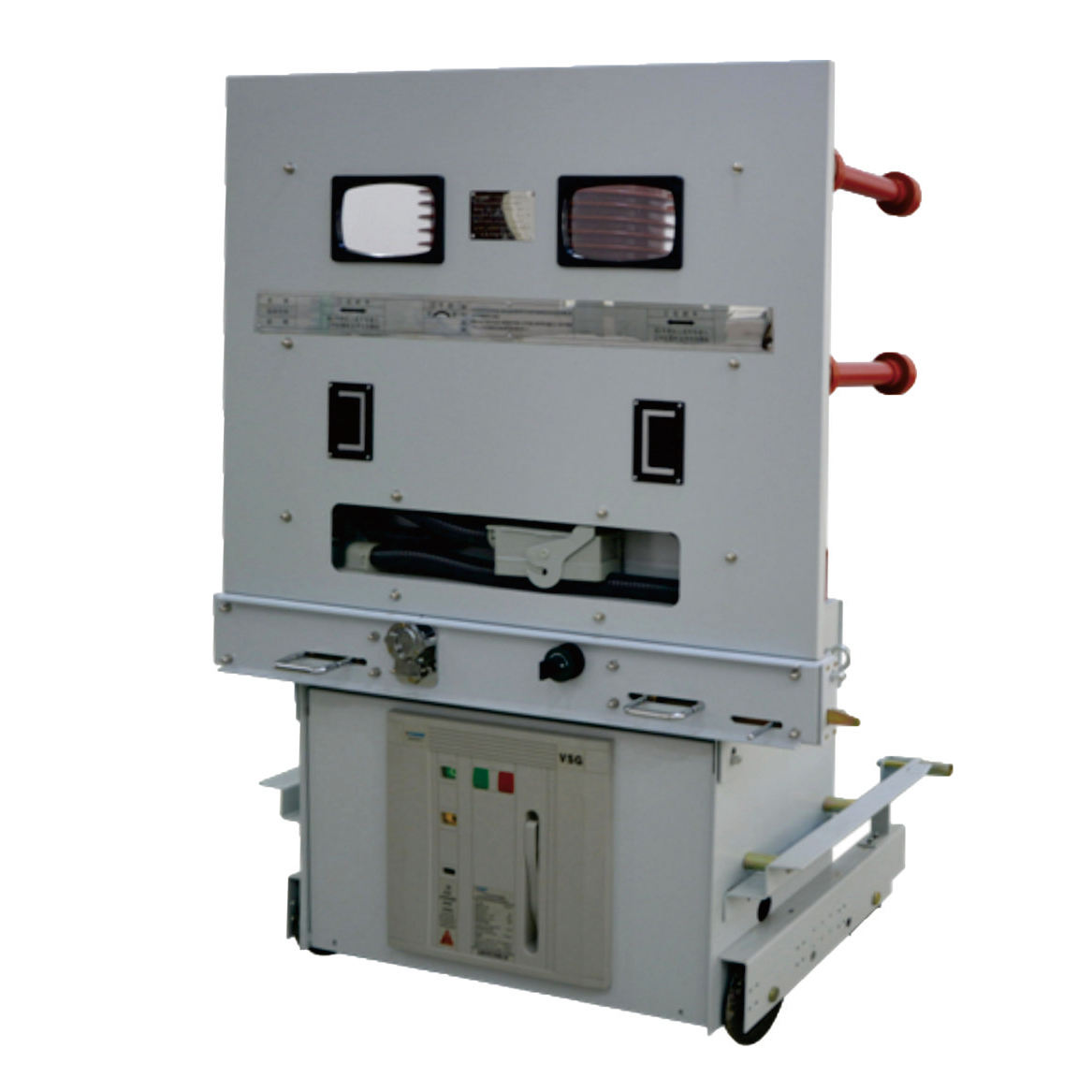
Semi-automatic vacuum circuit breakers occupy an interesting middle ground: they don't fully automate switching, and they don't leave everything to the operator. That balance is why they keep showing up in switchgear where reliability matters more than flashy features. This article explains their working principle in plain terms and maps out where they deliver the most value in real installations. If you want to see how these principles translate into actual equipment, XIAOPAI has a range of vacuum breakers worth exploring.
Inside the Interruption Cycle
Every interruption begins with a silent crack in attention—a notification, a passing thought, or a colleague's question that splits focus before we even notice. The cycle isn't random; it follows a predictable rhythm: trigger, pivot, shallow work, guilt, and then a hasty return to a task we've already half-forgotten. Most people blame the trigger, but the real issue is how quickly the pivot becomes automatic. Once the brain learns that a buzz equals a dopamine hit, it starts seeking interruptions even when none exist.
What makes the cycle so hard to break is that it feels productive. Checking messages feels like work. Replying instantly feels like responsiveness. But each switch carries a hidden cost—not just the seconds lost, but the minutes it takes to rebuild the mental context you were standing in. Over a day, those fragments pile up into hours of what researchers call attention residue: the ghost of the previous task still haunting the next one. The cycle doesn't just steal time; it lowers the quality of everything you do after the interruption.
Breaking the cycle starts with mapping your own pattern. Notice what pulls you away, how long you stay away, and what you tell yourself when you come back. Most people discover their interruptions cluster around boredom or uncertainty—moments when the current task feels too hard or too vague. That's the real reason a quick email check feels irresistible: it's an escape hatch from difficult thinking. Once you see the cycle as an emotional loop rather than a time-management failure, you can interrupt the interruption before it becomes a habit.
How Operator Input Blends with Automated Response
In practice, the line between what a human operator decides and what the system executes on its own rarely stays fixed. Automated routines handle the repetitive, high-volume tasks without hesitation, but they also watch for moments where ambiguity spikes or confidence drops. That is when a subtle handoff occurs: the operator's judgment enters not as a full override, but as a nudge that reshapes the next automated step.
Think of it less as a switch between manual and auto, and more as a shared throttle. The machine keeps the engine running, parsing inputs and proposing actions in real time. The operator then bends the trajectory—sometimes by confirming a suggested move, other times by injecting a constraint that the automation wasn't aware of, like a local rule or a customer's unspoken preference. The system absorbs that input and folds it into the next round of decisions, so the blend feels continuous rather than start-stop.
What emerges is a loop where neither side operates alone. The automation flags anomalies and asks for a human read; the operator flags exceptions and watches how the automated response adapts. Over time, the system learns which operator inputs tend to produce better outcomes, and it begins to anticipate those adjustments, blurring the boundary until the blend becomes the default way of working.
Why a Vacuum Gap Changes Fault Clearing
A vacuum interrupter relies on contact gaps measured in millimeters, not the centimeters typical of gas-blast designs. Because the dielectric strength of a high vacuum recovers almost instantly after current zero, the short gap can withstand the transient recovery voltage without a long deionization period. This means the arc is extinguished at the first available current zero in most cases, reducing the total arcing time to a fraction of a cycle.
The small gap also shortens the mechanical travel of the moving contact. Faster contact separation, combined with the vacuum's ability to condense metal vapor onto the shield and contacts, keeps the arc diffuse and cool. Fault energy is interrupted before it can build to destructive levels, and the contact erosion remains low enough to allow tens of thousands of operations.
There is, however, a particular consequence of interrupting in a short vacuum gap: current chopping. The arc can become unstable as the current approaches zero, forcing an early interruption and generating a voltage spike. Modern contact materials like copper-chromium reduce this effect, but engineers still account for it when applying vacuum breakers to motors or dry-type transformers.
Typical Locations Where These Breakers Earn Their Keep
Heavy manufacturing floors put these breakers through their paces daily. Conveyor lines, stamping presses, and induction furnaces all demand quick fault interruption without nuisance tripping. The real test comes during shift changes when motors cycle on and off in rapid succession, sending current spikes through the busbar. A breaker that handles that chaos while keeping arc flash energy low becomes indispensable.
Commercial high-rises lean on them in less obvious ways. Behind the polished lobby walls, these units guard elevator machine rooms, chiller plants, and emergency lighting circuits. In hospitals, the stakes shift to life safety. Operating rooms and MRI suites cannot afford a single unplanned outage, so the breakers placed there are chosen for their selective coordination and resistance to thermal fatigue.
Outdoor substations and remote pumping stations push the environmental envelope. Dust, moisture, and salt spray reduce lesser equipment to scrap in a few seasons. But a breaker built for these spots keeps its contacts clean and its trip unit accurate, even when the temperature swings forty degrees between night and noon.
Service Habits That Keep Tripping Consistent
Consistency on the road rarely comes from grand gestures. It grows out of small, repeatable service habits that quietly stack up. The best teams don't improvise every interaction; they lean on a shared rhythm for greetings, confirmations, and follow-through. That rhythm becomes the invisible spine of a trip, so guests know what to expect without thinking about it.
One habit that makes a difference is checking the next step before the traveler has to ask. A quick note about pickup time, a clear update on a delay, a straightforward answer about luggage—these tiny moves remove friction. Another is owning the handoff between teams. When the driver, the front desk, and the guide all use the same simple language, a trip feels less like a series of transactions and more like one continuous experience.
The goal isn't perfection. It's predictability with a human touch. Teams that keep tripping consistent treat service habits as living routines: they notice which details repeat, adjust what isn't working, and pass along what is. Over time, those habits become the reason travelers choose the same path again.
Reading Ratings and Settings Before Installation
Before you pick up a screwdriver or mount anything on the wall, take a few quiet minutes with the rating label and the default settings sheet that came in the box. These small print details tend to get skipped when the job feels straightforward, yet they hold the specific voltage, wattage, and ambient temperature range your unit was actually tested for. If the supply in your home runs slightly high or the room sits warmer than the listed ceiling, the device may still power on but will work against its own safety margins from day one.
Settings matter just as much as the hard numbers. Many units ship in a demo or factory-default mode that is not meant for permanent use, so scrolling through the initial configuration before mounting avoids the frustration of unmounting later to reach a recessed button or switch. Pay particular attention to choices that affect warm-up behavior, standby draw, or sensor sensitivity, because those are the ones that quietly shape daily performance and energy use.
A practical habit is to photograph the rating label and the settings screen with your phone before everything gets covered by trim or brackets. That way, if a support call becomes necessary or you compare performance a year later, the exact model number, production batch, and chosen configuration are already in your hands instead of behind a fixed panel.
FAQ
It is a medium-voltage switching device that uses a vacuum interrupter to quench arcs, while its operating mechanism combines manual charging or closing actions with automatic tripping functions. This hybrid approach gives operators direct control during switching without sacrificing rapid fault interruption.
When the contacts separate inside the vacuum bottle, the arc is drawn in a near-perfect vacuum. Since there are almost no gas molecules to ionize, the arc cannot sustain itself and extinguishes at the first current zero. The vacuum also recovers its dielectric strength almost instantly, preventing restrikes.
The mechanism typically requires a manual spring-charging action before closing, but once the breaker is closed, protective relays can automatically command an opening operation. This means routine switching can be deliberate and controlled, while fault clearance remains fast and independent of human reaction time.
They are commonly found in industrial plants, utility substations, mining operations, and commercial buildings. Typical locations include incoming feeders, transformer protection panels, motor control centers, and capacitor bank switching, especially where operators prefer a hands-on closing procedure.
Regular checks focus on the mechanical linkages, spring-charging system, and contact erosion indicators. The vacuum interrupter itself is sealed for life and usually needs no internal maintenance, but periodic insulation resistance tests, lubrication of moving parts, and verification of trip coil functionality are recommended.
A fully automatic version can be closed and opened remotely or by relays without any manual spring charging. The semi-automatic variant requires local or manual energy input for the closing stroke, while the tripping side remains automatic. This gives the semi-automatic design a simpler control circuit and often a lower initial cost.
Vacuum interrupters eliminate the need for oil or SF6 gas, so there is no fire hazard, no toxic byproducts, and no greenhouse gas leakage. The arc is contained inside the sealed interrupter, which keeps external flashover risk low and allows the breaker to be compact and quiet.
Yes, vacuum interrupters handle frequent operations very well because contact erosion is minimal and the arc duration is short. Semi-automatic models are often chosen for motor starting, furnace control, and shunt reactor switching, where operators perform regular switching but still need automatic protection against faults.
Conclusion
A semi-automatic vacuum circuit breaker merges direct operator control with automated protection, creating a responsive yet predictable interruption cycle. When a fault occurs, the breaker's mechanism first relies on an operator's initiation or confirmation for certain operations, while automated sensors and trip coils independently detect overcurrent or short-circuit conditions and command the contacts to part. Inside the sealed vacuum interrupter, the arc is drawn between contacts but quickly extinguishes because metal vapor and ionized particles cannot sustain conduction in the near-perfect vacuum. This vacuum gap gives the device an exceptionally fast recovery of dielectric strength after current zero, limiting contact erosion and reducing the risk of restrikes. The result is a compact, low-maintenance unit that handles frequent switching without the environmental concerns of oil or SF6 alternatives.
In practice, these breakers find use in industrial plants, mining operations, substation auxiliary circuits, and renewable energy installations where operators want a manual checkpoint before re-energizing a feeder but still need automatic fault clearing. Keeping tripping consistent depends on regular inspection of the operator interface, lubrication of the stored-energy mechanism, and verification of contact wipe and vacuum integrity through routine testing. Before installation, reading nameplate ratings such as rated short-circuit breaking current, impulse withstand voltage, and control voltage is critical; misinterpreting settings like undervoltage release or closing delay can defeat the semi-automatic coordination. By respecting these service habits and matching ratings to the site's fault level, a semi-automatic vacuum circuit breaker delivers reliable interruption with fewer unplanned outages and simpler troubleshooting than fully manual or fully automated alternatives.
Contact Us
Contact Person: Kellen Chen
Email: [email protected]
Tel/WhatsApp: 8613806536768
Website: https://www.cnxiaopai.com