
Reliable Sheet Metal: Key Benefits and Top Applications for Your Projects
2026-06-13
Sheet metal quietly powers countless projects, from sleek electronics to rugged machinery. Yet its reliability hinges on precision and expertise—qualities that separate the ordinary from the exceptional. At TPS, we’ve seen how thoughtfully crafted sheet metal transforms ideas into durable, high-performance realities. Curious about what makes it indispensable? Let’s unpack the key benefits and top applications that could redefine your next build.
The Unseen Backbone of Modern Manufacturing
Every product we touch—from the smartphone in your pocket to the car you drive—owes its existence to a sprawling, largely invisible infrastructure. This hidden world is made up of precision tooling, calibration labs, and testing facilities that never make headlines but without which production lines would grind to a halt. It’s the quiet hum of climate-controlled rooms where lasers measure components to micrometer tolerances, and the rigorous routines of maintenance crews who work through the night so that morning shifts arrive to flawless machinery. Far removed from the final assembly, these layers of preparation and care form a nervous system that sustains every stage of manufacturing.
Beyond the factory floor, there’s an entire ecosystem of suppliers and logistics specialists who ensure that raw materials and subassemblies appear exactly when needed—neither too early nor too late. This just-in-time orchestration relies on decades of expertise in warehousing, freight forwarding, and inventory management, all choreographed by algorithms that predict demand fluctuations and reroute shipments during disruptions. Without this delicate balance, even the most advanced factory would be left waiting for a single missing bolt. It’s a behind-the-scenes ballet that most consumers never notice, yet it shapes the availability and cost of everyday goods.
Then there’s the digital undercurrent: the data centers and proprietary software that monitor machine health, track energy consumption, and simulate production scenarios before a single physical part is made. Engineers pore over dashboards in quiet offices, spotting anomalies that could lead to costly downtime days in advance. This predictive layer has quietly revolutionized manufacturing, shifting the industry from reactive fixes to proactive optimization. It’s the unglamorous, relentless intelligence that keeps modern production resilient, adaptive, and always running—truly the unseen backbone of our material world.
Why Durability Matters: Sheet Metal's Long-Lasting Promise
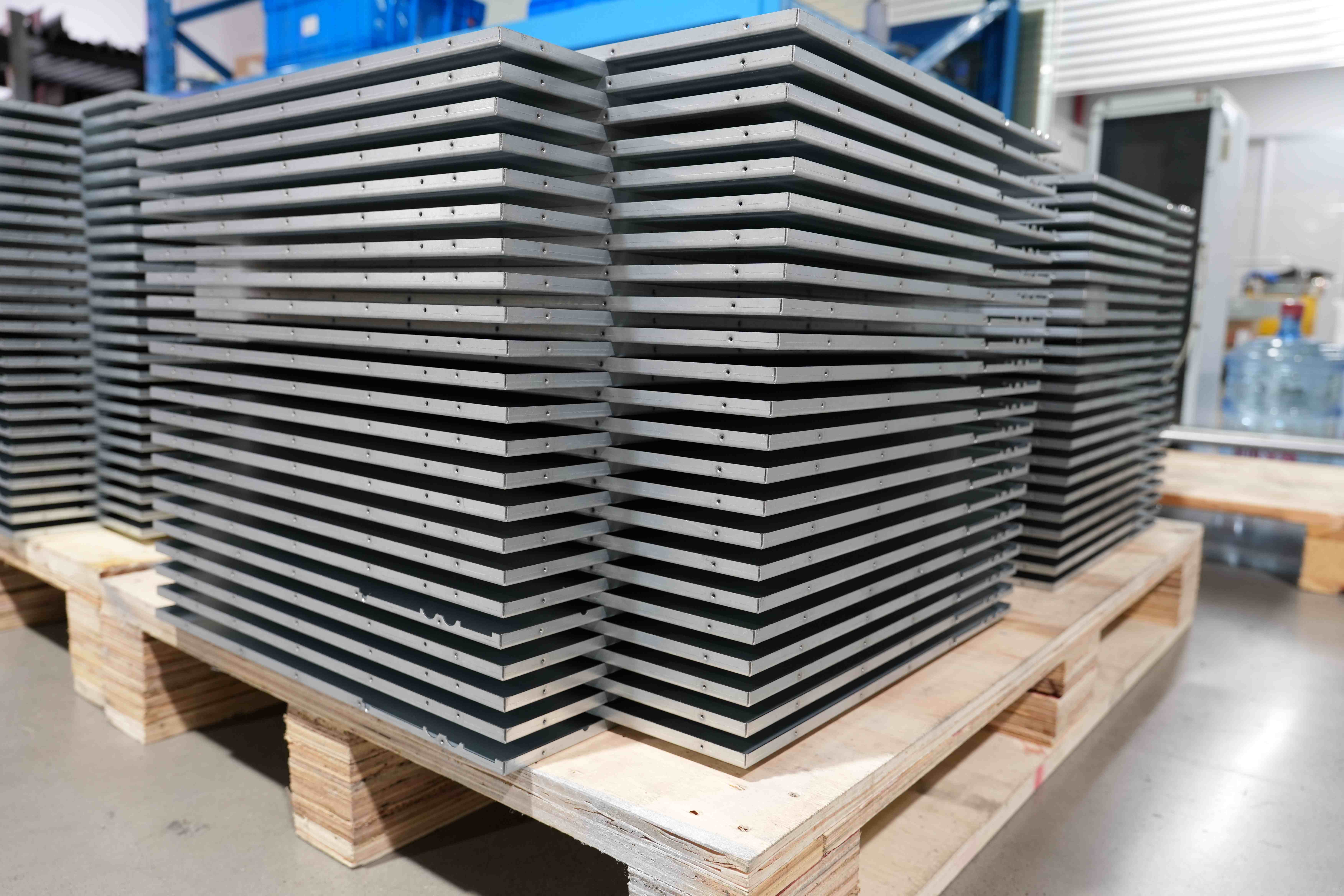
In environments where materials face daily punishment—think corrosive chemicals, relentless moisture, or abrasive particles—short-term solutions quickly become expensive regrets. Sheet metal shrugs off these challenges with a resilience that plastics and wood simply cannot match. Its inherent strength isn’t just about surviving impact; it’s about maintaining structural integrity year after year without warping, cracking, or degrading. This translates directly into lower maintenance costs and fewer unplanned replacements, giving engineers and builders a foundation they can trust.
Beyond the obvious physical toughness, there’s a quiet confidence in choosing a material that doesn’t gradually lose its properties. Coatings and treatments can enhance corrosion resistance, but even untreated, many sheet metal alloys develop a protective patina that actually slows further deterioration. Unlike composite alternatives that might hide internal fatigue until it’s too late, metal wears its history on its surface, making inspections straightforward and lifecycle planning more predictable.
That longevity also carries a sustainability weight that’s often overlooked. The longer a component stays in service, the fewer resources are consumed on remanufacturing, shipping, and installation. When it does eventually reach end-of-life, sheet metal flows easily into recycling streams without downcycling—a sharp contrast to materials that end up in landfills after a single use. Durability isn’t just about saving money today; it’s about designing responsibility into the very structure of our built environment.
From Prototype to Production: Speed and Precision Combined
The leap from early concept models to full-scale manufacturing used to involve painful trade-offs—speed often meant sacrificing accuracy. Now, integrated digital workflows erase that line. Designs flow from CAD to simulation and then straight to CNC or additive machines without reinterpretation, so the part that comes off the line matches the prototype down to microns, only faster. Iteration cycles shrink from weeks to hours because the same data drives every stage, letting teams test, tweak, and lock in tolerances with almost zero drift.
On the factory floor, this marriage of pace and exactness shows up in how toolpaths are generated and adjusted mid-run. High-speed machining centers now pair with real-time metrology that feeds corrections back before a single defective piece gets completed. It’s not about rushing—it’s about removing idle gaps and guesswork. The result is a process where sprinting from prototype to production doesn’t leave a trail of rejects. Instead, you get repeatable micron-level output at a tempo that keeps supply chains breathing, turning what was once a bottleneck into a fluid, reliable rhythm.
Everyday Wonders: Surprising Uses You Never Noticed
You’ve probably never looked at a dryer sheet and thought it could freshen more than laundry. Tucked into a musty drawer or slipped inside a stinky shoe, it quietly absorbs odors for weeks. That same unassuming sheet can also tackle dust on baseboards or even loosen burnt-on food when soaked in a pan overnight—no scrubbing required.
Uncooked rice isn't just for dinner. A few spoonfuls in a salt shaker keep clumps at bay by absorbing moisture, and if your phone takes a dive, a sealed bag of rice can help draw out that humidity. Meanwhile, a dab of toothpaste on a microfiber cloth can polish cloudy car headlights to near-new clarity, and a lemon half dipped in baking soda makes stainless steel sinks gleam without harsh chemicals.
These quiet tricks have been hiding in plain sight, turning mundane objects into multi-tasking marvels. Once you start spotting them, it’s hard to unsee the secret life of things you've owned for years.
Shaping the Future: Innovations in Sheet Metal Design
Sheet metal design has quietly shed its heavy, manual past for a more agile digital backbone. Parametric modeling lets teams test dozens of bend sequences in minutes, while cloud-based simulations flag thinning or springback before a single prototype is cut. The result isn't just faster turnarounds—it's a tighter marriage of aesthetics and structural logic that feels almost intuitive.
Material science is pushing boundaries too. High-strength, lighter alloys now come paired with forming techniques that would have cracked older grades. Meanwhile, adaptive tooling and sensor-fed press controls adjust on the fly, turning what used to be a rigid process into a responsive dance of force and feedback. The scrap pile is shrinking, and with it the old excuse that complexity equals waste.
The quietest revolution, though, is how sheet metal now talks to other processes. Additive fixtures, embedded conductive tracks, thermally formed texture—all creeping into what was once a strictly subtractive world. Designers are thinking less in terms of flat patterns and more in terms of multi-material ecosystems, where a bracket can be a heat sink, an antenna, or a load-bearing skin. It's a shift that blurs the line between component and assembly, and it's only just getting started.
Getting It Right: How Reliable Sheet Metal Cuts Costs
Precision in sheet metal fabrication isn't just about meeting specs—it directly controls your bottom line. When parts are made right the first time, you avoid the drawn-out cycle of rework, material waste, and delayed shipments that quietly drain budgets.
Reliable processes mean fewer production halts and less time spent chasing defects. Consistency across batches gives your assembly team the confidence to move fast, knowing every piece will fit without forcing. That predictability eliminates the hidden costs of emergency orders and overtime scrambles.
Investing in a supplier that values tight tolerances and thorough quality checks pays off in ways that a cheap quote never can. The real cost of sheet metal isn't the invoice price—it's measured in the hours and materials lost when things go wrong.
FAQ
Sheet metal is a thin, flat piece of metal formed through industrial processes into various thicknesses. Its reliability comes from its exceptional durability, versatility, and cost-effectiveness. Modern fabrication techniques ensure consistent quality, making it suitable for everything from precision electronics to heavy machinery housings.
The key benefits include high strength-to-weight ratio, corrosion resistance through coatings, ease of customization through bending and cutting, and excellent electrical conductivity. It's also highly recyclable, reducing environmental impact. These attributes make it a preferred material in automotive, aerospace, and construction sectors.
Sheet metal is essential in automotive for body panels, in aerospace for structural components, in construction for roofing and ductwork, in medical devices for enclosures, and in consumer electronics for casings. Its adaptability allows it to meet strict industry standards with minimal waste.
Different metals offer distinct properties. Aluminum provides lightweight corrosion resistance, stainless steel offers strength and hygiene, copper ensures excellent thermal conductivity, and cold-rolled steel is cost-effective for general purposes. Selecting the right material balances performance, longevity, and budget.
They should evaluate the provider's fabrication capabilities, including precision cutting, bending, and finishing. Certifications (like ISO), turnaround times, material sourcing transparency, and previous project portfolios are critical. A reliable partner will also offer design-for-manufacturability feedback to optimize costs without compromising quality.
Absolutely. Modern fabrication shops often handle both mass production and custom one-offs. With technologies like laser cutting and CNC bending, prototypes and small batches are cost-effective. This flexibility makes sheet metal ideal for startups, artists, and bespoke manufacturing.
Finishing options include powder coating for a tough, colorful finish; anodizing for aluminum to improve wear resistance; galvanizing for rust prevention; and plating for aesthetic or conductive properties. These treatments extend the life of components, especially in harsh environments.
Sheet metal often surpasses plastics in heat resistance, mechanical strength, and durability. Compared to composites, it's easier to recycle and often more cost-effective for high-volume runs. However, for weight-critical projects, composites might be preferred, though thin-gauge metal can compete by optimizing design.
Conclusion
Sheet metal forms the quiet backbone of modern manufacturing, a material so ingrained in daily life that its presence often goes unnoticed. Its unmatched durability delivers a long-lasting promise, withstanding extreme environments and heavy use without losing structural integrity. From the sleek casing of electronics to the rugged panels in automotive bodies, sheet metal proves that resilience doesn’t have to come at the expense of precision. The prototyping-to-production journey benefits enormously from the speed and accuracy of modern fabrication techniques—laser cutting, CNC bending, and rapid forming turn concepts into tangible parts faster than ever, shrinking lead times while maintaining tight tolerances.
Beyond its industrial might, sheet metal shapes the everyday world in surprising ways: the subtle curves of kitchen appliances, the robust enclosures guarding critical medical equipment, even the intricate heat sinks cooling advanced electronics. Innovation in design continually pushes its potential, with lightweight alloys and smart geometries unlocking new possibilities in aerospace and renewable energy. More than a material choice, reliable sheet metal is a cost-cutting strategy—minimizing material waste, reducing assembly steps, and simplifying maintenance over a product’s lifetime. For any project demanding strength, versatility, and economy, sheet metal remains a foundational solution that quietly empowers industries across the board.
Contact Us
Contact Person: Lily
Email: [email protected]
Tel/WhatsApp: +49 (0) 2161 49526-0
Website: https://tps-elektronik.com/en/