
Recloser Exporter Best Practices for Reliable Power Distribution Networks
2026-08-30
Power grids don't fail gracefully—they cascade. A single recloser misstep can ripple into hours of outage, and exporters who treat them as commodity hardware learn that the hard way. Yet most advice online recycles the same checklist: inspect, pack, ship. That's not reliability; that's luck. At Deepwill, we’ve spent years dissecting why some reclosers survive the journey from factory to substation while others arrive as expensive paperweights. This post isn't another generic guide. It’s a field-tested playbook for exporters who want their reclosers to perform not just on the test bench, but under real fault conditions—halfway across the world. If you’re tired of ‘best practices’ that read like a shipping manifest, keep reading. The difference between a resilient network and a brittle one starts before the container door ever closes.
Factory Acceptance Testing That Mirrors Real Grid Faults
Instead of relying on abstract test scripts, the FAT recreates specific grid disturbance waveforms captured from actual substations. Relay engineers feed these recordings into the protection scheme under test, so a distance element sees the same evolving fault impedance and DC offset it would encounter on a 115 kV line. This approach exposes mismatches in CT saturation handling and synchronization that standard steady-state injections overlook.
The test bench includes a real-time simulator that can switch from a phase-to-phase fault to a high-resistance ground fault in under a millisecond, matching the breaker clearing times recorded in field events. Every trip and reclose command is timestamped and compared against the expected operating time from the protection settings, not just a pass/fail threshold. When a discrepancy appears, the FAT stops and the logic is traced before the panel ships.
By closing the loop between field-fault records and factory validation, the acceptance test becomes a rehearsal for the grid rather than a paperwork exercise. Utilities can walk into the control room knowing the relay's response to a tree contact or a failed insulator was proven on the same hardware they are installing.
Packaging Reclosers for Salt Spray and Rough Seas
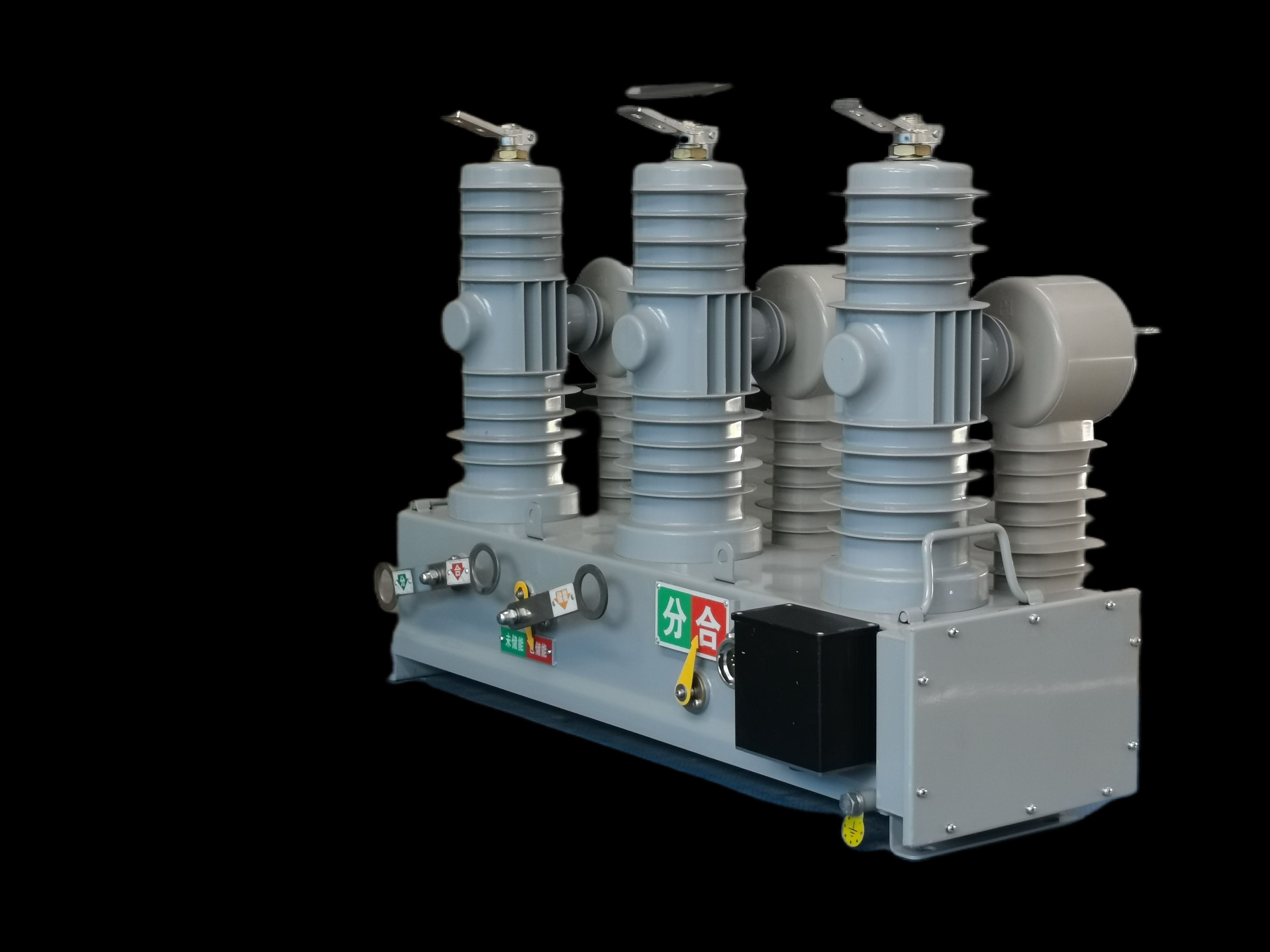
When a recloser leaves the factory floor, it faces two of the most unforgiving environments known to marine logistics: salt spray that eats through standard coatings, and rough seas that turn every container into a battering ram. The packaging strategy starts with a vapor-phase corrosion inhibitor film that clings to the recloser's frame, releasing molecules that neutralize chloride ions before they reach the metal. Over that goes a custom-molded polyethylene shell, designed not just for impact absorption but to lock the unit in place so internal components don't shift under repeated wave-induced vibration.
Rough seas demand more than a sturdy crate. Each recloser ships inside a steel-reinforced wooden crate with an internal cradle that isolates the unit from the container floor by at least six inches. That gap allows drainage if seawater breaches the outer barrier, while the crate's pressure-release valves prevent vacuum buildup during rapid temperature swings at sea. Straps are replaced with threaded rods and lock nuts, because we've seen too many banding clips shear off during a twelve-degree roll. The crate's exterior gets a sacrificial zinc-rich primer under the marine-grade paint—if a forklift grazes it on the dock, the zinc corrodes first, buying time before the wood or steel inside is compromised.
Finally, every shipment includes a humidity indicator card and a reusable desiccant breather installed in the crate wall. Before the recloser is sealed, a nitrogen purge displaces oxygen-rich air, cutting the oxidation rate inside by over eighty percent. This isn't about meeting a spec sheet; it's about ensuring that when the crate is opened at a coastal substation after three weeks at sea, the recloser powers up on the first try—not after a technician spends two days cleaning salt residue off the bushings.
Simplifying Export Documentation Without Cutting Corners
Export paperwork often feels like a maze of forms, declarations, and ever-shifting regulations. The temptation is to rush through it, skipping details to save time, but that's exactly where costly errors creep in. Instead, start by building a master checklist tailored to your product and destination markets. Cross-reference each required document against current customs mandates, and keep digital copies with clear naming conventions. This way, you're not cutting corners—you're cutting confusion.
One underused trick is to create templates for recurring shipments. Pre-fill commodity codes, incoterms, and consignee details where allowed, then leave only the variable fields blank. But be careful: templates can become a trap if you don't review them against the latest trade agreements or sanctions lists. A five-minute verification before each submission catches discrepancies that could otherwise trigger holds or fines. That's the difference between a shortcut and a smart system.
Finally, involve your freight forwarder or customs broker early. They see documentation errors across dozens of clients, so their feedback can reveal weak spots in your process before they become expensive lessons. Document their advice in a shared log, and schedule a quarterly review of your export documents against real shipment outcomes. This isn't about adding bureaucracy—it's about building a routine that respects the rules while trimming wasted effort. Compliance and speed can coexist when your process is lean, not lax.
Building Spare Parts Kits That Keep Linemen Working
A kit that actually keeps a crew on the pole starts with the parts that fail most often in your territory, not a generic off-the-shelf list. Talk to the linemen who have had to climb down because a hot line clamp cracked or a dead-end shoe stripped. Pack multiples of those small items—split bolts, H-tap connectors, fuse links, preformed ties—while trimming bulkier stock down to one or two pieces. The moment a job stops because someone is hunting for a 3/8-inch bolt, the kit has already paid for itself in saved windshield time.
Layout matters as much as the inventory. Use shallow trays or foam cutouts so a lineman can glance at an open lid and see whether a compartment is low, instead of digging through loose hardware. Mark reorder levels on the foam, and keep the case light enough that one person can carry it up a ladder without wrestling it. If a spare part spends every storm in the truck and never gets used, swap it for something that actually broke during the last two seasons.
Finally, treat the kit as a living tool, not a one-time purchase. After each major job or storm, have the crew note what they reached for, what was missing, and what sat untouched. Those notes drive the next revision. A well-maintained kit means fewer trips down the pole, fewer overnight parts runs, and a lot less time explaining to a customer why the lights are still off.
Remote Commissioning Support for Overseas Utilities
Field teams at distant power plants or water treatment facilities often face commissioning delays when specialized engineers cannot travel. Our remote commissioning support closes that gap through secure live video links, shared control interfaces, and real-time data overlays. Instead of waiting weeks for an on-site visit, local technicians get step-by-step guidance for relay settings, governor tuning, or protection scheme verification across different grid codes.
The approach adapts to each utility's existing infrastructure. Some sites use dedicated VPN tunnels with low-latency telemetry; others rely on ruggedized tablets that stream high-definition video from inside switchgear rooms. We also work around local shift patterns and safety rules, so a commissioning window in Jakarta or Lagos doesn't force engineers to operate at 3 a.m. without context.
After the initial energization, remote support continues through performance checks and handover documentation. Fault recordings, event logs, and test reports are reviewed jointly with utility engineers, and any required parameter changes are applied under controlled change management. This reduces repeat site visits and builds local capability, since the utility's own staff handle the physical tasks while our specialists watch, confirm, and sign off each step.
Designing Recloser Settings for Unstable Feeder Conditions
Unstable feeder conditions rarely announce themselves with a single fault signature. Voltage sags, intermittent overcurrents, and rapid load swings can make a recloser misread the difference between a transient disturbance and a persistent fault. Instead of relying on fixed time-current curves, the settings need to be tuned around the feeder's actual instability patterns. That often means extending the first reclose delay to ride through momentary voltage collapses, while tightening the ground fault pickup to catch arcing faults that tend to reappear after a trip. The goal is to let the protection scheme stabilize itself before deciding whether to lock out.
A practical approach is to start with sequence-of-events data from previous misoperations. Look for the gap between what the relay saw and what the field crew found. If a section of line is prone to tree contact during wind, the phase overcurrent pickup might need to be lowered just enough to detect a high-impedance fault without sacrificing coordination with downstream fuses. At the same time, the reset time should be extended so that a series of breaker operations doesn't leave the recloser stranded in a countdown state. For feeders with high distributed generation penetration, the settings should also account for reverse fault current, which can confuse directional elements and cause unnecessary lockouts.
Testing the settings against unstable conditions means running through scenarios that don't appear in standard coordination studies. Simulate a three-phase fault that evolves into a single-line-to-ground fault, a cold load pickup after a long outage, and a nearby lightning strike that induces momentary overvoltage. If the recloser can ride through those without dropping the feeder, the settings are moving in the right direction. The final check is a field verification during a scheduled outage, where the actual pickup and timing are measured with a secondary injection test set. This kind of deliberate tuning turns a generic overcurrent device into a protection asset that adapts to the feeder's real behavior.
FAQ
A dependable exporter does more than ship hardware. They verify that each recloser meets the destination grid's voltage and fault-interruption requirements, provide complete documentation for local utility acceptance, and offer field support during commissioning. They also maintain traceability on every unit so that a utility can confirm the exact test results before the device goes live.
The most important checks are dielectric withstand tests, timing verification for trip and reclose operations, and communication protocol compatibility with the local SCADA system. Exporters should also confirm that the control cabinet wiring matches the utility's drawings and that all labels and manuals are in English plus the destination language if required.
Customization should be limited to configurable parameters like protection curves, voltage ratings, and plug-and-play connectors. Core interrupting mechanisms shouldn't be altered unless the original manufacturer certifies the change. A strong exporter runs full type tests on any customized configuration and shares those results before shipping.
Utilities usually require factory acceptance test reports, bill of materials, wiring schematics, commissioning checklists, and a certificate of origin. For many regions, an accredited third-party test certificate for IEC or ANSI standards is mandatory. Missing any of these can delay customs or grid connection approval.
They can offer a burn-in period at the factory, simulate actual fault sequences on each unit, and insist on vibration-resistant packaging for transport. After delivery, they should provide remote diagnostics support and keep a regional stock of critical spare parts like bushings and control power supplies.
Reclosers must coordinate with existing protection settings, fault levels, and communication protocols. An exporter who ignores local grid codes might ship a unit that trips too slowly or refuses to communicate with the utility's master station. That leads to nuisance outages and regulatory penalties, so verifying grid code compliance before signing a contract protects both sides.
Look for scheduled remote health checks, a clear escalation path for firmware issues, and a commitment to supply spare parts for at least ten years. Serious exporters also maintain a database of every unit's configuration and test history so that utilities can get exact replacement components without guesswork.
They use sealed, desiccant-lined crates and tilt indicators on each shipment. Reclosers are secured upright with custom foam supports to prevent oil or gas leakage from the interrupters. For long storage, exporters include guidance on ambient temperature limits and periodic insulation resistance checks before energization.
Conclusion
Reliable power distribution across borders depends on how a recloser exporter handles the details that never show up in a brochure. Factory acceptance testing that mirrors real grid faults means staging phase to phase and ground faults with the same impedance and timing as the field, not just running a dry contact check. Packaging for salt spray and rough seas goes beyond foam and cardboard, reclosers need sealed desiccant barriers, corrosion resistant wraps, and shock absorbing cradles that survive a container lashed to a deck for weeks. Designing recloser settings for unstable feeder conditions calls for export specific parameter sets because the feeder profile a utility in one country assumes may be nothing like the sagging overloaded lines another grid actually runs.
Equally important are the paperwork and people behind the shipment. Simplifying export documentation without cutting corners means building a per country matrix of certificates, test reports, and incoterms that clears customs without hiding a missing type test. Spare parts kits should be assembled from actual failure data, not generic lists, so linemen never open a box and find a useless gasket while a control cable is breaking. Remote commissioning support for overseas utilities turns a one time sale into a workable installation, using live video, local time zone coverage, and pre staged configuration files lets a crew in another hemisphere bring a recloser online without waiting for an engineer to fly in. Together these practices keep distribution networks from becoming someone else's emergency.
Contact Us
Contact Person: Julion
Email: [email protected]
Tel/WhatsApp: 8617351370631
Website: https://www.deyunelectric.com