
Radial Artery Compression Device Ranking List to Help You Choose with Confidence
2026-11-25
Choosing a radial artery compression device often feels like guessing, not deciding. This ranking cuts through the noise with practical comparisons, including reliable options from INT Medical, so you can pick with confidence instead of crossing your fingers.
When Pressure Has to Be Steady, Not Squeezing
Steady pressure is less about force and more about patience. In processes where two surfaces meet, any sudden squeeze can trap air, shift layers, or leave uneven thickness. The goal is to let pressure arrive gradually, hold at a set point, and release without a snap. That kind of control keeps the result repeatable long before anyone checks the final dimensions.
The difference often shows up in the details. A steady ramp gives adhesives time to wet the surface, lets gaskets settle into a groove, and prevents thin films from wrinkling. Squeezing harder rarely fixes a misalignment; it usually magnifies it. When the pressure curve is smooth, even fragile materials can survive at higher loads because the load never spikes.
In practice, that means watching the rate of change as closely as the peak value. A controller that reacts too late or too aggressively turns a controlled press into a slow hammer. Better to let feedback work in small corrections, keeping the force predictable and the part unbothered.
A Wrist Is Not a Uniform Cylinder
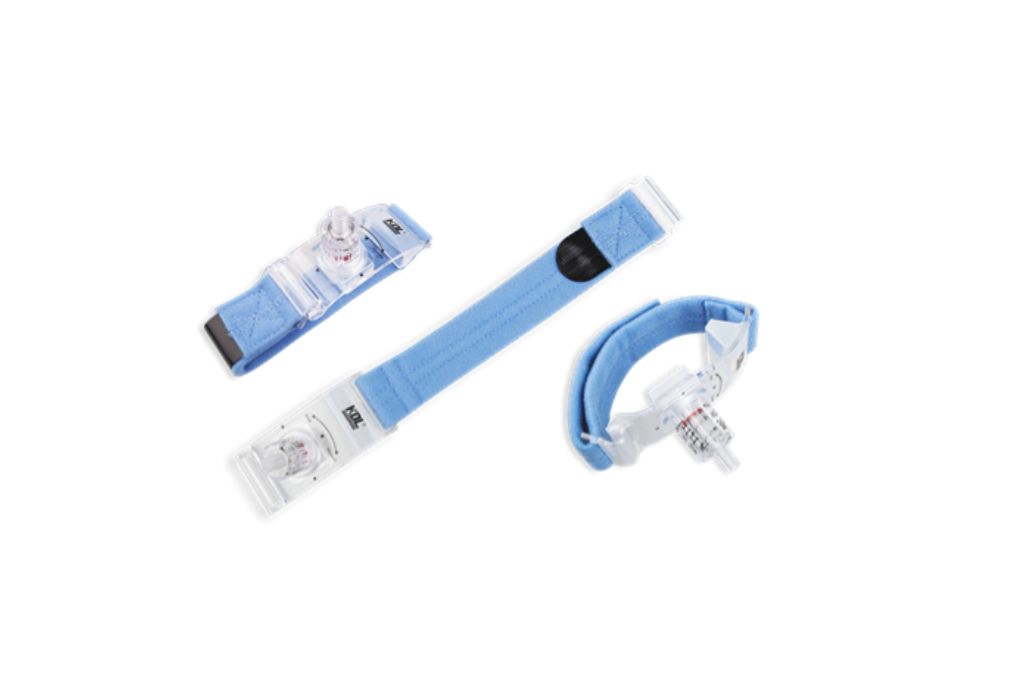
Most sketches simplify the wrist into a smooth cylinder, but the real structure is closer to a shallow landscape of bone and soft tissue. The two styloid processes sit at different heights on the thumb and little-finger sides, so the cross-section is never a true circle, and the width tends to run deeper than the height.
That irregular profile changes with almost every movement. Turn the palm up, down, or inward and the radius and ulna shift under the skin, pulling tendons tight or letting them relax. A band that fits evenly in one position can press sharply over the bony points in another, which is why a simple diameter measurement often misses the actual comfort problem.
Designs work better when they stop treating the wrist as a fixed shape. Curves that accommodate the longer bone profile, straps with a slight bias, or materials that flex over the styloid bumps tend to distribute pressure across the changing surface instead of fighting it.
Seeing the Puncture Site Without Unwrapping Everything
A clear panel over the catheter entry point means you're not forced to lift the whole dressing just to check the skin. You can see redness, fluid, or movement at the insertion site while the rest of the adhesive stays sealed. That one design choice keeps routine monitoring simple.
During a shift, that adds up quickly. A nurse can look through the window, note that the site is dry and intact, and move on without reaching for new tape or a fresh dressing. If the area does look irritated, then it makes sense to uncover it fully. Otherwise, the sterile field stays closed.
For longer dwell times, the benefit becomes even more obvious. Less peeling means less skin stripping and fewer chances to introduce bacteria. The puncture site remains visible at a glance, but the protective layer around it stays undisturbed. That is the kind of balance that keeps a line stable from placement to removal.
Why Some Devices Slip and Others Stay Put
It usually comes down to the microscopic relationship between two surfaces. A phone with a smooth metal or polished glass back behaves like a tiny ice skate on a hard desk, while a device wrapped in textured silicone or soft-touch rubber generates enough interlocking friction to resist minor bumps and angles. Even a barely visible pattern can change how firmly something holds its position.
Weight distribution is another quiet factor. A top-heavy tablet or a phone with the camera module near one corner tends to pivot or slide once its center of gravity moves past the edge of its contact patch. Devices that stay put often spread their mass low and wide, or they include small rubber feet that compress slightly under load, increasing the real contact area without making the product bulky.
Then there is the surface you set the device on. Glass desks, lacquered wood, and polished stone can turn a stable device into a slow drifter, especially if a trace of dust or skin oil is present. The same gadget that sits securely on a fabric sofa cushion may wander on a smooth conference table, which is why small material choices matter more than they first appear.
Taking It Off Should Not Be the Worst Part
Most hairpieces are fine until the end of the day. The mirrors, the adhesive residue, the slow peel that pulls at fragile skin—it turns a simple routine into something quietly exhausting. That moment should feel like relief, not dread. When the base lifts away without resistance and the scalp doesn't sting, taking it off becomes just another step before bed rather than the hardest one.
A gentle removal process matters more than the attachment itself. If the bond holds securely through humidity and movement but releases cleanly with warm water or a light remover, you don't have to brace yourself. The goal is easy: nothing digs in, nothing tears, and cleanup takes a couple of minutes instead of twenty. Comfort at the end matters as much as confidence during the day.
It's also about seeing yourself afterward. The room doesn't have to go quiet. You can keep the lights on, glance in the mirror, and still recognize the person standing there. When removal stops being the worst part, the whole experience shifts. You're not dreading a reveal; you're simply ending the day with your skin calm and your sense of self intact.
The Comfort Test Nobody Talks About Until Hour Six
The first twenty minutes on any new chair or mattress feel like a promise. But the real verdict doesn't arrive until your body stops compensating and starts settling into its honest weight. That usually happens around hour six, when the foam has warmed, the support has softened, and your spine finally asks a harder question.
What makes that sixth hour different is how little it cares about showroom impressions. A seat can feel plush at a glance, yet leave your lower back reaching for a cushion that isn't there once fatigue sets in. The seams you ignored earlier start pressing into the back of your leg, and the armrest that felt fine during a short break becomes a reason to keep shifting.
Most people only notice this threshold after they have already bought the thing and lived with it. The products that hold up are rarely the ones with the thickest padding or the softest fabric. They are the ones that let you forget you are sitting on them at all, even when the clock passes six and your body has stopped being polite.
FAQ
The biggest differentiator usually comes down to how evenly the balloon or pad distributes pressure around the puncture site. Models with a rigid backplate and a wider contact area tend to reduce hematoma formation without needing constant reinflation. You also notice the difference in the valve design after a few hundred cases; a smoother micro-adjustment makes weaning much less frustrating.
They often are, but the advantage is not just seeing the puncture site. A clear window lets the nurse catch a slow bleed before it becomes a hard swelling under the wristband. The trade-off is that some clear plastics feel flimsier, so material quality matters as much as visibility.
Look for straps that hold without bunching on a small wrist and do not cut into a larger arm. The best designs use a broad, slightly elastic band with multiple anchor points. If you treat a mixed population, an adjustable frame that keeps the pressure dome centered is more useful than a one-size claim.
No. Excessive pressure is a common cause of radial artery occlusion. A device that lets you titrate down in small increments while still maintaining hemostasis is more valuable than one that simply clamps hard. The goal is the least pressure needed to stop bleeding, not maximum tightness.
Comfort affects how still a patient stays during recovery. A rigid plate with no padding can cause more movement and fiddling than a device with a soft underside. That said, too much cushioning can hide bleeding, so the padding should be positioned without covering the observation area.
Usually yes, but complex PCI with larger sheaths or heavier anticoagulation may require a device with a more dependable pressure distribution and finer adjustment. If your volume includes many prolonged interventions, choose something that tolerates longer wear and repeated small adjustments without shifting.
They serve different situations. Disposables reduce reprocessing burden and are convenient for high-turnover labs. Reusable sets may feel more substantial, but they only make sense if your cleaning workflow is reliable. The ranking should reflect total cost per use, not just the upfront price.
It should weigh real-world factors like ease of one-handed application, clarity of the puncture window, adjustability during weaning, and how often the strap slips. Published specifications can be misleading, so feedback from staff who manage the recovery area is often more revealing than the marketing sheet.
Conclusion
Most people assume radial artery compression is only about stopping bleeding, but the real difference between a forgettable device and a miserable one comes down to how pressure is delivered. Steady compression that holds the puncture closed without crushing everything underneath matters because a wrist is not a smooth, uniform cylinder. Bone, tendon, and soft tissue sit at different depths, so rigid bands tend to press hardest where they should not, leaving bruises and nerve irritation. The better options shape themselves around the wrist, letting pressure sit where it belongs. Visibility also changes care: if the puncture site is hidden under layers of plastic and fabric, nurses have to unwrap everything just to check for oozing or swelling. A clear window or an open design makes those checks quick and lowers the chance of a small bleed turning into a bigger problem. Slipping is another silent failure. Devices that shift when the patient moves force staff to tighten them further, which only adds pain. Good straps and low-profile contours keep the pad anchored without relying on excessive tension.
Removal should not feel like a punishment. Some devices cling to skin or release pressure all at once, which can disturb the clot and turn a calm recovery into a slow rebleed. A controlled, gradual deflation is easier on the skin and the artery. Then there is the test nobody talks about until hour six. A band that feels acceptable at twenty minutes may become unbearable once the patient has rested, moved, eaten, or tried to sleep. Hard edges, trapped heat, and constant uneven pressure are the reasons people ask for early removal. A practical ranking therefore weighs all of these details together: steady but not squeezing pressure, fit that follows wrist anatomy, clear site access, resistance to slipping, gentle removal, and long-wear comfort that survives well past the first hour. That is how you choose with confidence instead of guessing from a package photo.
Contact Us
Contact Person: Jeffrey
Email: [email protected]
Tel/WhatsApp: 86-0633-2230056
Website: https://www.sd-intmedical.com