
Professional Purification Panel Production Line: Streamlining Cleanroom Manufacturing
2026-08-04
In cleanroom construction, the quality of purification panels can make or break a project. Yet, traditional panel production often struggles with inconsistency and slow output. That's where innovation steps in—YI ZHOU TECHNOLOGY has engineered a professional purification panel production line that redefines streamlined manufacturing. Curious how automation and precision engineering are transforming cleanroom efficiency? Let's dive into the line that's setting a new industry benchmark.
Precision Engineering Behind Every Panel
Every panel begins its life in a space where tolerances are measured in microns, not millimeters. Our fabrication process leans on a blend of robotic laser cutting and hand-finished edge profiling, ensuring that each piece slots into an assembly with a satisfying, almost magnetic certainty. The goal isn’t just consistency—it’s creating panels so precisely tuned that even the faintest unevenness would feel out of place.
What truly sets these panels apart is how we treat their boundaries. Instead of a simple cut and finish, we employ a staggered seam technique that distributes stress across the entire surface, virtually eliminating warping over time. This isn't a factory-floor afterthought; it’s a design philosophy that starts in CAD and continues through to the final tactile inspection, where a trained eye and a gloved finger scan for deviations invisible to most instruments.
The result is a panel that behaves less like a static piece of material and more like a dynamic component of its environment. Whether it’s resisting thermal drift in a high-velocity airflow or maintaining a flush surface under varying humidity, the engineering behind it remains quietly obsessive—right down to the micro-chamfers that catch light just enough to designate its edges without shouting for attention.
How Automated Workflows Boost Output
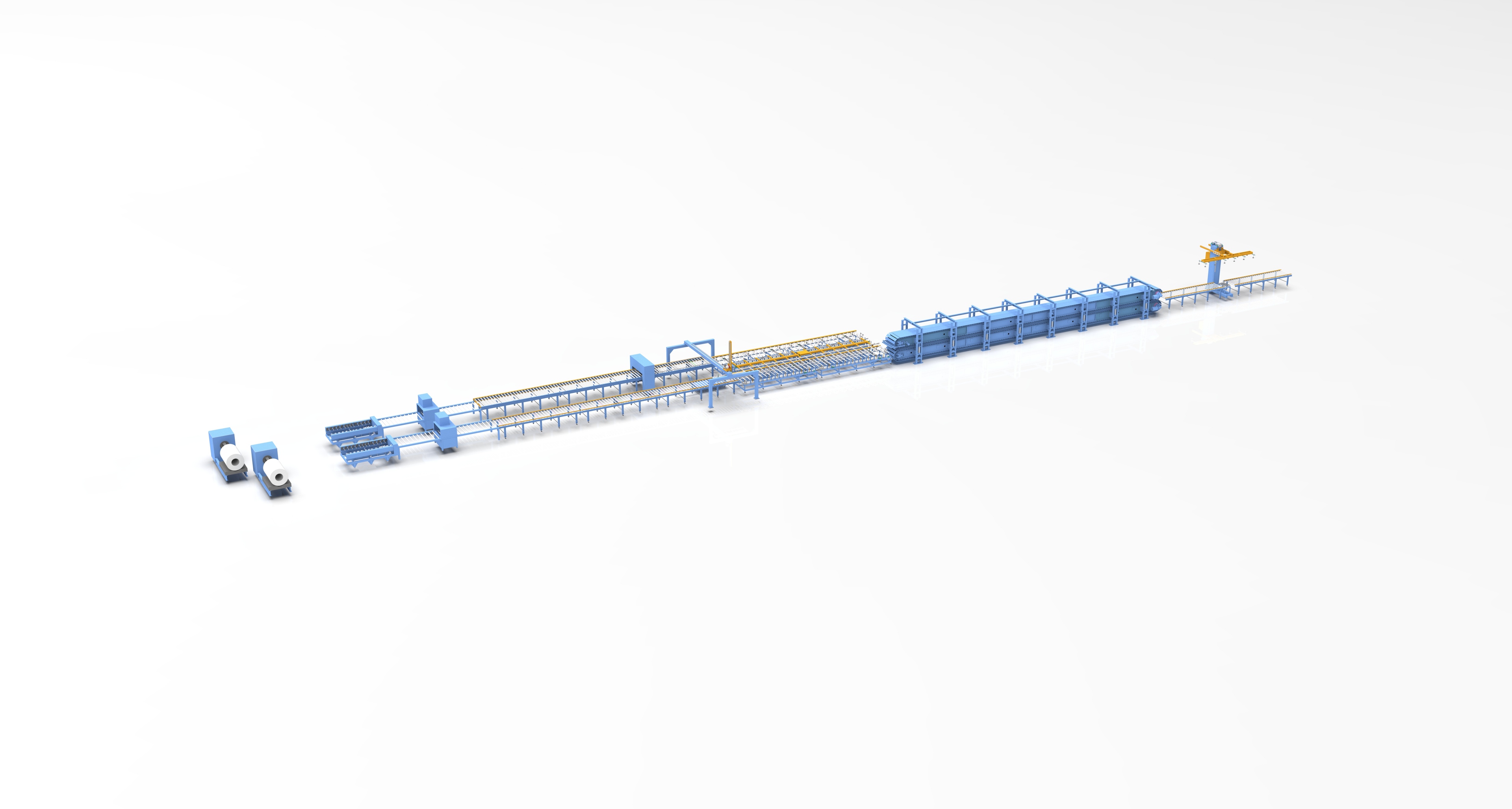
Many teams still waste hours on manual handoffs and repetitive data entry. Automating these steps turns a sluggish process into a continuous flow. Instead of waiting for approvals or copy-pasting between tools, tasks move forward the moment they’re ready. That shift alone often raises daily output by removing the hidden delays that eat into productive time.
Beyond speed, automated workflows cut the cognitive load of keeping track. When systems handle routing and reminders, people focus on higher-skill work rather than inbox triage. A well-tuned sequence also catches mistakes early—like missing fields or mismatched formats—before they cause rework. The result is not just more volume, but better quality without extra effort.
Material Selection for Ultra-Clean Environments
Every surface inside an ultra-clean facility becomes a potential source of contamination, so material choices must go far beyond typical durability concerns. Stainless steel, particularly 316L, remains the standard for process equipment and furnishings due to its smooth finish and resistance to chemical attack. Yet, it is the treatment of these surfaces—electropolishing to reduce microscopic crevices—that truly limits particle adhesion and biofilm formation. Polymers, when permitted, are selected for minimal outgassing and low leachables; fluoropolymers like PTFE and PEEK often replace conventional plastics in critical zones. Even the selection of sealing materials reflects a deliberate move away from silicone-based elastomers toward perfluoroelastomers that won’t shed particles or react with aggressive cleaning agents.
Less visible but equally critical is the elimination of organic or fibrous materials. Painted surfaces, exposed wood, and standard cardboard packaging have no place in ISO Class 5 and cleaner environments, as they shed continuously. Instead, walls and ceilings are clad in non-shedding, non-porous panels—often coated steel or high-pressure laminates—that are compatible with vaporized hydrogen peroxide and other sterilants. Flooring moves beyond simple epoxy coatings to seamless, static-dissipative systems that can withstand heavy traffic without cracking. Even the adhesives and caulks used to bridge joints are chosen for low volatile organic compound content and the ability to maintain a hermetic seal after repeated thermal cycling and chemical exposure.
The decision-making framework for materials demands close collaboration between facilities engineers, contamination control specialists, and process owners. A material that passes a simple wipe-down test might still fail under prolonged exposure to the cleaning chemistry used in a particular manufacturing step. Accelerated aging and extractables studies, combined with real-world surface particle counts, create a data-driven selection process that prevents costly retrofits. This rigorous approach ensures that every component—from the fasteners behind a wall panel to the gasket inside a valve—contributes to the sterile envelope rather than undermining it.
Tailored Solutions for Diverse Industries
Every industry operates with its own rhythm, rules, and pain points—what works for a healthcare provider may fall flat in a manufacturing plant. That's why we don't believe in one-size-fits-all approaches. Instead, we immerse ourselves in the nuances of your sector, from compliance hurdles to supply chain quirks, to design solutions that feel native to your environment. Whether you're navigating strict regulatory frameworks or aiming to streamline field operations, our focus is on building tools that adapt to the way your teams already work, not the other way around.
For instance, in logistics, where real-time visibility is non-negotiable, we've architected systems that reduce tracking blind spots and automate dispatch decisions based on live traffic patterns. In professional services, our emphasis shifts to seamless client collaboration and the secure handling of sensitive documentation. These aren't generic modules with a fresh coat of paint; they're purpose-built configurations born from deep conversations with frontline staff, department leads, and compliance officers. The result is technology that actually shortens the learning curve and eliminates friction, rather than introducing new bottlenecks.
Beyond just customizing features, we also tune the way our solutions are rolled out, supported, and scaled. A retail chain expanding into new regions needs a different implementation cadence than a biotech firm validating a lab management system. We align our timelines, training models, and ongoing support structures with your operational realities. This holistic approach means that as your industry evolves—and it will—the solutions we provide can flex without requiring a comprehensive overhaul. It's not about offering a set of options; it's about crafting an ecosystem that grows with you, shaped by the unique challenges and opportunities of your field.
Quality Checks That Eliminate Contamination Risks
Every production stage has potential contamination entry points that most standard audits miss entirely. We focus on raw material screening, equipment sanitation monitoring, and environmental particulate counts, all calibrated against actual failure scenarios rather than generic checklists. This means our sampling methods are tailored to your specific product vulnerabilities, whether that involves microbial swabbing on high-contact surfaces or chemical residue testing immediately after cleaning cycles.
Our team runs frequent, unannounced inspections to catch lapses in real-time. Instead of relying solely on periodic lab reports, we deploy rapid detection kits and visual verification protocols that let supervisors act on the spot when something doesn, t add up. The result is a living quality system where each shift learns from the last, building layers of protection that go far beyond paperwork compliance.
Tracking trending data plays a huge role here. By mapping contamination events back to their root causes, we identify recurring weak points and fortify them permanently. This proactive loop has eliminated entire categories of risk for our partners, transforming quality checks from defensive measures into a strategic advantage that keeps your product safer than the industry norm.
Installation and Lifecycle Support Simplified
From the moment your equipment arrives, our goal is to make every step effortless. We don’t believe in complicated manuals or drawn-out setup processes. Instead, we focus on getting you up and running with minimal downtime—whether that means on-site guidance, remote assistance, or a blend of both. It’s installation that doesn’t feel like a chore, because we’ve already handled the hard parts behind the scenes.
But support shouldn’t stop once the power is on. That’s why we stay close after the initial install, keeping an eye on performance and making adjustments before small issues become big problems. Lifecycle support means regular health checks, adaptive updates, and a team that understands your specific operational rhythm. You won’t have to chase us for help; we’re already one step ahead, aligning with your maintenance schedules and growth plans.
Think of it as having a partner who treats your uptime as seriously as you do. Whether it’s a minor tweak or a major transition years later, our support adapts as your needs evolve. No runarounds, no generic fixes—just straightforward expertise that keeps your operation stable, today and tomorrow.
FAQ
It's an integrated manufacturing system designed to produce cleanroom wall and ceiling panels with high precision and minimal contamination. The line handles everything from material cutting and framing to filling and packaging, ensuring each panel meets strict cleanroom standards.
By automating repetitive tasks, reducing manual handling, and maintaining a controlled environment throughout the process. This cuts down on lead times, lowers labor costs, and improves consistency, allowing manufacturers to deliver high-quality panels faster.
Common materials include galvanized steel, stainless steel, aluminum, and composite boards for frames, along with rock wool, honeycomb, or PU foam for core filling. The line can adapt to different material specifications based on project requirements.
Absolutely. It's equipped with flexible tooling and adjustable stations that allow for quick changeovers between different dimensions and designs. Whether you need standard sizes or bespoke shapes, the system can accommodate them with minimal downtime.
Advanced inspection systems monitor every stage—laser alignment for dimensions, pressure tests for seal integrity, and surface finish checks. Rejects are automatically removed, and data is logged for traceability, so you get consistently flawless panels.
The panels themselves are produced in a clean environment, with anti-static treatments and smooth, crevice-free surfaces that prevent particle accumulation. This directly supports the stringent air cleanliness and hygiene standards required in pharmaceutical, semiconductor, or biotech settings.
Conclusion
Behind every cleanroom wall and ceiling is a production line engineered to perfection, where precision drives every cut, weld, and finish. The manufacturing of professional purification panels starts with a deep understanding of material behavior in ultra-clean settings. Non-shedding substrates, antimicrobial coatings, and corrosion-resistant cores are selected not just for compliance, but for long-term resilience under strict ISO conditions. Automated workflows then take over, synchronizing CNC machining, lamination, and edge-sealing into one seamless rhythm. This isn't just about speed—it's about repeatable accuracy that eliminates human error and ensures each panel meets exact thermal and acoustic specs.
What sets a truly streamlined line apart is its ability to adapt without compromising integrity. Whether for pharma, semiconductor, or food processing, tailored solutions are built into the process from day one, with modular tooling that accommodates varying dimensions, cutouts, and reinforcement needs. Quality checks are embedded at every station—laser flatness scanning, particle count testing, and full traceability logs—so that contamination risks are not merely reduced but eliminated before panels ever leave the factory. And the support doesn't stop at delivery: intelligent labeling and pre-assembled components simplify on-site installation, while lifecycle services like replacement gaskets and performance audits keep cleanrooms running at peak purity for years.
Contact Us
Contact Person: Sophia Jiang
Email: [email protected]
Tel/WhatsApp: +86 17367381818
Website: https://yzwelding.com/