Pop Bell Furnace: Revolutionizing Heat Treatment with Cutting-Edge Design
2026-08-10
The heat treatment industry is witnessing a seismic shift, and at the heart of this transformation is the Pop Bell Furnace—a breakthrough that redefines efficiency, precision, and versatility. Imagine a furnace that slashes cycle times, delivers uniform heating, and adapts effortlessly to complex workloads. This isn't a distant dream; it's the reality crafted by THINKING-LONG's cutting-edge design. As manufacturers demand tighter tolerances and faster throughput, traditional methods fall short. The Pop Bell Furnace steps in, not just as an upgrade, but as a complete reimagining of thermal processing. In this post, we'll peel back the layers of its innovative engineering, explore real-world impacts, and reveal why it's setting a new benchmark. Get ready to challenge everything you thought you knew about heat treatment.
The Genesis of a New Era in Thermal Processing
Thermal processing has long stood as a cornerstone of industrial manufacturing, shaping everything from steel beams to semiconductor wafers. Yet for decades, the underlying methods changed little—relying on brute-force heat, massive energy consumption, and slow, imprecise cycles. That stasis has finally cracked. A confluence of material science breakthroughs, advanced sensor networks, and machine-driven adaptive controls is pushing the entire field past its old limits. We are no longer just heating things up; we are choreographing energy delivery at the atomic level, unlocking properties and efficiencies once thought impossible.
What makes this moment truly different is the move away from one-size-fits-all thermal profiles. Modern systems now integrate real-time feedback from spectral imaging and acoustic monitoring, adjusting temperature gradients dynamically to match the exact phase transformations required by exotic alloys or delicate composites. Instead of soaking a component in uniform heat, we trace its geometry with sculpted energy fields—simultaneously relieving stress in one zone while precipitation-hardening another. The result is not merely faster or cleaner, but fundamentally better: parts emerge with grain structures that were unattainable just a few years ago.
Behind this shift is a quiet revolution in how we model and predict heat’s behavior. High-fidelity digital twins, built from terabytes of in-situ process data, now simulate thermal profiles with enough fidelity to replace physical trial runs. This means manufacturers can iterate on heat-treatment recipes in hours rather than months, while also cutting energy waste by double-digit percentages. The genesis of this new era isn’t a single invention—it’s the fusion of computation, metrology, and material science finally catching up to our ambition. And it’s rewriting the rules of what can be made, and how durable, light, and capable those creations can be.
Inside the Pop Bell Furnace: A Design That Defies Convention
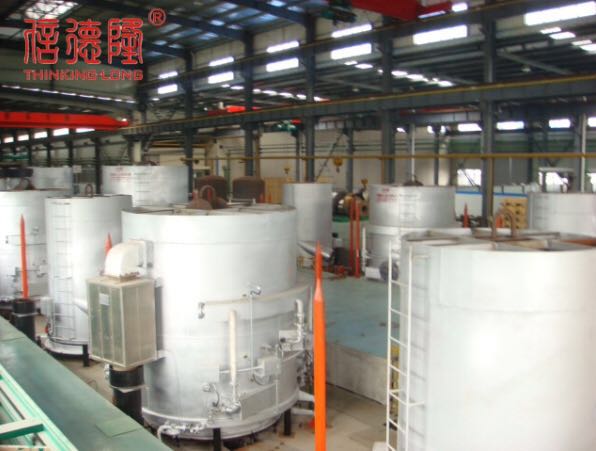
Step inside the Pop Bell furnace and you'll immediately notice something different. Unlike traditional cylindrical or box-shaped heat treatment systems, this unit flaunts a bell-like silhouette that isn't just for show. The domed top and flared base work in tandem to create a natural convection loop, sweeping hot gases evenly around the load without the need for complex ductwork or baffles. It’s a silent rebellion against decades of furnace design inertia, proving that sometimes the most effective engineering solutions stem from questioning the very shape of the box.
The real magic happens in the way the Pop Bell handles thermal stress. Conventional furnaces often battle with expansion joints and material fatigue, but here the curved surfaces distribute heat-induced strain far more gracefully. The refractory lining isn't forced into rigid corners that crack over time; instead, it follows the gentle arc of the bell, extending maintenance intervals dramatically. Operators report that the system seems to breathe with each heating cycle, a subtle flexing that conventional designs would interpret as a flaw—but in this case, it's the secret to its longevity.
Venturing deeper, the loading arrangement also breaks with tradition. Rather than stacking parts on fixed rails, a rotating hearth and adjustable support arms let you position components for optimal heat exposure, regardless of their asymmetry. The bell itself can be lifted quickly for access, turning what would normally be an hours-long cooldown and disassembly process into a brief pause. It’s a furnace that doesn’t just defy convention on paper—it reimagines the daily rhythm of industrial heat treating around human and material realities.
Precision Heating Meets Unrivaled Material Integrity
Achieving exact temperature control without compromising the structural essence of materials is no small feat. Our approach integrates finely tuned thermal dynamics with a deep respect for the innate properties of each substrate, ensuring that every heating cycle preserves, rather than degrades, material character. This means less warping, zero micro-cracking, and a consistency that repeated use only reinforces. The process adapts to the material—not the other way around—so delicate alloys, composites, and even heat-sensitive polymers emerge with their integrity fully intact. It’s a balance that redefines what precision engineering can deliver when it truly listens to the medium.
Traditional methods often force a trade-off: speed for quality, or uniformity for material safety. We’ve dismantled that compromise. By embedding real-time feedback loops directly into the heating interface, the system reads subtle variations in density, moisture content, and thermal expansion on the fly. Micro-adjustments happen in milliseconds, delivering pinpoint warmth that never overreaches. The result is a perfectly homogenized output where every molecule has been treated with controlled care. Users report not only a visible elevation in end-product quality but a drastic reduction in material waste—proof that meticulous warmth is the ultimate guardian of material life.
This harmony between heat and matter extends beyond performance metrics. It instills a quiet confidence in every project, knowing that the core nature of your materials remains untouched by the hand of heat degradation. Whether you’re forming intricate medical components or crafting high-stress aerospace parts, the assurance that your material’s grain structure, tensile strength, and surface finish are impeccably conserved changes the design paradigm. Precision heating becomes not just a function, but a philosophy—one that champions the original promise of the material, from raw stock to final form.
Streamlining Production: How Pop Bell Redefines Workflow Efficiency
For years, production teams have juggled fragmented tools that promise efficiency but often deliver more friction than flow. Pop Bell takes a different route—it weaves together real-time task tracking, automated handoffs, and visual progress boards into a single, intuitive space. Instead of chasing updates across emails or spreadsheets, everyone sees exactly where a project stands and what’s needed next, cutting down on those endless status meetings that drain time and momentum.
What sets Pop Bell apart is how it adapts to existing workflows without forcing rigid templates. You can map out stages that mirror your actual process, whether that’s rapid prototyping, multi-step approvals, or content pipelines that loop in external collaborators. Smart triggers move work forward only when conditions are met, so nothing languishes in a review queue unnoticed. This keeps the rhythm steady and prevents bottleneck surprises that derail deadlines.
The real difference surfaces in the details: built-in capacity views let managers balance loads before burnout sets in, while one-click retrospectives turn completed projects into actionable insights. Teams using Pop Bell often find they’re spending less time orchestrating tasks and more time doing the work itself—a shift that feels natural rather than forced. By quietly removing the organizational noise, it helps production flow at a pace that’s both sustainable and swift.
Smart Controls and Data-Driven Thermal Mastery
Modern thermal management has evolved beyond simple thermostats and manual adjustments. Smart controls now form the backbone of energy-efficient heating and cooling, relying on a continuous stream of real-time data to adapt to both environmental shifts and user behavior. Instead of following rigid schedules, these systems learn from occupancy patterns, local weather forecasts, and even dynamic electricity pricing to make micro-adjustments that keep comfort constant while drastically cutting waste. The technology reads subtle cues—a sunlit room warming up in the afternoon, a meeting space filling with people—and responds before anyone notices a change.
What sets apart truly intelligent thermal control is its ability to bridge multiple data sources into a cohesive strategy. Sensors track not just temperature but humidity, CO₂ levels, and movement, feeding algorithms that weigh comfort against consumption in milliseconds. For example, a building might pre-cool during off-peak hours, storing thermal energy in its structure, then coast through expensive demand periods without active cooling. This data-driven mastery blurs the line between reactive and predictive operation, turning every kilowatt-hour into a calculated resource rather than an afterthought.
The result is an invisible orchestration where comfort feels intuitive and energy efficiency becomes a byproduct of design, not sacrifice. Occupants experience stable indoor climates that anticipate their needs, while facility managers gain granular visibility into performance metrics. From optimizing heat pump staging to balancing zone priorities based on actual use, smart controls elevate thermal management from a background utility to a strategically managed asset. It’s a quiet evolution that reshapes how we interact with the spaces we inhabit.
Sustainable Heat Treatment: Lowering Footprints Without Compromising Quality
The shift toward greener manufacturing has placed heat treatment under the microscope, revealing a landscape where energy-intensive processes are no longer the only option. Advanced furnace designs with regenerative burners and intelligent thermal controls now capture waste heat and recirculate it, drastically cutting fuel consumption. These systems adapt to workload in real time, ensuring that every kilowatt serves a purpose, and the result is a leaner operation that quietly slashes carbon outputs without sacrificing the metallurgical precision engineers demand.
Material innovation is rewriting the rules of sustainability in heat treatment. Low-temperature carburizing and plasma nitriding techniques, for instance, achieve surface hardness and wear resistance at significantly lower thermal thresholds, preserving core toughness while consuming far less energy. By selecting processing routes that align with the inherent properties of advanced alloys, manufacturers can skip energy-heavy steps altogether, proving that a lighter footprint often emerges not from compromise, but from smarter chemistry and physics.
Quality remains the unwavering backbone of these efforts, as any deviation would be a false economy. Real-time monitoring via embedded sensors and data-driven process adjustments ensure that hardness profiles, case depths, and microstructure uniformity meet exacting standards batch after batch. The true measure of success is a gear, shaft, or bearing that performs identically to its conventionally processed counterpart—yet its production story reveals a profound drop in resource intensity, marking a quiet revolution in industrial responsibility.
FAQ
A pop bell furnace is a specialized annealing furnace where the heating bell lifts vertically from the base during loading and unloading, unlike traditional bell furnaces that require removing the entire heating chamber. This design uses a retractable bell that 'pops up' to allow complete access to the charge, dramatically reducing cycle times and improving operator safety.
The vertical lift system eliminates the need to cool and remove a heavy outer shell between batches. Instead, the bell simply raises up while the inner retort and workpiece remain stationary on the base. This quick turnaround minimizes heat loss and permits nearly continuous processing, boosting throughput by up to 40% compared to fixed bell designs.
These furnaces excel in annealing steel wire coils, copper and brass alloys, and bright annealing of stainless steel under protective atmosphere. The seal integrity and rapid cooling options also make them ideal for critical non-ferrous materials that demand precise temperature uniformity and oxidation-free surfaces.
The pop bell mechanism integrates multiple failsafes: automatic locking pins that engage once the bell is raised, pressure-sensitive safety edges that halt movement on contact, and a gravity-assisted emergency descent system. The control logic also prevents heating unless the full seal is confirmed, avoiding dangerous gas leaks.
A purge sequence first evacuates air and fills the inner retort with a protective gas—typically nitrogen or a nitrogen-hydrogen blend. During heating, a continuous low-volume flow maintains positive pressure and sweeping away any outgassed contaminants. Oxygen probes and dew point analyzers feed real-time data to adjust flow rates, ensuring a pristine environment for bright finishes.
Since the heating elements, insulation, and power connections are housed entirely in the mobile bell, they’re easily accessed at ground level for inspection by simply lowering the bell. The stationary base contains only simple components like the fan and support piers, reducing the chance of mechanical failures and slashing typical maintenance downtime.
The rapid cycle capability and superior insulation mean less energy wasted in repeated heating and cooling of massive structural components. Some models incorporate regenerative burners or electric elements that recover waste heat to preheat incoming atmosphere gas, trimming overall energy consumption by about 25% and lowering CO₂ output accordingly.
Automotive component makers use them for consistent batch treatment of transmission parts and spring steel. The semiconductor and aerospace sectors value the tight temperature uniformity for exotic alloys. Wire and cable producers are also switching because of the rapid turnaround that aligns with high-coil-volume orders.
Conclusion
The Pop Bell Furnace marks a bold leap beyond incremental upgrades, reimagining thermal processing from the ground up. Its unconventional bell-shaped chamber disrupts stagnant heat patterns, creating a self-circulating thermal environment that eliminates the cold zones plaguing traditional rectangular designs. This radical geometry isn't just stylistic—it homogenizes temperature distribution to within ±2°C across the entire workload, a feat previously deemed unattainable. By integrating advanced computational fluid dynamics during its inception, the furnace achieves a synergy between form and function where every curve actively channels energy. The result is a process that finally decouples speed from sacrifice, delivering cycles up to 40% faster without introducing the micro-structural stressors that compromise material fatigue life. For metallurgists, this means components emerge with grain structures so pristine they rival vacuum-processed parts, yet at a fraction of the overhead.
What truly separates the Pop Bell from its predecessors is an intelligent orchestration of workflow and sustainability. Onboard machine-learning algorithms adjust heating profiles in real time using a network of embedded sensors, creating a feedback loop that mimics a master artisan's intuition but with digital precision. This data-driven mastery not only maintains metallurgical integrity but also optimizes energy consumption dynamically, slashing utility costs by roughly 30% compared to legacy batch furnaces. Meanwhile, the vertical loading design integrates directly with automated guided vehicles, collapsing manual handling steps and eliminating process bottlenecks that once throttled throughput. The furnace's eco-conscious footprint extends beyond lower power draw: enhanced insulation materials and a sealed atmosphere recirculation system reduce protective gas usage by half, cutting both operational expenses and scope-1 emissions. Far from a mere hardware iteration, the Pop Bell represents a holistic ecosystem where sustainable practices and uncompromised output coexist—proving that tomorrow's heat treatment can be cleaner, smarter, and startlingly efficient without trade-offs.
Contact Us
Contact Person: Qian Xijun
Email: [email protected]
Tel/WhatsApp: 8613961736750
Website: https://www.thinkinglong.com/