
OEM Retrofit Glass Doors: A Practical Upgrade for Commercial Refrigeration Displays
2026-11-22
Swapping worn-out or fogged glass doors on a commercial display case usually feels like a costly replacement job. But OEM retrofit glass doors are changing that math—and ART is helping operators see the difference. Instead of replacing entire cases, you can restore efficiency, improve product visibility, and give the sales floor a cleaner look with far less downtime. Here’s what makes this upgrade worth a closer look.
Why Open Cases Are Quietly Getting Glass Doors
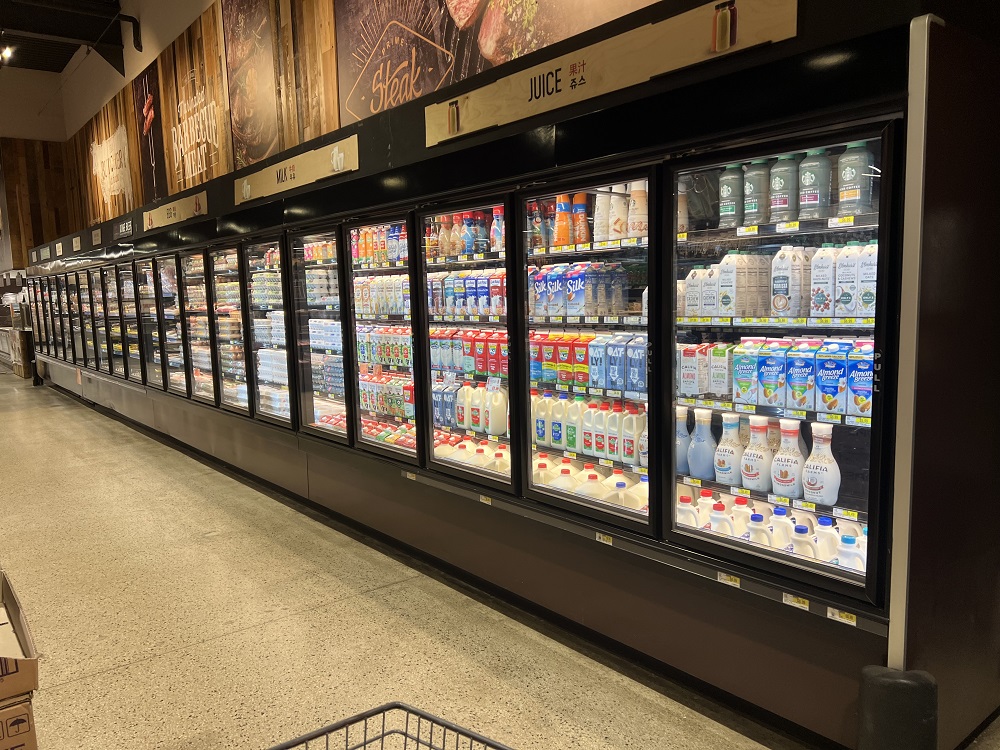
Walk through almost any specialty food hall or small-format grocery store now and you will notice something odd about the refrigerated displays. The open dairy case that once let shoppers grab a bottle of cold brew without breaking stride has grown a thin glass front, and nobody really talks about it. It is not a sudden redesign trend so much as a slow correction. Stores are tired of paying to cool aisles instead of products, and glass doors keep the cold where it belongs while still letting the labels do the work.
Most of the change comes down to the unglamorous math behind refrigeration. An open case may feel inviting, but it spends all day fighting the room's warmer air, dripping condensation onto the floor and pushing compressors harder than they need to work. Add a door and that constant battle eases. Newer glass has also gotten clearer and less reflective, so the visual barrier is far lighter than it used to be. Shoppers can still see the rows of butter, juice, or plant-based milks without the store needing to run the cooling system at full tilt.
There is also a quieter benefit for the people who stock the shelves. Glass doors keep dust, curious hands, and the occasional runaway cart from turning a neat display into a mess by early afternoon. The store keeps the open feel through good lighting and clean frames, while the products stay at a steadier temperature. What looks like a small hardware change is really a shift in how retailers think about the cost of convenience. The cold air is no longer spilling into the aisle, and the difference shows up on the monthly bill more than on the sales floor.
What an OEM Retrofit Kit Actually Includes
The Energy Bill Before and After a Retrofit
Before the retrofit, the utility bill for our 1960s ranch landed in the mailbox like a monthly dare. The furnace cycled constantly whenever the temperature dipped, and the upstairs bedrooms still felt cold by morning. We got used to setting the thermostat at 68 and paying for 72, because drafts around the baseboards and an old attic hatch kept undoing whatever the gas burner was trying to accomplish.
The retrofit itself was mostly unglamorous work: dense-pack cellulose in the walls, new attic insulation, air sealing around pipes and recessed lights, and a heat pump water heater tucked into the basement. Nobody warned us that the biggest change would be how quiet the house became. A few weeks later, the first full billing cycle came in lower by roughly a third, even though the weather had turned colder than the previous month.
After a full winter, the pattern held. The gas portion of the bill dropped sharply, while the electrical use ticked up only a little. More telling than the dollar amount was the way the house held its temperature overnight. The furnace no longer kicked on at 4 a.m. as a reflex, and the thermostat finally matched what the rooms actually felt like.
Matching Retrofit Glass Doors to Existing Case Dimensions
Start by measuring the cabinet opening itself, not the old doors coming off. Frames move over time, so take width and height at three points each and use the smallest number. Subtract the margin you want around each glass panel, and check the case for racking before you assume the opening is square.
The hinge style changes how those numbers work. A full-overlay door can be sized close to the outside edges of the case, while an inset door has to sit inside the frame with a steady reveal all the way around. If you are keeping existing hinge cups or plates, match the new door thickness and edge profile first, because a small difference at the pivot point will show up as an uneven gap at the opposite side.
Glass thickness and edge detail also eat into clearance. Tempered glass often runs from 3/16 inch to 1/4 inch, and adding a bevel or a slim metal channel changes the fit more than expected. Dry-fit one panel with shims before drilling, then adjust the remaining panels from that reference rather than working from a fixed printed size.
A Realistic Timeline for Installing Retrofit Doors
Most homeowners underestimate how long a retrofit door project actually takes once you factor in measuring, manufacturing, and the inevitable surprises hiding behind the old casing. A straightforward swap rarely happens in a single afternoon, even when the opening is standard. Expect the process to stretch across several days if you are working around paint drying, trim adjustments, and hardware alignment.
A reasonable first week usually covers precise measurements, ordering, and waiting for the slab or pre-hung unit to arrive. Once the door is on site, the physical installation may take a day, but the finish work often spills into a second or third day. Shimming the frame, checking reveals, and making sure the latch engages cleanly can consume more time than the initial tear-out.
If the opening needs reframing or if you discover rot, outdated flashing, or out-of-level rough openings, add another day or two. Rather than racing the clock, build in buffer time for the small corrections that make a retrofit door perform well. A realistic schedule is less about the door itself and more about the surrounding structure it has to fit.
When a Door Retrofit Makes More Sense Than New Equipment
Replacing an entire door system often looks like the default solution, but it can create problems the existing setup never had. When the frame, tracks, and surrounding structure are still in good shape, a retrofit keeps those proven components in place while addressing the actual weak points. That usually means less cutting, less patching, and fewer surprises once the work begins. It also avoids the hidden cost of adapting a brand-new unit to an opening that was never built to current standard sizes.
Retrofitting becomes especially practical when the door is tied into masonry, fire-rated assemblies, or custom architectural finishes. Pulling the old frame can damage adjacent surfaces and trigger additional repair work that quickly erases any efficiency gain from new equipment. By swapping out the operator, rollers, seals, sensors, or panels only where needed, the facility keeps its existing opening intact and avoids a chain of structural modifications. The result is a quieter upgrade path that respects the building rather than forcing it to accept something new.
Time-sensitive environments also benefit from a retrofit approach. Cold storage facilities, hospitals, and active production lines rarely have the downtime for full frame removal, wall repairs, and reinstallation. A retrofit can often be scheduled in shorter windows and completed with less disruption to daily operations. When the existing door still protects the opening well but simply suffers from worn hardware or outdated controls, changing those components delivers most of the benefit without the delay, cost, and mess of replacing everything.
FAQ
OEM retrofit doors are built to match the original equipment dimensions and hardware, so they drop into existing cases without reworking the frame. Standard doors often require shims or new mounting points.
Yes, most well-maintained cases can. The main requirements are a solid frame, enough hinge support, and a power supply for any anti-sweat heater. Age matters less than structural condition.
Savings vary by case type and ambient store conditions, but open cases often lose a large share of cooling through the front. Adding doors commonly cuts case energy use by 40 to 60 percent, with faster payback in humid climates.
Not if the glass is chosen properly. Low-iron or triple-pane glass with good lighting keeps products readable. Many retailers see sales hold steady because the case looks cleaner and temperatures stay more consistent.
Measure the case opening at several points, check hinge and handle placement, confirm voltage for anti-sweat heaters, and note any curved or specialty glass. Sending photos and a cut sheet to the supplier prevents most ordering errors.
They can be, especially in high-humidity stores. The fix is usually a properly wired anti-sweat heater and good door gaskets. Some doors also use warm-edge spacers and gas fills to keep the interior pane closer to case temperature.
Retrofitting typically costs a fraction of new case pricing and can be done overnight section by section. New cases make sense when the existing lineup has compressor or cabinet damage, but doors alone often extend service life by years.
Mostly hinge lubrication, gasket inspection, and occasional cleaning with non-abrasive glass cleaner. Hinges and handles are wear items, and gaskets may need replacement every few years depending on traffic.
Conclusion
Open refrigerated cases are quietly losing their appeal as energy costs climb and product temperatures drift. Many stores are adding OEM retrofit glass doors instead of replacing the whole display. The change feels almost invisible to shoppers, yet the cold air stays put and compressors cycle less often. A proper kit generally includes framed glass panels, hinges, handles, gaskets, and mounting hardware matched to the original case. Some suppliers also include anti-sweat controls or LED lighting strips so the doors feel like original equipment rather than an afterthought. It is a quiet shift, but it changes how the case holds temperature throughout the day.
The energy savings are usually visible within the first full billing cycle, often cutting case power use by 30 to 60 percent depending on ambient conditions and setpoints. Because the doors are built for specific case dimensions, installers can avoid awkward gaps and misaligned frames; field adjustments are minor. A typical retrofit across a small bank of cases takes a few days, including measuring, frame mounting, door hanging, and final sealing. For aged but mechanically sound cases, retrofitting makes far more sense than buying new units. It preserves the existing footprint, avoids disposal costs, and shortens downtime. When the compressor, coils, and controls still have life left, adding doors is a practical, lower-cost path to modern display performance.
Contact Us
Contact Person: Ellen
Email: [email protected]
Tel/WhatsApp: +86-535-2229725
Website: https://www.artrefrigeration.com/