
Naxi Cultural Attractions: Top Recommendations for Immersive Travel
2026-07-27
Step into the living tapestry of Naxi culture, where ancient rhythms echo through stone-paved lanes and towering snow-capped peaks. For travelers eager to go beyond the postcard views, the real magic lies in immersive moments—joining a Dongba ceremony at dawn, tasting the bittersweet depth of locally cured ham, or listening to age-old folk ballads by firelight. Among the region's hidden gems, Jade Water Village stands apart: a quiet enclave where turquoise springs and stone dwellings reveal the soul of Naxi heritage, untouched by mass tourism. This guide curates the most authentic cultural encounters, from sacred murals to mountain trails, to help you experience the Naxi world not as a spectator, but as a welcomed guest.
Where Naxi Songs Echo Off Stone Walls
In the tight, maze-like lanes of Lijiang’s old town, a melody seeps through a weathered wooden gate. It ricochets off slabs of bluestone and ancient brick, the sound bending and lingering in unexpected ways. There’s no stage, no spotlight—just a cluster of elders with erhus and lutes, their voices threading through the cracks of time. The stones themselves seem to hum along, worn smooth by centuries of footsteps and song.
These are not polished performances. They’re the raw, unbroken lines of Naxi life—carried in the rise and fall of a tune, in lyrics that name the snowmelt on Jade Dragon Mountain or the ache of a lover’s parting. The walls don’t just reflect the sound; they hold it, shape it, give it a weight that a concert hall never could. Every note becomes a conversation between the living and the ancestors who stacked these stones long ago.
Walking here as a stranger, you feel the music before you fully hear it—a vibration underfoot, a murmur that turns a corner into a whispered story. It’s in the way a high note catches on a mossy eave, or how a drumbeat syncs with water dripping into a stone basin. There’s no need for translation. The walls take what is sung and return it as something shared, a brief but deep echo of a world that refuses to fade.
An Evening with the Naxi Orchestra
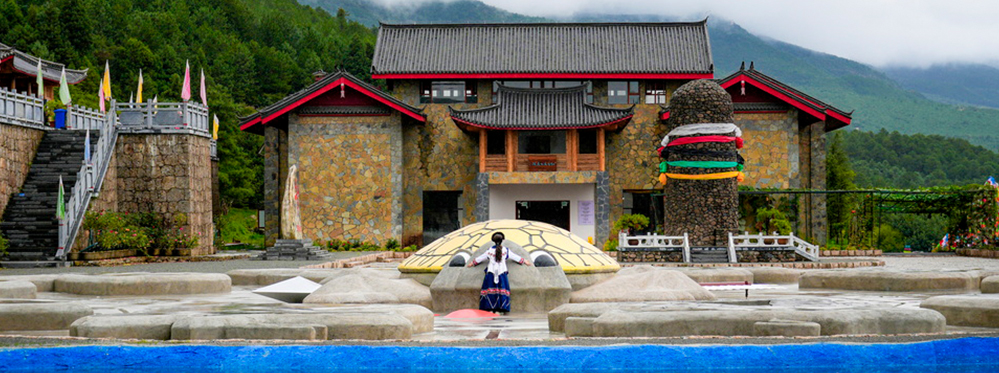
Stepping into the stone courtyard, the air thrums with the low hum of the huluhu, its lizard-skin belly vibrating with a sound as ancient as the cobbled streets of Lijiang. The Naxi Orchestra, a gathering of elder musicians and a few young apprentices, sit in a semi-circle, their eyes closed in deep concentration—or perhaps in a kind of meditative timelessness. There is no conductor; the music flows like a communal breath, starting with a single note that pulls you gently out of the modern world.
The repertoire is not simply entertainment but a living relic, rescued from the Dongjing scriptures once reserved for sacred rituals. As the gongs and bells punctuate the long, lilting phrases of the bamboo flute, you realize this isn't a performance in the Western sense—it's an invitation into the Naxi way of harmonizing with nature and spirit. Each piece, whether a hymn to the wind or a prayer for rain, unfolds slowly, demanding patience but rewarding you with a rare sense of peace that lingers far beyond the final bow.
Afterwards, over cups of smoky pu'er tea, the musicians share stories in halting Mandarin and animated Naxi, their laughter filling the courtyard just as vividly as the music. They speak of a time when these melodies were nearly silenced, and how each note now carries the weight of cultural survival. By the evening's end, you're not just a spectator; you've become part of a quiet, stubborn effort to keep an ancient sound alive in the high mountains of Yunnan.
Deciphering Dongba in a Mountain Village
Nestled deep in the folds of Yunnan's mountains, a cluster of stone-roofed homes holds secrets older than the written word of most civilizations. Here, the Dongba script—a mesmerizing system of pictograms—still breathes through the hands of elderly priests who trace symbols onto rough handmade paper. Each glyph is more than a word; it's a memory of animist rituals, a record of planting seasons, or a line from a chant that has echoed through these valleys for over a thousand years. Visitors who stay long enough might witness a quiet evening lesson, where a grandfather carves the character for "cloud" into a block of wood, explaining how its shape mirrors the mists that drift down from Jade Dragon Snow Mountain.
Deciphering Dongba isn't a task for linguists alone—here, it demands a kind of cultural archaeology. You learn that the symbol for "home" is a pig under a roof, and you suddenly understand the centrality of livestock in village life. The script has no fixed reading order, no standardized grammar; it dances across the paper according to the rhythm of the ritual. One afternoon, watching a shaman prepare a healing ceremony, I noticed how he combined the pictogram for "mountain" with that of "water" to represent not a landscape, but a state of balance. That's when it hit me: in this village, Dongba isn't a dead language waiting to be decoded—it's a living syntax of the land itself.
What stays with you, long after leaving the narrow cobbled paths, is the sheer fragility of this knowledge. The few remaining Dongba masters are in their eighties; younger generations often leave for cities. Yet efforts are emerging from unexpected corners—a local teacher has started photographing every manuscript in the village, while a teenager runs an informal "Dongba club" after school, drawing characters on smartphones. In those moments, the script feels less like an academic puzzle and more like a bridge between worlds, where a mountain village becomes the final redoubt of a way of recording human experience that refuses to fade into the museum glass.
Flavors Passed Down: A Naxi Family Meal
In a Naxi kitchen, the day often begins with the gentle sizzle of cured pork belly hitting a hot wok. This isn't just cooking—it's a quiet ritual passed from grandmother to mother to daughter, each stir carrying the memory of stone courtyards and mountain mist. Fragrant with Sichuan pepper and dried chilies, the fat renders slowly as chunks of fresh potato join in, soaking up decades of practiced technique. Nothing is measured, yet everything is balanced.
Around a low wooden table, the family gathers not just to eat, but to continue a conversation that spans generations. A steaming bowl of yak butter tea sits beside pickled turnips and a clay pot of bubbling bean paste stew. The flavors are bold yet comforting: fermented soybeans, wild mushrooms foraged from nearby slopes, and the faint smokiness of a fire that has burned since dawn. Hands reach across bowls, chopsticks clink, and stories flow freely—of ancestors who crossed tea-horse roads, of festivals where these same dishes graced the table.
What outsiders might call a meal is, for a Naxi family, a living archive. Every bite of pan-fried cheese or a mouthful of hearty barley cake holds the residue of high-altitude winds and the patience of slow-cooked love. There are no written recipes here—just the subtle adjustments of a cook who learned by watching, and a shared understanding that these flavors will outlast them, weaving their way into the next generation’s hands.
The Artisans Who Weave Naxi Dreams
In the ancient town of Lijiang, where stone bridges arch over murmuring canals and the Jade Dragon Snow Mountain looms on the horizon, a handful of Naxi artisans keep a fading tradition alive. Their hands move with quiet precision, guiding dyed wool through worn wooden looms that have been passed down for generations. Each textile they create is more than fabric—it is a woven diary of the Naxi people, encoding symbols from the Dongba script, motifs of nature, and the rhythms of a life intertwined with the mountains.
These weavers do not merely replicate patterns; they interpret dreams. A shawl might capture the swirl of clouds above Tiger Leaping Gorge, or the dappled light through a forest of camellias. The process is slow, deliberate, and deeply personal. Many work from home workshops, their fingers remembering rhythms learned in childhood, while the clack of the shuttle fills rooms scented with yak butter tea. Younger apprentices now learn beside elders, bridging centuries with every pass of the weft, as the outside world’s fast fashion roars past unnoticed.
What emerges from their looms is far more than tourist trinkets. A Naxi tapestry is a tactile story, a fragment of a culture that resisted assimilation for a millennium. To hold one is to feel the texture of persistence—the slight unevenness that proves it was made by hands, not machines. In an age of digital uniformity, these artisans weave not just wool, but the very dreams of their ancestors, offering the world a thread back to something irreplaceable.
Footsteps and Folk Tales: A Naxi-Guided Hike
Venturing into the rugged hills of northern Yunnan, the trail winds through ancient stone villages where the Naxi people have lived for centuries. Instead of a standard tour, you follow the unhurried rhythm of a local guide who shares everyday wisdom passed down through generations. He points out plants used in medicine, recounts a ghost story that once terrified children in his family, and reveals the real reason why elders never whistle at dusk. The landscape shifts quickly from terraced fields to pine-scented forests, and every pause feels earned, not scheduled.
As you climb higher, the guide’s stories peel back layers of the Naxi worldview—how the wind carries messages from ancestors, why certain rocks are considered sleeping guardians, and the meaning behind the intricate embroidery on his vest. You’ll pause by a stream where he once tried to catch a dragonfly for his grandmother, and learn a tune his mother sang while weaving. It’s not a performance; it’s a conversation that blurs the line between the natural and the mystical, making the mountain feel more like a living library than a scenic backdrop.
The rhythm of the hike mirrors the storytelling itself: slow, winding, and full of unexpected turns. You might scramble over moss-covered boulders to glimpse a hidden waterfall, then sit in silence as the guide softly chants a blessing for safe passage. By the time you descend, your legs are tired, but your mind feels strangely light—you’ve walked through a landscape woven with memory, not just geography. This is no generic eco-trek; it’s a chance to trade footsteps for folklore, where the land itself becomes the narrator.
FAQ
Instead of the bustling Lijiang Old Town, head to Yuhu Village at the foot of Jade Dragon Snow Mountain. It’s home to the former residence of Joseph Rock and still retains traditional stone houses and a slow-paced farming lifestyle. Another gem is Baisha Village, where you can witness ancient Naxi embroidery and the famous Baisha Murals without the crowds. For a deeper dive, trek to Wenhai Village, a lakeside settlement where Naxi families welcome visitors into their homes for tea and stories.
Absolutely. In Shuhe Ancient Town, some studios offer short courses in Dongba pictograph writing, where you can create your own simple scrolls. At the Lijiang Dongba Culture Research Institute, you might catch a live demonstration of shamanistic rituals. For a more hands-on experience, join a paper-making workshop using traditional methods—the bark paper is still used for sacred texts. Also, consider a private session with a local Dongba priest who can explain the symbols and their meanings over butter tea.
Timing is key. Plan your visit around the Torch Festival (June/July) or Sanduo Festival (February/March). In the Torch Festival, you can watch giant torches being paraded and join the dancing, but always follow local customs—ask before photographing rituals. For the Sanduo Festival, head to Beiyue Temple where offerings are made to the war god; visitors can light incense but should dress modestly. Some villages also host smaller farming ceremonies; ask your guesthouse host if any are happening during your stay.
Skip the large staged shows and look for private teahouse performances in Shuhe or Baisha. The Naxi Ancient Music Orchestra sometimes holds smaller gatherings in the Dayan Naxi Ancient Music Hall. For a truly personal experience, contact a local musician through your accommodation—some are willing to perform by the fireplace in a guesthouse. The haunting melodies of the sugudu (a three-stringed instrument) sound far better in a quiet courtyard at dusk than in a crowded theater.
Start with baba, a thick flatbread often stuffed with minced meat or sweet bean paste, best eaten fresh from a street vendor in the morning. Try the Yunnan ham with fern root noodles, a dish that blends mountain ingredients. Don’t miss the Naxi hot pot, where yak meat and local mushrooms simmer in a copper pot. For brave eaters, sample dried yak cheese and the infamous “Three Courses of Tea”—bitter, sweet, and aftertaste—which symbolize life’s journey.
The Jade Dragon Snow Mountain isn’t just a scenic backdrop; it’s a sacred entity in Naxi belief. Hike the lower slopes to spot prayer flags and small shrines. At Blue Moon Valley, you’ll see how glacial meltwaters create vivid turquoise lakes that feature in legends. Visit the Lashihai wetlands to understand the ancient horse caravan trade and how the lake sustained villages. Driving through the valleys, you’ll notice villages oriented toward the mountain, a fengshui practice that shows the deep spiritual bond with the land.
Conclusion
Immersing yourself in Naxi culture is like stepping into a world where every stone and melody tells an ancient story. Begin in the labyrinthine old town, where Naxi songs echo off weathered stone walls and narrow alleyways carry the whispers of centuries. As dusk falls, let the haunting strains of the Naxi Orchestra transport you—their music, a rare survival of Tang-dynasty temple rituals, fills the lantern-lit halls with a timeless resonance. For a deeper dive, venture into a mountain village to decipher the pictographic Dongba script alongside a local shaman, tracing symbols that connect the earthly to the divine in a quiet, smoke-wreathed sanctuary.
The soul of Naxi life reveals itself in shared meals and handmade crafts. Join a family in their courtyard home, where recipes passed down through generations simmer with the aroma of foraged herbs and cured mountain ham—each bite an edible archive. In nearby workshops, artisans who weave Naxi dreams onto hand-loomed textiles demonstrate how threads capture mythic narratives and alpine hues. Finally, walk the old trade trails with a Naxi guide, whose tales of heroic ancestors and trickster spirits turn every ridge and stream into a living folklore. These encounters aren’t just attractions; they’re invitations to feel the pulse of a culture that thrives where snowmelt and song converge.
Contact Us
Contact Person: Changhong He
Email: [email protected]
Tel/WhatsApp: 086-0888-5190152
Website: https://vip.e-baixing.com/ysh