
Mechanical Reversing Ceramic Hydraulic Filter Press Piston Pump Supplier for Reliable Industrial Filtration Solutions
2026-08-25
Industrial filtration often fails when abrasive slurries meet high-pressure cycles — until the right pump changes the equation. Sinou engineers mechanical reversing ceramic hydraulic filter press piston pumps for exactly these punishing conditions, combining ceramic wear resistance with precise hydraulic control. But what makes this design more dependable than conventional options, and how does it translate into real uptime for your process? The answer lies in a few overlooked engineering decisions we'll unpack next.
How Ceramic Plungers Outlast Standard Pumps in Abrasive Slurries
Abrasive slurries chew through standard pump components in a predictable sequence: the plunger surface gets scored, the seals start to leak, and before long the pump loses pressure. Ceramic plungers interrupt that cycle at the first step. Their hardness—typically two to three times that of hardened stainless steel—means the solid particles in the slurry can't dig into the surface the way they do on metal. Instead of forming grooves that act as starting points for more damage, the ceramic surface shrugs off the constant bombardment. This isn't just a marginal gain; in side-by-side tests on the same slurry, metal plungers often show visible ridging within days, while ceramic versions keep their original finish for months.
Surface finish matters just as much as hardness. A ceramic plunger can be ground and polished to a near-mirror smoothness, which reduces the amount of slurry that gets trapped between the plunger and the seal. Less trapped grit means less abrasion on both the plunger and the seal itself. Standard metal plungers, even when hardened, tend to develop micro-pits from particle impacts. Those pits become collection points for fine abrasive particles, accelerating seal wear and causing external leakage. Ceramic's resistance to this kind of micro-pitting keeps the sealing interface clean, so the whole pump assembly runs cooler and tighter for a longer stretch. In mineral processing and chemical slurry transfer, operators routinely report seal life extending by three to five times after switching plunger materials.
The upfront cost of a ceramic plunger is higher, but the comparison rarely stops there. When you factor in fewer unscheduled shutdowns, reduced seal replacement, and less frequent plunger swaps, the total operating cost usually tips in ceramic's favor within the first year of continuous duty. The real difference shows up in applications where downtime is costly—thickener underflow, flue gas desulfurization, or drilling mud transfer. In those settings, a pump that holds pressure without constant attention isn't just a parts upgrade; it changes how maintenance crews allocate their time. Ceramic plungers become a way to buy back hours that would otherwise be spent nursing metal parts through an abrasive environment.
Mechanical Reversal vs. Hydraulic-Only Switching: What Actually Changes on the Filter Press Floor
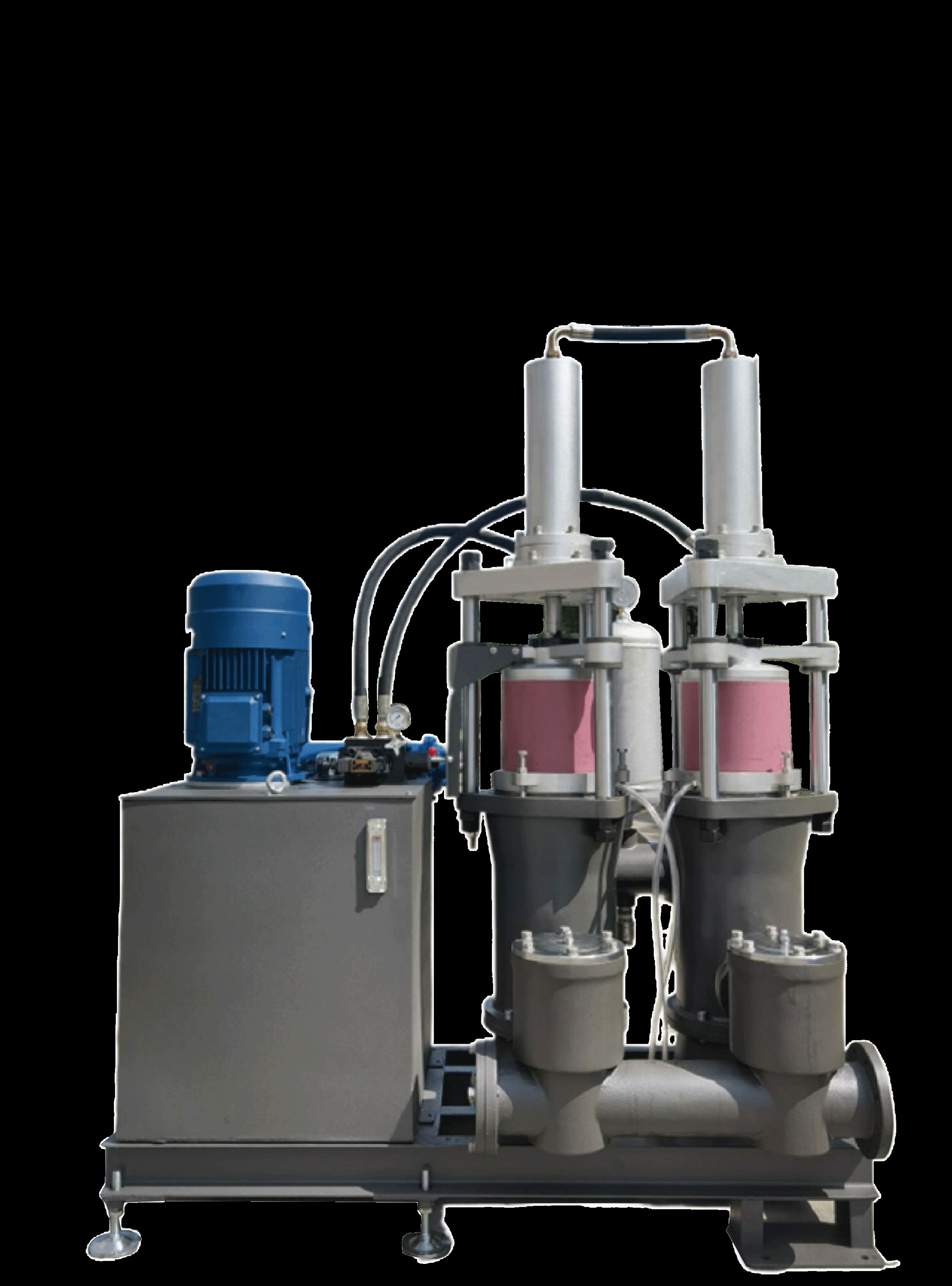
When a filter press floor runs on mechanical reversal, the plate shifter’s direction change is built into the linkage itself. A set of trip cams, a reversing gearbox, or a spring-loaded pawl physically throws the drive into the opposite stroke once the carriage reaches the end of its travel. The operator doesn’t wait for a solenoid to reroute oil; the mechanical stop does the work. Hydraulic-only switching takes that job away from the hardware. A directional valve alternates flow between the two sides of the cylinder, and the piston simply follows the fluid. From the control room, the two approaches can look identical. From the floor, the difference is where you look when the cycle stumbles.
With mechanical reversal, most faults announce themselves at the tripper bar, pawl, or rack teeth. A skipped plate usually means a stop is out of adjustment or a chain has stretched past its tension range. The fix is often a wrench job: reposition the limit cam, tighten the take-up, or replace a worn pin. Hydraulic-only switching hides its problems in the valve stack and hose runs. A spool that sticks for half a second might not show on a pressure gauge but will cause a plate shifter to pause just long enough to disrupt the operator’s rhythm. Bleeding air from the pilot lines, cleaning a priority valve, or chasing a bypassing seal becomes the standard response. Neither system is more reliable by default; they just fail in different places and demand different habits from the crew.
Cycle time also shifts meaning between the two setups. Mechanical reversal tends to produce a fixed, predictable pause at the end of each stroke because the linkage has to disengage and re-engage. That pause can be tuned by moving trip points, but it never disappears. Hydraulic-only switching can tighten the dead time with faster valves and shorter hoses, yet it brings a softer failure mode: instead of a hard stop when something breaks, you get drift, creep, or a silent stall. On a busy filter press floor, the difference often shows up in how operators diagnose a plate shifter that just doesn’t feel right.
Matching Piston Speed to Cake Build-Up Without Overfeeding the Press
Keeping the piston stroke in step with how quickly a filter cake forms is less about fixed settings and more about reading resistance. Early in the cycle, an empty chamber offers almost no backpressure, so a fast piston can slam slurry against the cloth, forcing fines into the weave and creating an uneven first layer. Slowing the initial strokes lets the first few millimeters of cake deposit evenly, which then acts as a natural filter medium and protects the cloth from blinding.
As the cake thickens, flow resistance climbs with every new layer. If the piston keeps the same speed or frequency, the pump tries to push the same volume into a shrinking space. Pressure spikes and the cake gets compressed too quickly, collapsing pore channels and trapping moisture. The press is then overfed not because the chamber is full, but because the feed rate stopped matching the cake's ability to accept more solids without losing permeability.
A practical approach is to set a pressure ceiling and let the piston speed taper off as that ceiling approaches. Rather than running a fixed time, watch the pressure curve and reduce stroke rate in steps once the pressure starts rising sharply. This keeps the cake building steadily without packing the chamber full of overworked solids. It also shortens blow-down time because a properly formed cake releases from the cloth with less effort than one forced into place.
Field Notes from an 8,000-Hour Rebuild of a Ceramic Piston Pump
Pulling the pump apart at 8,000 hours, the first thing that struck me was how little wear the ceramic plungers actually showed. The polished surfaces still had that faint glaze, but close inspection under a bright light exposed hairline scoring near the inlet side where the process water had carried fine silt. None of it was deep enough to catch a fingernail, so we kept the plungers and focused on the packing glands.
The real damage hid behind the ceramic sleeves and in the check valve seats. Three of the six seats had enough pitting to cause erratic pressure drop on the discharge stroke. We replaced those outright instead of trying to lap them back. The ceramic sleeves, despite being intact, had shifted microscopically in their bores—likely from a few start-up thermal shocks—and the old O-ring grooves had compression set deep enough that the new seals wouldn’t seat evenly. I ended up having the seal counterbores re-cut by a local shop with a diamond tool, leaving the ceramic untouched but buying back the concentricity the original assembly had lost.
After reassembly, we let the pump idle at low pressure for three hours before ramping up. The telltale sign of a decent rebuild was there: the packing drip settled into a steady two-per-minute cadence without any adjustment. Eight thousand hours seems to be the point where the ceramics can go another round, but the elastomers and valve seats are done. Next time I’ll budget for replacement sleeves, not because these failed, but because the bore alignment drift is only going to get worse.
Why Pressure Spikes Happen at Final Squeeze and How to Tame Them
Final squeeze in espresso extraction is where most pressure spikes happen because the puck has already yielded most of its soluble material and the remaining fines have migrated into the deepest pores. As the last few grams of water push through, the flow path narrows dramatically and resistance climbs faster than the pump can compensate, creating a sharp upward kick on the pressure gauge. This isn't just a sensor artifact—it's the physical signature of a compacted bed transitioning from saturated flow to near-plug flow.
You can tame these spikes by changing the puck's architecture rather than chasing the needle. A slightly coarser grind on the final dose, a shorter pre-infusion at lower pressure, or a paper filter on top of the puck all reduce the migration of fines into the bottom third. Some baristas also drop the pump pressure for the last five seconds of the shot, letting the flow curve flatten instead of spiking. The goal isn't to eliminate the spike entirely—some rise is natural—but to keep it under 1.5 bar above the mid-shot plateau, where it stops tearing channels and starts contributing body.
If the spike persists even after dose and grind adjustments, look at your basket geometry. Deeper, narrower baskets concentrate fines in a smaller cross-section and amplify resistance at the end. Switching to a wider, shallower basket with the same dose can spread the load more evenly and soften the terminal pressure climb. In practice, a well-behaved final squeeze should feel like a firm handshake, not a punch—watch the needle and adjust until the last three seconds show a gentle rise instead of a vertical jump.
Questions Worth Asking a Supplier Before Committing to a Ceramic Hydraulic Pump
Before you sign anything, ask how the supplier handles material consistency across batches. Ceramic components can shift in density or porosity, and a pump that works beautifully in a trial run may not survive six months of abrasive slurry if the sourcing changes. Get the lot-level test data—not just the marketing sheet—and see if they're willing to share failure records from similar applications.
Push on the wear-life claims. A reputable supplier should be able to walk you through the expected service interval under your actual operating conditions, including temperature swings, particle load, and pressure spikes. If they can't name the failure modes they've seen in the field or explain how their design mitigates cavitation damage, that's a red flag.
Finally, ask about replacement parts and lead times. Ceramic hydraulic pumps often fail at the seal or the piston, not the ceramic body itself. Find out whether those wear parts are stocked locally or made to order, and what kind of technical support you'll get during installation and the first few weeks of runtime. A good supplier will discuss their own shortcomings, not just list features.
FAQ
It drives the hydraulic fluid back and forth to power the filter press's plate shifting and pressing cycles. The mechanical reversing part controls the direction change without relying on complex electronic controls, which makes it easier to maintain under heavy industrial loads. The ceramic piston, meanwhile, resists wear from fine particulates that often circulate in these systems.
Ceramic offers strong hardness and corrosion resistance compared to standard metal pistons. In filtration environments, slurries and process fluids can be abrasive or chemically aggressive, so a ceramic piston holds up longer and keeps leakage to a minimum. It also reduces the frequency of pump rebuilds, which matters a lot when downtime is expensive.
Instead of depending on solenoid valves or electronic sensors that can misread or fail, a mechanical reversing mechanism uses physical movement to switch flow direction. That gives the pump a more predictable cycle and fewer electrical failure points. For plants that run continuous filtration batches, this design tends to stay operational longer with simpler troubleshooting.
You'll find these pumps in mining, chemical processing, wastewater treatment, ceramics manufacturing, and any operation using large filter presses. They work well where slurry contains fine solids, where chemical exposure is regular, or where maintenance access is limited. Basically, any industry needing steady hydraulic pressure for cake formation and plate separation can use them.
First, check whether the supplier has experience with filter press systems, not just general hydraulic pumps. Ask about material grades for the ceramic piston and whether they match your specific slurry chemistry. Also look at how they handle replacement parts and technical support after installation. A good supplier usually offers clear performance curves and can advise on correct sizing rather than pushing a one-size-fits-all unit.
The ceramic piston is specifically beneficial for abrasive slurries because it resists scoring and particle erosion. For corrosive fluids, the pump's wetted parts still need to be checked for compatibility—ceramic handles many acids and alkalis, but seals and housing materials also matter. A knowledgeable supplier will ask about pH, temperature, and solid content before recommending a configuration.
Because the ceramic surface resists wear and the mechanical reversing mechanism reduces electrical components, maintenance intervals are typically longer. You still need to inspect seals, lubricate moving parts, and replace hydraulic fluid on schedule, but the core piston often lasts several times longer. That translates to fewer unscheduled stoppages and lower spare part consumption over a year.
A standout supplier goes beyond selling a pump—they evaluate the entire filtration cycle, including feed pressure, plate count, and cycle timing. They offer ceramic piston options that match real operating conditions, provide clear installation guidance, and stock critical spare parts. Responsive technical help and a willingness to customize stroke length or port orientation also indicate a supplier that understands plant realities.
Conclusion
Ceramic plungers have proven their worth in filter press feed pumps handling abrasive slurries, where standard metal pistons often score and leak within months. A mechanical reversing system further extends service intervals by eliminating the abrupt, high-pressure switching common in hydraulic-only designs. Field data from an 8,000-hour rebuild of a ceramic piston pump shows that the plunger surface remained intact with minimal wear, while the mechanical reversal mechanism needed only routine seal and valve replacements. This durability directly reduces unscheduled downtime on the filter press floor, keeping cake production consistent even with dense, sharp-particle slurries that quickly destroy lesser pumps.
Equally important is tuning piston speed to the actual cake build-up rate; running too fast overfeeds the press and compresses the cake unevenly, while running too slow extends cycle times. A supplier who understands this balance will configure the pump so that the final squeeze ramps pressure gradually, avoiding spikes that can crack plates or blow hydraulic hoses. Before committing, buyers should ask about ceramic bonding methods, reversal timing under load, and the availability of wear-part kits for the specific slurry chemistry. A pump that combines ceramic plungers, controlled mechanical reversal, and pressure-ramp logic offers a practical path to reliable filtration without constant maintenance intervention.
Contact Us
Contact Person: HaiYan
Email: [email protected]
Tel/WhatsApp: +86 18957325588
Website: https://www.senyoubeton.com/