
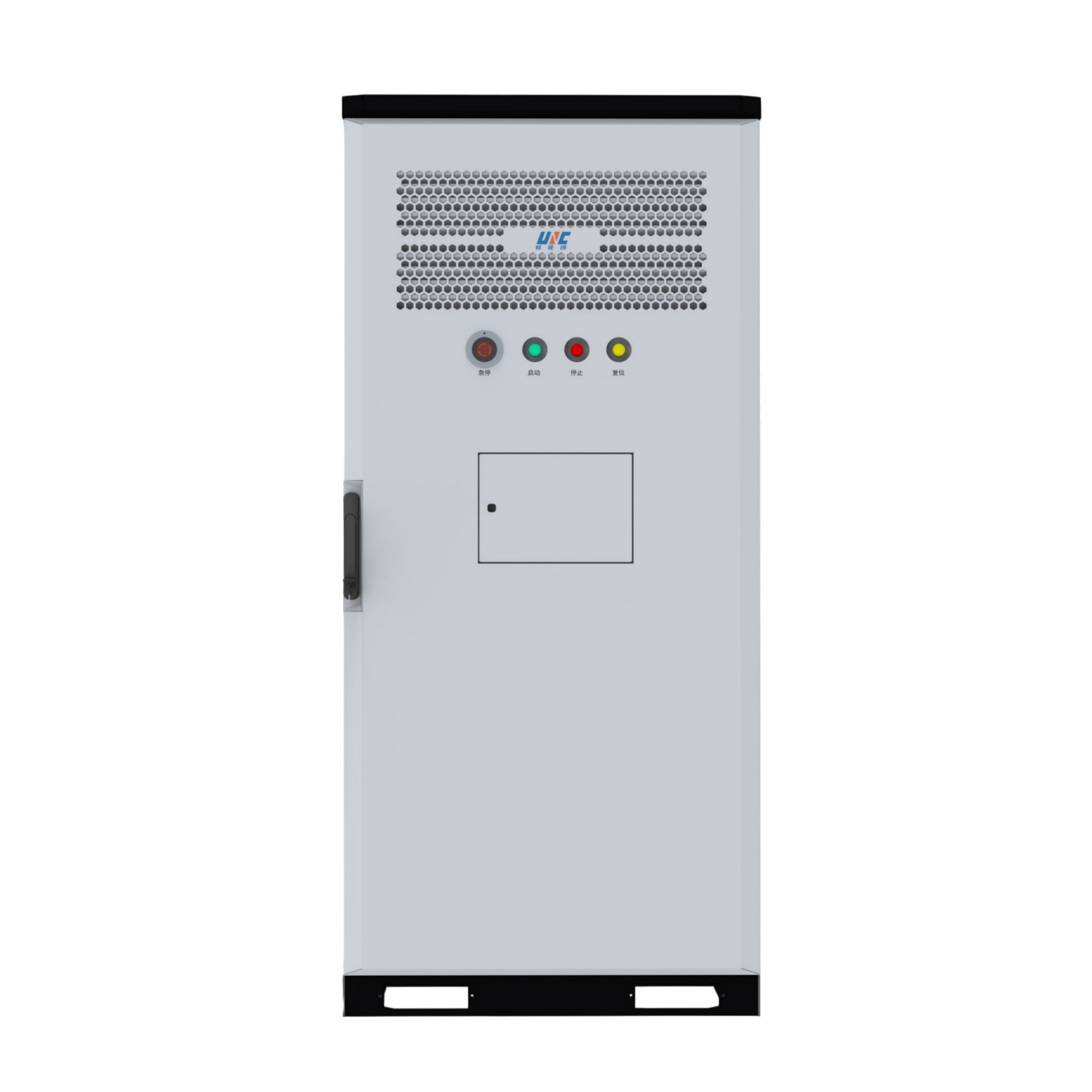
Integrated Energy Storage Cabinet 135kW/261kWh Engineered for Global Export
2026-11-23
Most energy storage cabinets look impressive on a spec sheet, but the real test starts when they ship across borders and meet unstable grids, salt air, or extreme temperatures. The Integrated Energy Storage Cabinet 135kW/261kWh engineered by UNC is designed for exactly that reality: export-ready performance that holds up where generic systems fall short. In this blog, we take a closer look at what makes this cabinet a practical choice for global projects and demanding environments.
What Integrated Actually Changes on a 135kW/261kWh Cabinet
On a 135kW/261kWh cabinet, integration is not just about placing components in one enclosure. It changes how the DC bus, battery management, thermal control, and power conversion share a common control loop. During site work, installers no longer need separate wall space for a PCS, combiner box, and communication cabinet. They land the AC feed and auxiliary power, then the cabinet handles pre-charge, insulation monitoring, and state-of-charge balancing internally. That removes a large share of field-made cable lugs and cuts the number of terminations that have to be torqued, labeled, and verified by hand.
The more noticeable change appears when something goes wrong. In a non-integrated setup, mismatched firmware or a floating neutral can sit between components from different vendors. On this cabinet, BMS, inverter, and HVAC data move through one data map. If a cell group sags under a heavy discharge, the power stage derates before the DC contactor opens, so the event log shows one time-stamped sequence instead of three separate alarm bursts. During a late-night service call, that means fewer drawings, fewer vendor portals, and a much shorter path from the first alarm to the correct breaker.
Why Export-Ready Means More Than a Different Plug
A plug adapter solves the obvious problem: your device physically fits into a wall socket overseas. But that moment of connection is where the easy part ends. Voltage differences, frequency shifts, and local certification requirements can quietly damage hardware or void coverage the first time something goes wrong.
Export-ready also means the product can survive how people actually use it. Labels need to make sense without a translator. The manual has to guide someone who has never seen your brand before. Packaging should protect the item through humid ports and rough courier depots, not just look tidy on a shelf.
The real test happens after the sale. If a customer in another country cannot get a replacement part, understand a warning label, or reach support in their time zone, the export has not really worked. The plug only gets you through the door; everything else decides whether you stay.
Matching 135kW Demand Peaks to 261kWh of Usable Storage
A 135kW spike rarely lasts as long as it feels on the utility bill. With 261kWh of usable capacity, the system can hold that full peak for roughly one hour and fifty-six minutes before drawing from the grid again. In practice, most demand events are shorter and less uniform, so the battery cycles through partial discharges instead of one long drain.
That changes the sizing conversation. Instead of treating the battery as a fixed block of energy, it works as a buffer that clips the sharpest parts of a load profile. When a facility crosses the 135kW threshold, the inverter responds and the pack absorbs the overage. If the peak arrives as a series of short surges, the 261kWh reserve can stretch across several hours and multiple events.
The real advantage shows up in how the system ages and performs. Running at 135kW pulls only about 0.52C from the cells, which keeps heat and voltage stress modest. That leaves enough headroom for days when the load repeats aggressively or the battery is already partially depleted. The usable figure, not the nameplate capacity, is what determines whether the site can ride through a full demand window without triggering a new peak.
Thermal Control for Cabinets That Cross Climate Zones
Cabinets that sit in one climate are easy to size: pick a cooling load, add margin, done. Units that move between or straddle humid coastal heat, high-desert cold, and poorly ventilated indoor spaces behave differently. The same enclosure can sweat at sunrise in a tropical depot and then run its heaters continuously at a mountain site. A workable thermal strategy starts with the dew point, not just the air temperature. Add a small controller that reads internal and external humidity, then delay compressor startup until surfaces are above the local dew point. That single change prevents most corrosion and board failures that get mislabeled as cooling problems.
Mixed-mode cooling is often more practical than relying on oversized air conditioning. When outside air is cooler than the return air by at least 8–10°C, filtered fans can handle the load without pressurizing the cabinet with cold, moist air. Above that band, a variable-speed compressor takes over. The transition needs enough hysteresis to avoid short cycling, but not so much that the interior swings into condensation territory. In difficult installations, set the fan-to-AC switchover around 22°C return temperature and force the compressor to run for a minimum of four minutes once it engages.
Sealing and insulation choices matter more when the cabinet crosses climate zones. Closed-cell foam gaskets survive ultraviolet exposure and wide temperature swings better than open-cell strips, but they still need a compressible bulb wall to work against warped doors. Pressure equalization vents with hydrophobic membranes help manage altitude changes and sudden barometric shifts without pulling in dust or rain. If the cabinet will see sub-zero nights followed by warm, humid mornings, specify a drain heater and slope the base so condensed water cannot pool around cable entry plates.
Fewer Field Connections, Faster Commissioning on Site
Instead of landing dozens of individual conductors at the panel, the setup consolidates signals into a handful of plug-in links. That cuts the usual wiring time down to a fraction and leaves fewer chances for a mislabeled terminal to slip through. Commissioning stops being a long hunt for the one loose wire and starts looking more like a simple power-up sequence.
Because every connection maps to a clearly marked port, technicians spend less time cross-checking drawings against cable numbers. The repeated plug-and-socket approach also means a module can be swapped without re-terminating anything, which keeps startup on schedule even when a last-minute change appears.
The real payoff shows up during handover. Fewer terminations mean fewer torque checks, fewer continuity tests, and less back-and-forth between the cabinet and the field device. Teams can finish the morning checklist before lunch and move on to functional testing with confidence.
Remote Oversight After the Cabinet Leaves the Factory
Once a cabinet is loaded onto a truck, oversight doesn't stop. The onboard telemetry module stays linked to the same monitoring platform used during factory testing, so field engineers can watch temperature, humidity, and power draw from a phone before the unit is even unbolted from its shipping pallet.
That continuity matters more than a spec sheet suggests. A cabinet that leaves the factory with calibrated sensors and known baseline behavior can be compared against its own history rather than a generic threshold. Drift in fan speed, small increases in standby current, or unexpected door events show up as deviations from the individual unit's fingerprint, not just as red or green status.
For sites without a resident technician, this kind of remote visibility changes what a service visit actually entails. Instead of rolling a truck to inspect, the team can pull logs, adjust setpoints, or schedule firmware work after confirming which component has drifted. The cabinet becomes a managed endpoint, and the handoff from factory floor to live environment is less of a cliff edge than a gradual, well-lit transition.
FAQ
It fits mid-sized commercial and light industrial loads. Typical examples include a small manufacturing line, a cold storage facility, an office campus with EV chargers, and a retail distribution hub. The 135kW output covers peak demand shaving, while 261kWh gives enough energy for several hours of load shifting or backup support.
At the rated 135kW load, a full discharge takes just under two hours because the usable capacity is 261kWh. Real loads rarely sit at maximum continuously, so partial loads often stretch runtime to three to five hours.
It is configured for different grid conditions, including 50Hz and 60Hz operation and a wide AC voltage tolerance. The physical packaging, cooling system, and internal busbar layout are also prepared for ocean freight, long storage periods, and regional certification requirements.
The battery management system tracks cell voltage, temperature, and current at module level. The cabinet includes overcurrent and ground fault protection, optional fire suppression, and a reinforced enclosure designed to contain thermal runaway events.
Yes. It can operate behind the meter with a PV inverter or alongside a generator. The control system manages charge and discharge schedules, so solar surplus can be stored during midday and released during evening demand peaks.
It arrives as a pre-assembled cabinet with a forklift base and lifting points. On site it needs a level concrete pad, an AC connection to the main panel, and communication wiring. Commissioning is usually completed in a few days with remote support from the vendor.
Most upkeep is remote monitoring and firmware updates. Physical checks are limited to cleaning air filters, inspecting cable torque, and testing the fire suppression system. The battery cells are sealed and are not serviced in the field.
Conclusion
The change starts with how the 135kW power stage and 261kWh battery block are handled at the design stage. Rather than forcing separate inverters, battery racks, cooling units, and switchgear into a shared enclosure, the integrated layout recalculates busbar routing, airflow paths, and control signalling around how the cabinet actually loads and discharges. The 135kW output is therefore matched to short, sharp demand peaks without pushing the thermal system into needless oversizing, while the 261kWh usable capacity supports meaningful runtime instead of serving only as a nominal figure. Under partial load and high ambient heat, the difference becomes visible: heat from the power conversion section exits along a defined path instead of drifting back through the battery compartment. For equipment crossing humid coastal sites, high-altitude grids, and hot inland installations, the cooling approach relies on derating curves and sensor placement tuned to local conditions, not just a single laboratory test point.
Export readiness is equally visible in the physical build. Voltage labels and plug types are only a small part of the work; the cabinet is pre-terminated to cut field connections, with AC, DC, and communication zones separated to reduce installation errors, and lifting points arranged for different freight and handling equipment. Commissioning shifts from chasing wiring mistakes to confirming settings, which shortens the interval between delivery and operation. After handover, the unit reports inverter state, cell temperatures, state of charge, and alarm events through a remote interface that supports off-site diagnosis and controlled firmware updates. That visibility is particularly useful when cabinets are spread across regions where a service visit is slow or costly. The result is a 135kW/261kWh package that behaves less like a group of separately sourced components and more like a single engineered system prepared for different grid codes, inspection rules, and climate conditions.
Contact Us
Contact Person: Manager Leng
Email: [email protected]
Tel/WhatsApp: 8613764878967
Website: https://www.unc-energy.com