
IBC Tank Supplier: Essential Qualities to Ensure Safe and Efficient Storage
2026-05-29
When it comes to industrial storage, choosing the right IBC tank supplier is critical for safety and efficiency. But with countless options on the market, how do you identify a partner that truly delivers? From container integrity to regulatory compliance, the essential qualities go far beyond a competitive price. As a trusted industry leader, DYE sets the standard—ensuring your operations run smoothly with reliable, high-performance solutions. Let’s explore what makes a supplier worth investing in.
Material Matters: Why Tank Composition Dictates Long-Term Reliability
The choice of material in tank construction isn't just a line item on a specification sheet—it's the single most decisive factor in how the vessel will perform decade after decade. A tank that holds up under constant chemical exposure, thermal cycling, or abrasive media does so because its composition was matched to the demands of the environment from day one. When that match is off, even slightly, the consequences show up as pitting, stress cracking, or thinning walls long before anyone expects a problem.
Take stainless steel, for example. The alloying elements that make certain grades resistant to chlorides or acids also determine how welds hold up over time and whether the tank will need passivation treatments to maintain its passive layer. Skip the molybdenum in a 316 grade where it's needed, and you'll find rust blooming inside a tank that looked flawless on delivery. In polymer tanks, the resin backbone and fiber reinforcement architecture define not just chemical compatibility but also how the structure handles thermal expansion without delaminating—subtle variations that compound into structural failures.
Long-term reliability, then, isn't about buying a tank that meets a generic standard. It's about verifying that the material chemistry aligns precisely with the purity, temperature, and pressure profiles of the actual service. Tanks that keep process fluids contained and workers safe for 20 years do so because someone took the time to query the alloy certifications, double-check the laminate schedule, and insist on documentation that traces each heat or batch back to its mill. Those details are what separate a capital asset from a recurring repair expense.
Beyond Compliance: Safety Features That Prevent Catastrophic Failures
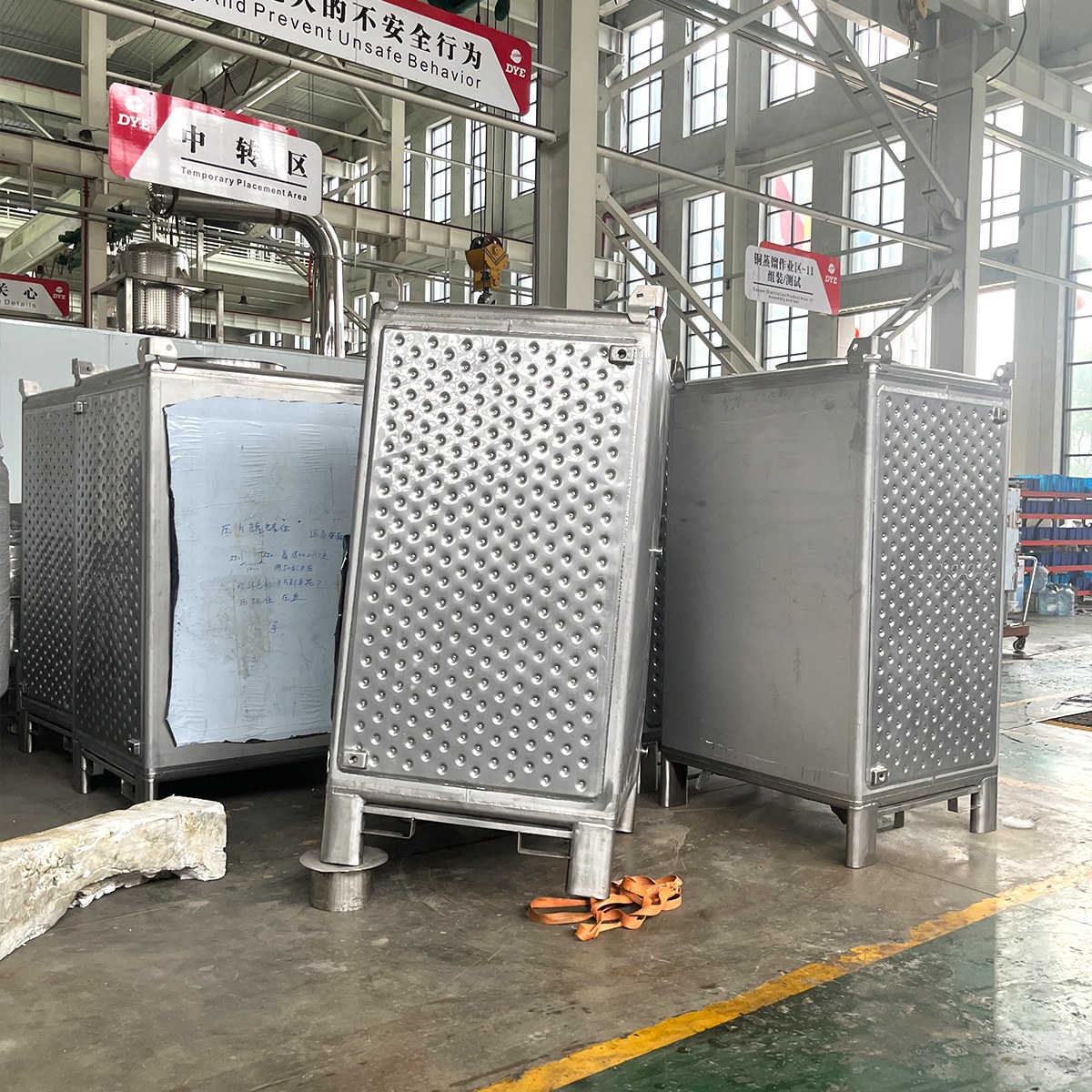
Meeting regulatory standards is merely the starting point for genuinely safe industrial systems. While compliance ensures a baseline of protection, it often addresses known risks and historical failure modes, leaving emerging threats and complex interactions unaccounted for. True resilience comes from engineering philosophies that anticipate the unexpected, embedding multiple layers of defense that function independently of checkbox requirements. This proactive mindset shifts the focus from proving safety on paper to achieving it in the chaotic, unpredictable real world.
Advanced safety features designed to avert catastrophic failures include redundancy architectures where critical components have backups that activate instantaneously upon failure, and fault-tolerant designs that allow systems to continue operating safely even when a part malfunctions. Beyond hardware, predictive algorithms monitor equipment health in real time, detecting subtle deviations that precede disaster—cracks, vibration shifts, or thermal anomalies—and triggering automated shutdowns or alerts before a minor issue escalates. Such capabilities transform safety from a passive attribute into an active, intelligent guardian, effectively closing the gap between what is required and what is possible.
The Efficiency Equation: How Design Improves Handling and Storage
Every second counts when products move through a supply chain. Thoughtful design strips away the friction, shaping containers and interfaces that feel intuitive to handle. Rounded edges slip into palms, balanced weight distribution reduces strain, and modular stacking eliminates wasted motion. The result is a rhythm—workers flow rather than struggle, and throughput climbs without added effort.
Storage isn't just about cramming more into a warehouse; it's about smart spatial relationships. A well-designed unit accounts for how it nests when empty, how it interlocks when full, and how it fits into existing racking systems. Squeezing out dead air and awkward gaps creates density without chaos. Suddenly, that shelf holds 20% more, not because you forced it, but because the shape simply belongs there.
Beyond the physical, good design bakes in information. Color-coded zones, tactile indicators, and transparent panels let teams read a shelf at a glance. Decisions that used to take seconds now happen in an instant. When design aligns with human instinct, efficiency stops being a metric and starts feeling like common sense.
Hidden Costs of Cut-Rate Suppliers: What You Risk with Subpar Service
When you chase the lowest bid, you often inherit a cascade of problems that don’t show up on the initial invoice. Substandard materials might pass inspection once but fail under real-world use, leading to warranty claims, recalls, or even safety incidents. The cost of rework and replacements can quickly dwarf any upfront savings.
Beyond defective products, unreliable suppliers frequently miss deadlines, forcing you to pay for expedited shipping from a backup source or lose sales from empty shelves. Your team also spends hours hand-holding or troubleshooting with a vendor who lacks proper quality controls, diverting focus from growth-oriented tasks.
Then there’s the less tangible damage: your reputation. Every faulty item shipped or late delivery erodes trust with your customers, who rarely blame the supplier—they blame your brand. Rebuilding that confidence takes far more time and money than it would have to choose a partner who gets it right from the start.
Tailored Solutions: When Off-the-Shelf Tanks Fall Short
Cookie-cutter storage tanks might seem like a quick fix, but they rarely fit the puzzle perfectly. We've seen operations struggle with wasted space, awkward hookups, or materials that just don't hold up because the tank was never built for their specific pressure, temperature, or chemical exposure. A tailored approach starts with listening—mapping out not just what you're storing, but how you move it, access it, and clean it day in and day out.
Customization isn't about piling on features; it's about dialing in the exact specs that make your process hum. Maybe you need a sloped bottom for complete drainage, a heating jacket that wraps precisely around a mixing zone, or a nozzle placement that shaves minutes off every transfer. These aren't luxuries—they're the difference between a tank that simply holds contents and one that actively streamlines your workflow. Our engineers work from your flow diagrams and safety requirements backward, so the result fits like a glove rather than a box you have to engineer around.
The real payoff surfaces over time. When a tank is designed with your actual cleaning regimen in mind, CIP optimization stops being a nightmare. When the material selection accounts for trace impurities in your batch, you halt corrosion before it starts. And when the dimensions are sculpted to your floor plan, you reclaim square footage that off-the-shelf options would have swallowed. It's quieter, grittier problem-solving—no generic spec sheets, just a vessel that handles exactly what you throw at it.
Proof in the Partnership: Signs of a Responsive and Accountable Supplier
Real partnership isn’t built on contracts alone—it’s proven when things get messy. A responsive supplier doesn’t just answer emails fast; they anticipate what you’ll need before you ask, flag potential issues early, and adapt when your plans shift. They treat your urgency as their own, not because a service-level agreement says so, but because they genuinely care about your outcome.
Accountability goes deeper than delivering on time. It’s about what happens when something goes wrong: the supplier owns the mistake without deflecting blame, explains what they’ll do to fix it, and follows through without you having to chase them. They provide honest timelines instead of empty promises, and when unexpected challenges arise, they bring solutions—not excuses—to the table.
These signs often emerge in the quiet moments of a working relationship—the supplier remembering your specific preferences months later, proactively improving a process you never complained about, or sacrificing short-term gain to protect your long-term interests. That’s when you know you’ve found more than a vendor; you’ve found a partner who takes the success of your work personally.
FAQ
A dependable supplier provides tanks manufactured with materials resistant to chemical corrosion, such as high-density polyethylene and stainless steel frames, ensuring no leaks or contamination during storage.
They rigorously test each tank for structural integrity and compliance with safety standards like UN/DOT certifications, and offer transparent documentation for every batch.
Fast and consistent delivery helps maintain your workflow without interruptions, especially if you operate on just-in-time inventory, preventing costly downtime.
A good supplier tailors solutions to your specific needs, such as adding valves, heating jackets, or UV protection, making the tanks more efficient for your particular application.
Responsive technical support and easy access to replacement parts ensure your tanks remain functional and safe over time, reducing total ownership costs.
The supplier should have a documented inspection routine covering wall thickness, weld quality, and leak testing at multiple stages, and they should welcome factory audits.
Conclusion
When sourcing an IBC tank supplier, the materials used in construction are the foundation of long-term reliability. High-density polyethylene with UV stabilization and robust steel cages directly determine how well a tank withstands corrosive chemicals, temperature swings, and the wear of daily handling. A supplier that demonstrates genuine material expertise won't just list specifications but will guide you toward the right composition for your specific media, preventing premature degradation. Safety, too, goes beyond basic compliance—look for features like pressure-relief vents, anti-drain valves, and reinforced weld joints that actively prevent catastrophic failures. Thoughtful design then translates into operational efficiency: integrated forklift channels, stackable footprints, and smooth interior surfaces simplify handling, cleaning, and storage, cutting downtime and labor costs in real-world workflows.
However, the true cost of a supplier isn't just in the unit price. Cut-rate options often hide expenses in the form of inconsistent tank quality, limited after-sales support, or sudden stockouts that disrupt your supply chain. A reliable partner offers tailored solutions—custom fittings, specialized liners, or bespoke dimensions—when standard tanks don't meet your process needs. They are also clearly accountable, with responsive communication, transparent lead times, and a track record of proactive problem-solving. In the end, the right supplier isn't simply a vendor but an extension of your operations, dedicated to safe, efficient storage through every stage of the tank's lifecycle.
Contact Us
Contact Person: Ada Xu
Email: [email protected]
Tel/WhatsApp: 0577-86806088
Website: https://www.dayuwz.com/