
HVLS Fan Company: Leading the Way in High-Volume Low-Speed Air Solutions
2026-06-16
When it comes to managing airflow in vast industrial and commercial spaces, conventional fans often fall short—they're loud, energy-hungry, and struggle to create a comfortable environment. This is where high-volume, low-speed (HVLS) technology steps in, transforming how we think about air circulation. At the forefront of this innovation is VINDUSFAN, a company that doesn't just build fans but engineers smarter air solutions. Discover how their approach is quietly reshaping warehouses, gyms, and factories into more breathable, cost-effective spaces.
Rethinking Airflow: The Engineering Behind Seamless Climate Control
Most climate control setups still cling to the assumption that blowing more air faster is the answer to every comfort complaint. That brute-force logic not only wastes energy but also creates the drafts, hot spots, and stale corners we've all learned to tolerate. The real shift happens when engineers treat air not as a blunt tool but as a fluid that moves with its own momentum, buoyancy, and temperament. By studying how heat gradients and occupancy patterns shape indoor currents, we can start designing systems that work with natural convection instead of against it.
One of the quiet revolutions is happening at the component level—diffusers that adjust their geometry in real time, fans whose blade pitch changes with load, and sensors that map temperature in three dimensions rather than relying on a single wall-mounted thermostat. These pieces talk to each other over building networks, making micro-adjustments long before a human ever notices the half-degree drift. It’s less about complicated algorithms and more about giving the air an intelligent path to follow, much like how a river finds its way downstream with minimal turbulence.
The payoff is a room that feels consistently comfortable without the constant whoosh of air cycling on and off. People stop fiddling with the thermostat, and the system fades into the background—exactly where great engineering should be. That seamlessness comes from treating airflow as a design discipline rather than an afterthought, blending architecture, fluid dynamics, and material science to keep the atmosphere just right, no matter what’s happening outside the window.
Where Giants Roam: Unexpected Spaces Transformed by Gentle Air Movement
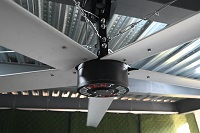
It starts with a whisper—a barely perceptible drift that slips through a cracked window or curls around the leg of a sturdy table. In the cathedral-like hush of an abandoned warehouse, giants roam not on heavy feet but on currents of air so gentle they might go unnoticed. A torn canvas tarp sways like the flank of a sleeping beast, while a scatter of sawdust rises and falls in lazy spirals, sketching the path of a wandering breeze. There’s no roar here, only the quiet reminder that scale and stillness can turn the smallest movement into something monumental.
Forgotten atria and empty stairwells become lungs of their own, breathing in rhythms set by temperature and time. A single open door at the far end of a corridor can coax a stream of air to travel the length of the building, nudging loose papers into a ghostly procession. In these spaces, the mundane becomes magical: a plastic bag caught in a corner bobs gently, almost in time with some unheard music, while dust motes hang in a shaft of light like a constellation waiting to be named. The air doesn’t just fill the room—it animates it, transforming industrial ruins into a theater of subtle motion.
What’s most striking is how these gentle drafts rewrite our sense of occupation. A space that seems empty is actually host to a quiet traffic, a migration of warmth and coolness that shifts with the day. Sunlight warms concrete floors, and the air above them stirs in response, creating a slow-motion dance that belongs to no one. Here, the giants are the invisible forces—the thermal breaths that lift a feather or turn a loose thread into a waving banner. Standing still, you can feel it on your skin: the room isn’t vacant at all. It’s alive with the passage of something vast and patient, content to roam without a sound.
Beyond the Blades: How Subtle Design Choices Redefine Industrial Comfort
When we think of industrial fans, the first image that comes to mind is usually the imposing blades slicing through the air. But real comfort in a workspace doesn’t just come from raw airflow. It’s the quieter, less obvious details that shape how a space truly feels. The angle of a grille, the texture of a control dial, the way a housing dampens vibrations—these elements barely register consciously, yet they add up to a seamless experience. In heavy-duty environments, where machinery runs for hours on end, those small considerations make the difference between an oppressive atmosphere and one that feels almost effortless.
Take the humble blade guard. Most are purely functional, designed to meet safety codes without a second thought to the user. But a guard with a slightly curved lip doesn’t just protect fingers; it smooths the airflow, reducing the turbulent flutter that causes discomfort at close range. Similarly, a motor mount with a custom rubber bushing might look like an afterthought, but it absorbs micro-vibrations that would otherwise translate into a constant low-level hum. These aren’t the kind of features that scream for attention. Instead, they work behind the scenes, reshaping the sensory environment until the fan feels less like a tool and more like an invisible companion.
Even color choices play a quiet role. In a factory where everything is battleship gray, a fan housing with a muted sage or warm sandstone tone does more than brighten a corner. It subtly shifts the psychological temperature of the room, nudging workers toward a calmer state without any conscious awareness. The placement of the power switch, the length of the cable, the texture under your thumb when you adjust the speed—each is a deliberate decision that either adds a grain of friction or removes one. Industrial comfort isn’t achieved by a single grand innovation. It’s layered into the product through a hundred restrained choices that, together, make the workplace feel a little more human.
Whisper-Quiet Power: The Unseen Force Driving Productivity and Safety
In the hum of a bustling workplace, silence is often mistaken for inactivity. Yet, the most potent force behind sustained productivity and safety isn't loud—it's the whisper-quiet hum of well-designed machinery, the muted click of precise equipment, and the absence of distracting noise. When operations run smoothly without the roar of struggle, workers can focus, communicate clearly, and react swiftly to subtle cues, turning silence into a powerful ally.
Conversely, excessive noise isn't just an annoyance; it's a silent thief of concentration and a catalyst for fatigue. Long-term exposure to high decibels can mask warning signals, erode situational awareness, and increase the risk of accidents. By prioritizing whisper-quiet technology—from advanced motor systems to sound-dampening materials—facilities create an environment where the mind stays sharp and the senses undulled, directly boosting both output and safeguarding lives.
This unseen force also reshapes maintenance culture. Quiet operation often indicates optimal performance; sudden changes in sound become early alerts to potential failures. Technicians trained to listen for these subtle shifts can preempt breakdowns, reducing downtime and preventing hazardous malfunctions. In this way, the softest sounds become the loudest warnings, driving a proactive safety ethos that no alarm can match.
A Breath of Fresh Efficiency: Unlocking Energy Savings Without Sacrifice
We often assume that trimming energy use means giving up comfort or convenience. But that trade-off is a myth. Fresh thinking around efficiency reveals that small shifts—like smart scheduling, better insulation, or upgrading to responsive systems—can slash consumption while actually improving how a space feels. The key is to stop treating energy as an endless, invisible resource and start managing it with the same care we give to lighting or temperature.
Take airflow: a well-ventilated building doesn’t need to guzzle power to stay comfortable. By matching ventilation rates to real-time occupancy and using heat recovery, you can exhale stale air and inhale savings all at once. Similarly, appliances and machinery often run full-throttle by default, even when part-load would do. Dialing back just a fraction—without ever noticing a performance dip—adds up to substantial cuts over months.
Ultimately, it’s about mindset. Instead of framing conservation as a sacrifice, think of it as shedding unnecessary waste. Modern controls, sensors, and designs let buildings breathe and operate in rhythm with their actual needs. The result: lower bills, longer equipment life, and spaces that adapt to people, not the other way around. Efficiency becomes invisible, effortless, and undeniably smart.
The Human Element: Why Comfort Is the New Competitive Edge in Large Venues
In vast arenas and stadiums, the technical specs—sound systems, giant screens, seating capacity—often dominate the conversation. But what lingers after the event isn't the wattage of the speakers or the pixel density of the display; it's how the space made people feel. When tens of thousands gather, the subtle cues of physical ease, from the width of a seat to the temperature of the concourse, become the silent arbiters of loyalty. A venue might boast cutting-edge acoustics, yet if attendees spend the evening shifting in cramped seats or navigating claustrophobic corridors, the memory sours. The human body keeps score, and it doesn't care about the engineering marvels it can't directly sense.
Consider the overlooked moments: the wait for a restroom, the trek to a concession stand, the posture of a stranger's knees against your back. These micro-experiences compound, shaping a collective verdict that no marketing campaign can overturn. The venues that win aren't necessarily the ones with the most advanced tech but those that understand anatomy and psychology in equal measure. They design for the shoulder blades that ache after two hours, the feet that swell from standing, the hands that fumble with a poorly designed cup holder. Comfort, in this context, isn't a luxury checkbox—it's the architecture of repeat attendance, woven into the bones of the building long before the first ticket is sold.
The shift is palpable across the industry, as operators realize that a loyal audience is built on the quiet assurance that their basic needs won't be an afterthought. It's about airflow that reaches the back rows, acoustics that don't punish, sightlines that don't strain the neck, and lighting that eases rather than assaults. These elements rarely make the headline, but they form the unspoken contract between a venue and its visitors: "We considered you." In an age where home entertainment systems rival the cinema and live-streaming brings the concert to the couch, the only irreplaceable offering is a physical experience that feels genuinely good—not just in the moments of spectacle, but in the gaps between. That's where the human element quietly, decisively, turns a one-time guest into a lifelong fan.
FAQ
HVLS stands for High-Volume Low-Speed. Rather than moving small pockets of air rapidly like standard fans, our designs use massive, slowly rotating blades to push immense volumes of air across large areas, creating a uniform, gentle breeze that eliminates hot and cold spots.
With over 1,000 successful installations in demanding environments like automotive plants and dairy barns, we combine rugged construction with proprietary airfoil technology that simply moves more air per watt than competing models—backed by a 10-year motor warranty.
Absolutely. By destratifying heated air in winter and boosting perceived cooling in summer, our fans help slash HVAC energy use by up to 30%. One logistics client reported a payback period of just 14 months after installing six 18-foot units.
High-bay facilities with large open areas really shine: think fulfillment centers, horse arenas, hangars, and religious assembly spaces. Even semi-outdoor venues like covered patios see remarkable airflow improvements that keep guests comfortable.
They're virtually silent. Our direct-drive motor and precision-contoured blades produce less than 38 dB on the highest setting—softer than a muted conversation—letting you hold meetings or hear equipment alarms without interference.
Every fan arrives with redundant safety links, anti-fall cable arrestors, and a smart controller that continuously monitors balance and torque imbalances, automatically braking and alerting maintenance if thresholds are exceeded. We've logged zero incident reports across our entire fleet.
Conclusion
HVLS Fan Company is reshaping large-scale air management by engineering airflow solutions that integrate seamlessly into any environment. Instead of relying on traditional, disruptive methods, they’ve pioneered a quiet yet powerful approach—high-volume, low-speed fans that move air gently but effectively across vast areas. The subtle design choices, from blade aerodynamics to variable speed controls, create a uniform climate without the usual noise or discomfort. This rethinking of airflow transforms warehouses, factories, and even public venues into spaces where temperature and air quality feel effortlessly balanced. It’s a shift from brute-force cooling to intelligent, energy-conscious climate control that respects both the facility and its occupants.
The true impact stretches beyond the mechanics. By operating almost silently, these fans eliminate distractions that compromise workplace productivity and safety, letting employees focus without the constant hum of machinery. There’s an immediate energy efficiency gain too—reducing the load on HVAC systems while maintaining comfort, which directly lowers operational costs without sacrificing performance. Most importantly, the emphasis on human comfort elevates the experience in large venues, from gyms to auditoriums. When people feel physically at ease, their engagement and well-being improve, turning climate control into a subtle but powerful competitive advantage. HVLS Fan Company proves that the smartest innovations are the ones you feel but barely notice.
Contact Us
Contact Person: Michael Danielsson
Email: [email protected]
Tel/WhatsApp: +1 951 565 7769
Website: https://www.vindusfans.com