
Heavy Duty Mixer Truck Washing Machine Solutions for Faster Concrete Cleanup and Cleaner Fleets
2026-11-20
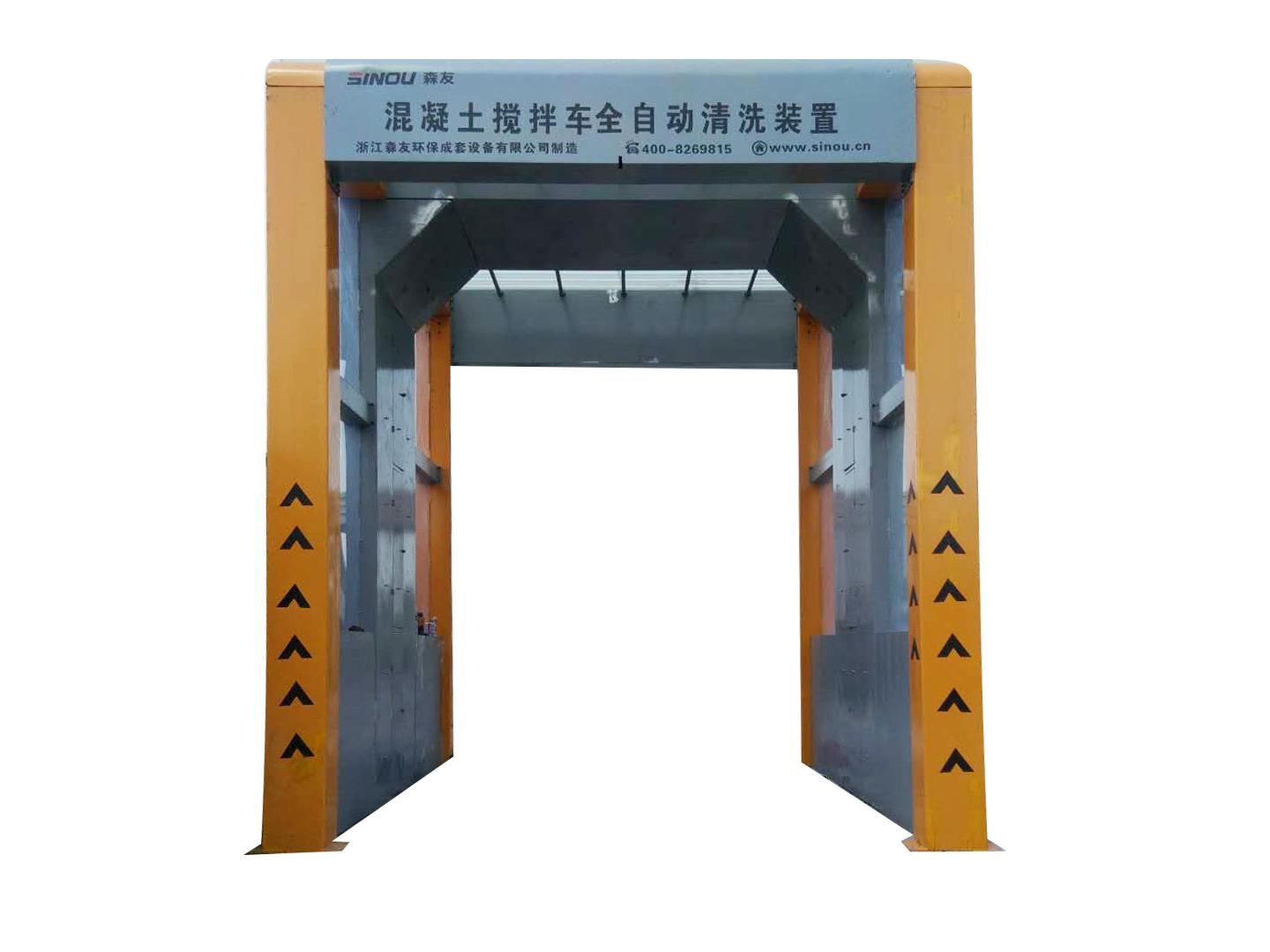
Leftover concrete doesn't just look bad on a mixer truck - it hardens, adds weight, and eats into time that should be spent on the next pour. Sinou heavy duty mixer truck washing machine solutions for faster concrete cleanup and cleaner fleets are engineered to remove that bottleneck before it becomes a bigger problem, keeping trucks job-ready and yards running smoothly.
Concrete Sets Faster Than Most Wash Cycles
Laundry day has its own rhythm: sort, load, add detergent, start the machine, and then wait around forty to fifty minutes before the spin cycle winds down. Concrete, oddly enough, doesn't need nearly that long to go from a wet slurry to a surface you can walk on. By the time the rinse cycle finishes, a fresh batch of standard concrete has already moved past its initial set and is well on its way to hardening.
The comparison sounds like a stretch until you watch it happen. Mix a bag of fast-setting concrete, pour it into a post hole, and come back after a single wash cycle. The material feels firm, holds its shape, and no longer shifts under a thumb press. That quick turnaround is why so many backyard fixes get squeezed between chores: one load in the washer, one fence post in the ground, both finished before lunch.
Of course, reaching that early set doesn't mean full strength. The concrete continues to cure and gain durability over days, just as a load of laundry still needs to make it into the dryer. But for anyone who has assumed concrete work demands a full weekend of waiting, the side-by-side with a wash cycle puts the speed in perspective.
Why Manual Washing Leaves the Worst Buildup Behind
Hand washing feels thorough because you can see the suds and target stains directly, but that control comes with a blind spot. Most people use cooler water and stop rinsing as soon as the foam disappears, which leaves dissolved sweat, skin oils, and detergent trapped between fibers. Over time, those invisible leftovers harden and turn into the stiff, greyish film that makes fabrics feel heavy even after they dry.
The problem gets worse with dense items like towels, bedding, and padded jackets. Rubbing the surface loosens dirt, but it does not create enough flow to carry particles out of the inner layers. Instead, the released grime settles back into the middle of the material, where manual squeezing cannot reach it. Each wash adds another thin deposit, and eventually the buildup becomes a food source for odor-causing bacteria.
Detergent choice makes this even more noticeable. Powders and strips that need high agitation or warm water often fail to dissolve fully in a basin, leaving their own chalky residue behind. Liquid detergents rinse away more easily, but they still require far more water changes than most people are willing to do. That is why hand-washed items may look clean at first, yet develop a sour, stale smell much faster than machine-washed ones.
Targeted Spray Coverage for Mixer Drums and Chutes
Dust and overspray often gather where the mixer drum meets the feed chute, leaving buildup that hardens over time and throws off batch consistency. A targeted spray pattern focuses moisture right at the transition point, so material moves without clinging to the edges or bridging across the opening. Adjusting nozzle angle and flow rate for the drum's rotation speed keeps the spray exactly where it's needed rather than wetting the entire surrounding area.
On chutes with steep slopes or tight clearances, a single wide fan nozzle rarely gives even coverage. Instead, overlapping narrow streams aimed at the wear zones help carry fines downward while reducing splash-back onto nearby walkways and guarding. Operators typically see fewer manual cleanouts during shift changes when the spray stays confined to the contact surfaces that actually cause blockages.
Small changes in spray placement can shift the whole flow pattern. Mounting the header a few inches closer to the drum lip or offsetting it slightly against the rotation can prevent dry pockets near the sides, while still leaving the central stream open for fast discharge. The goal is not to soak the mix but to create a thin, consistent film along the high-friction areas so the drum and chute stay clear without adding extra moisture to the product.
Reusing Wash Water Without Sending Sludge to the Drain
Many workshops and mobile wash setups make the same mistake: rinsing equipment into a drain and letting the heavy solids go with it. A simple settling tank or a series of baffled buckets changes that. Let the dirty water sit until the heavier particles drop, then pull the clearer water from the top and put it back to work on the next round of washing. It is less about high-tech treatment and more about giving the water enough quiet time to separate.
Sludge does not need to be pushed down the drain to disappear. Lay a fine mesh screen or geotextile bag over a collection barrel and pour the wash water through it. The solids stay behind, and the liquid can be reused for tool rinses or first-stage cleaning. Once the captured material dries, it can be scraped off and disposed of as solid waste, which keeps the plumbing clear without constant rinsing.
For soapy water, a two-container approach works well. Use one for the first heavy rinse and a second for the lighter rinse, rotating them as the water clears. Add a small air stone or stir the water occasionally to prevent it from turning anaerobic and sour. This keeps the water usable longer and cuts down on the volume that would otherwise sit in a drain line, hardening into blockages.
Cleaner Rigs That Last Longer Between Overhauls
Rigs that stay clean tend to hide fewer problems. When drilling mud, dust, and hydraulic film build up around pumps, hoses, and connections, small leaks become invisible until they turn into scored cylinders or cooked bearings. A wash-down schedule that targets the mast, substructure, and fluid ends removes the abrasive paste that shortens seal life. It also makes inspection quicker because cracks and weeping fittings show up against clean metal instead of disappearing under a layer of grime.
Heat is another factor that clean equipment handles better. Caked-on debris traps warmth around gearboxes and manifolds, pushing oil temperatures high enough to thin out lubrication and accelerate oxidation. Operators who keep cooling fins, breathers, and radiator cores clear usually see lower hydraulic temperatures and fewer varnish deposits in the system. Less varnish means valves shift more predictably and filters do not clog as often, which keeps the rig working instead of waiting on a repair window.
The payoff shows up at overhaul time. Teardown inspections on well-kept rigs typically reveal less scoring, less sludge, and fewer worn bushings than units that ran dirty for the same hours. That translates into longer service intervals, reduced parts consumption, and a machine that holds its value when it is time to sell or trade. Cleanliness costs very little compared to the price of a premature pump rebuild or a failed swivel bearing.
Sizing a Wash System Around Real Daily Volume
Most sizing mistakes come from trusting a brochure number instead of watching the actual line. Before adding another wash station or upgrading the pumps, spend a week or two counting what really moves through the site. Real daily volume is rarely the clean average shown in planning documents, so the count needs to include slow midweek stretches and the sharp spikes that arrive after weather breaks or shift changes.
A useful approach is to track hourly throughput, not just end-of-day totals. Two locations can both finish at 180 loads per day while one stays level and the other runs 70 loads between 2:00 and 4:00 p.m. If the system is sized for the daily average, that second site will back up during its peak and sit half-idle the rest of the day. Matching tanks, pumps, filtration, and heating capacity to the peak window is what prevents waiting and rushed cycles.
Leave some headroom, but not the oversized cushion that used to be standard advice. A system built for a volume you hope to reach in five years often wastes water, chemistry, and floor space right now. The better target is the upper edge of the current measured range, with enough reserve to handle an extra push without doubling the footprint.
FAQ
A dedicated system usually pairs high-volume water delivery with mechanical scrubbing or rotating nozzles that follow the drum and chassis profile. That combination strips off concrete slurry and fines far quicker than a handheld wand, especially around fins, hoppers, and discharge chutes.
It depends on the setup and how cured the concrete is, but many fleets cut per-truck cleaning from 30 to 45 minutes down to under 10. Automatic wash cycles also let the driver stay in the cab or handle other checks while the machine does the hard work.
Heavy-duty systems are designed for tough buildup, but no machine can reverse fully cured concrete without some effort. High-pressure hot water, targeted nozzles, and occasional use of approved release agents can lift thin hardened layers. Thick, rock-hard deposits may still need mechanical pre-scraping.
Most purpose-built units can be paired with settlement tanks, oil separators, and recirculating pumps. That keeps cement-laden water out of storm drains and allows much of the water to be reused for the next wash cycle, which helps with site compliance.
Good systems are built with galvanized or coated frames, heavy-duty pumps, and nozzles that resist clogging from sand and cement particles. They are intended for continuous operation, though pump seals, filters, and sensors still need scheduled checks.
Not always. Many units are modular and can be fitted into an existing wash lane with proper drainage. Some under-chassis spray bars work best with a shallow pit or drive-over grating, but a flat pad with adequate slope and collection can often be enough.
Typical upkeep includes clearing nozzles and inlet screens at the start of the shift, draining settlement tanks regularly, and monitoring pump oil and seals. If the site has hard water or heavy use, descaling valves and lines may also need attention to prevent buildup.
In many cases yes, because the main savings come from labor hours, reduced water use, and less downtime waiting for trucks to be cleaned. Smaller fleets sometimes recover the cost within a few months if they are currently paying for manual washing or dealing with schedule delays.
Conclusion
Time is the real enemy on a concrete site. Fresh mix hardens long before most wash cycles finish, and by the time a crew grabs a hose, the residue has already locked onto drums and chutes. Manual scrubbing rarely reaches the angled surfaces where buildup hides, so layers keep stacking until performance drops. The more practical approach is a heavy-duty washing machine built for mixer trucks: targeted spray coverage reaches the drum mouth, fins, and discharge chutes in one pass, while high-pressure nozzles break the bond before it cures. Instead of letting sludge pour into drains, closed-loop water reuse captures solids and returns clean water to the next cycle, cutting both mess and water cost.
A cleaner rig is not just about appearance. Trucks that get washed consistently hold tolerances better, avoid cement crust around moving parts, and stay out of the shop longer between overhauls. That reliability matters more when the washing system is sized around actual daily volume rather than a guess. A small fleet running twenty loads a day needs a different footprint than a plant clearing sixty trucks by noon. Matching flow rate, lane length, and reclaim capacity to real throughput keeps the wash moving without creating a bottleneck. The result is faster turnaround, less manual labor, and a fleet that leaves the yard without carrying yesterday's concrete into today's pour.
Contact Us
Contact Person: HaiYan
Email: [email protected]
Tel/WhatsApp: +86 18957325588
Website: https://www.senyoubeton.com/