
Glue Dispensing Machine Ranking Reveals Top Systems for Precision Adhesive Application
2026-11-16
Precision adhesive application has moved well beyond trial-and-error. A new glue dispensing machine ranking puts hard numbers behind the top systems, separating tools that truly hold fine bead control from those that only look good on a datasheet. If you are chasing tighter tolerances, fewer voids, and more consistent cycle times, the results are worth a close look. Among the names gaining attention is JATEN, a brand showing up where repeatability and clean dispensing matter most. Ahead, we break down the standout systems and what to weigh before you choose.
What the latest rankings actually measure beyond flow rate
Flow rate still gets the headline number, but the latest rankings treat it as a starting point rather than the whole story. Testers now push devices through short, repeated cycles to see whether the advertised liters per minute hold up once seals warm up, debris builds up, or inlet pressure drops. A unit that peaks well on a clean bench can look very ordinary after twenty minutes of real use, and the rankings increasingly reflect that gap.
Noise, vibration and fatigue are being weighted more heavily too. Instead of a single decibel reading taken at arm's length, newer assessments capture how sound changes under partial load, how much the housing vibrates against different surfaces, and whether small parts loosen after repeated start-stop runs. These details rarely appear on a spec sheet, but they shape the daily experience far more than a brief maximum-flow figure.
There is also a sharper focus on long-term serviceability. Rankings now consider how easy it is to reach the impeller or filter, whether common wear items are available without replacing the entire unit, and how performance degrades as consumables age. That shift explains why some high-flow models slip down the list while lower-flow designs with better pressure control and easier maintenance move up.
Where high-mix electronics assembly still trips up standard dispensers
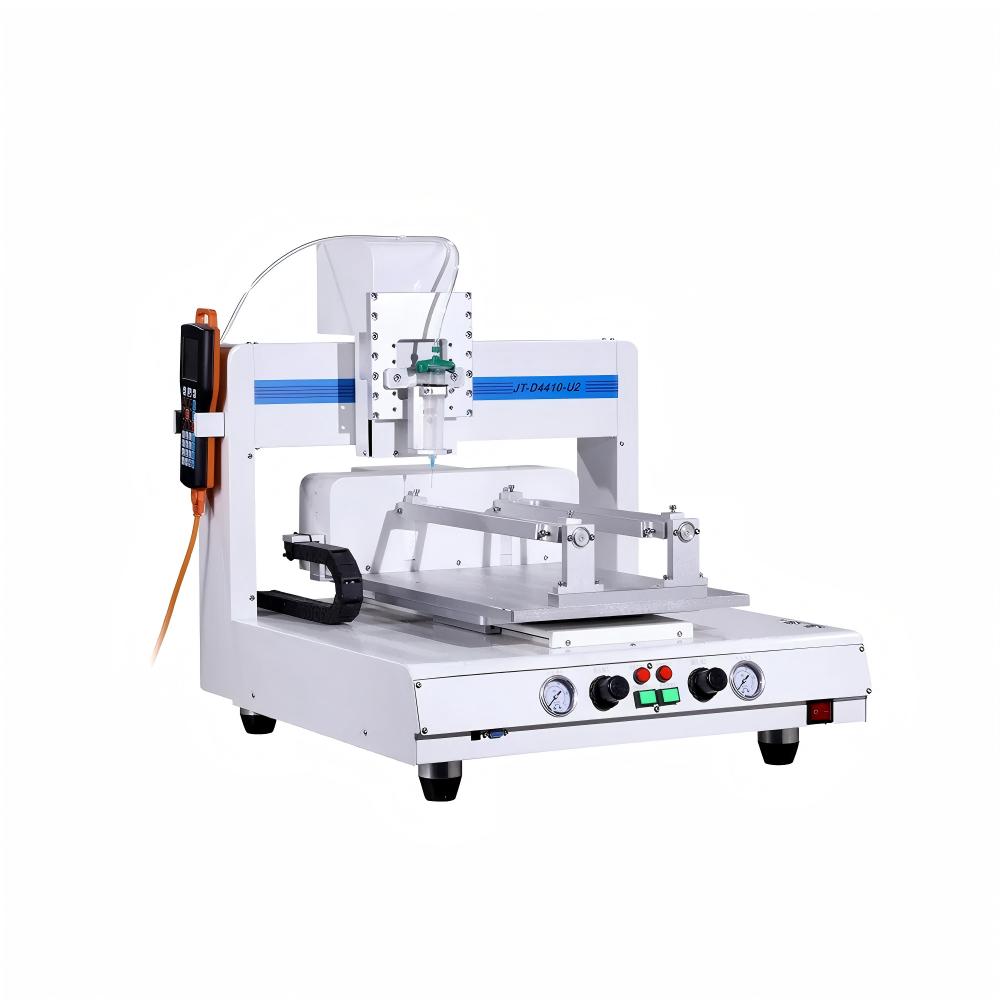
The real trouble starts when a single line has to switch between a dozen board variants in the same shift. Standard dispensers are tuned for stable, repeatable runs—same pad geometry, same fluid viscosity, same shot size. In high-mix electronics assembly, that consistency vanishes. A paste that flows perfectly on a dense BGA footprint can leave a starved fillet on an odd-shaped connector pad ten minutes later, simply because the machine hasn't been taught to adapt between each variant without manual intervention.
Another weak point shows up at the boundary between two deposit types. Many lines try to use one dispense head for both underfill and corner bonding, or for both solder paste and thermal gel. Standard machines force a compromise in needle selection, travel speed, or pressure profiling. On paper the specs overlap; on the floor, the result is a slow, fiddly calibration ritual every time the product changes. Operators end up babysitting the dispenser instead of running other stations, which quietly eats into the very flexibility that high-mix production is supposed to deliver.
The third failure is less visible but just as damaging: feedback loops. When a standard dispenser deposits slightly off-center on one board variant, it often has no way to tell the difference between acceptable drift and an actual process shift. By the time a defect is caught downstream, a whole batch of mixed panels may already be affected. High-mix work demands a dispenser that can learn per-variant offsets, store them without confusing one recipe with another, and flag borderline deposits before they become scrap—abilities that remain rare in equipment still designed around long, unbroken runs.
Closed-loop calibration separates repeatable accuracy from spec-sheet claims
A spec sheet can list impressive numbers, but those figures usually come from a single unit under tightly controlled conditions. Closed-loop calibration changes the conversation because it measures what the system actually does after each command, then adjusts the next cycle to close the gap. That feedback path turns small thermal drift, load variation, and mechanical backlash into correctable errors instead of hidden performance losses.
The result is repeatable accuracy that holds across longer runs and changing operating conditions, not just during a factory demonstration. Operators can compare claimed precision against logged, real-time corrections rather than trusting a brochure. Over time, the system builds a record of how it holds tolerance, which makes the difference between a machine that can hit a number once and one that can hit it every time.
Compact benchtop models now handle jobs that once needed full inline systems
A benchtop platform no longer signals a step down in capability. Many of these compact units now include servo-driven axes, integrated vision, and quick-change tooling that let them run precision dispensing, label placement, and small-part inspection without the long conveyors and heavy guarding of a full inline line. The difference is less about what the machine can do and more about how much floor space it leaves free.
Shops that used to reserve inline systems for high-volume work are finding that a portable machine can be rolled next to a press, a molding cell, or a packing table and put to work within minutes. Air, power, and a stored recipe are often all it takes. That flexibility matters in mixed-batch production, where a job may run for half a day before the next changeover.
Maintenance has also become far less intimidating. With fewer moving sections and modular components, most calibration and cleaning can be handled by in-house staff instead of a dedicated automation team. The result is that smaller lines can now take on projects that once would have been rejected simply because the equipment footprint and support burden did not fit the space.
Viscosity shifts and temperature drift quietly ruin adhesive bonds
A batch of adhesive that flows a little too easily can leave the joint starved at the edges, while a slightly thicker mix stalls before wetting the surface. These shifts are rarely dramatic on the datasheet, but in the bond line they translate into uneven coverage, trapped air, and a cure profile that never quite reaches the design strength.
Temperature drift adds another layer of quiet damage. A few degrees above the intended cure window accelerate the reaction and lock in residual stress; a few degrees below it leave unreacted resin and a weak boundary layer. Over time the bond may hold, but the margin shrinks until normal thermal cycling or a modest load finds the flaw.
Choosing a system around real changeover time instead of cycle speed
When equipment buyers fixate on cycle speed, they often overlook the hours lost between runs. A machine that produces one extra unit per minute can still lose that entire gain if swapping tooling, cleaning, or resetting takes half a shift. Changeover time is where real capacity hides.
A more useful approach starts with mapping every step from the last good part to the first good part. Systems built around quick-release guards, recipe-driven adjustments, and single-minute exchange principles can drop changeover from forty minutes to under ten. That shift matters more than shaving another second off a cycle that already meets demand.
Choosing by changeover also changes how you run. Short runs become viable, inventory drops, and scheduling stops being dictated by long setup penalties. In many plants, the bottleneck is not how fast the machine runs, but how long it sits idle between products.
FAQ
It focused on repeatability, temperature stability at the dispense tip, and the ability to hold tight bead profiles across different adhesive viscosities.
Auger and jetting valves tend to lead, especially where contactless placement, high cycle rates, or difficult-to-wet substrates are involved.
A shift of only a few microns can alter bead width enough to create voids, bridging, or weak mechanical bonds, so calibration drift directly affects yield.
Not really. Some mid-tier machines beat premium models in areas like fast changeover, maintenance access, and viscosity consistency, so the ranking values practical fit over price alone.
Because viscosity swings change dot size, tailing, and bond strength. Systems that keep the fluid path at a stable temperature generally post more consistent dispense results.
Many production lines do it at the start of each shift or after switching adhesive batches, but the exact interval depends on throughput, filler content, and tolerance limits.
Yes, many top systems use interchangeable wetted parts and fluid paths designed for light-sensitive resins as well as heavily filled or abrasive materials.
Closed-loop process monitoring with real-time offset correction is a major differentiator, allowing newer machines to hold tighter tolerances with far less manual adjustment.
Conclusion
Rankings for glue dispensing machines have moved past simple flow-rate bragging, and that shift is long overdue. The latest evaluations weigh closed-loop calibration heavily because a spec sheet can promise repeatability while a system drifting a few microns during a busy shift quietly ruins bond strength. In high-mix electronics assembly, many standard dispensers still stumble when jobs switch from a thin underfill to a thick thermal paste. Viscosity shifts and temperature changes turn an early-morning setting into an afternoon defect, so the top systems now stand out by holding deposit weight and placement within tight limits even as material behavior changes.
Another less obvious finding is that compact benchtop units have closed much of the gap with full inline systems. They now manage small-batch precision work that used to require a dedicated line, which matters for teams that cannot justify a large capital spend. However, the ranking authors caution against chasing raw cycle speed. Real changeover time, including nozzle cleaning, calibration checks, and recipe validation, often determines whether a machine fits a production schedule. The models that score highest combine fast physical motion with quick, foolproof setup, making them better choices for operations where product variants change by the hour rather than by the week.
Contact Us
Contact Person: Volien
Email: [email protected]
Tel/WhatsApp: +86 18029161762
Website: https://www.jatentech.com/