
Garment RFID Label Brands Revolutionizing Apparel Inventory Control
2026-05-21
Inventory chaos has long plagued apparel retailers—until now. The rise of garment RFID label brands is rewriting the rules of stock management, and OSRFID is at the forefront. These tiny tags are turning guesswork into precision, slashing labor costs while supercharging accuracy. What if you could count thousands of items in seconds, not hours? That’s the reality reshaping fashion logistics, and the innovators behind the labels are making it happen. Stick around as we unpack how these brands are transforming inventory control from a dreaded chore into a competitive edge.
Why Apparel Brands Are Ditching Barcodes for RFID Tags
The shift from barcodes to RFID tags is reshaping inventory management in the apparel industry, offering a leap in efficiency that old-school scanning simply can’t match. Unlike traditional barcodes that require individual line-of-sight scanning, RFID allows stores to count thousands of items in minutes using handheld readers or fixed portals. This speed transforms stocktaking from a labor-intensive chore into a near-instant process, freeing up staff to focus on customer engagement rather than tedious manual counts.
Beyond inventory speed, RFID unlocks real-time visibility across the supply chain, giving brands the power to track items from factory to fitting room. With each tag broadcasting a unique identifier, retailers spot shrinkage, misplacements, and trends as they happen, turning raw data into actionable insights. This granular tracking also fuels omnichannel strategies like buy online, pick up in-store, since accurate stock levels become a given, not a guess.
Brands also embrace RFID for the shopper experience it enables—think smart mirrors that suggest matching items or checkout-free stores where purchases are tallied automatically. As consumers expect seamless, tech-driven interactions, RFID acts as the invisible backbone, merging physical retail with digital convenience. The result is a streamlined operation that slashes out-of-stocks, lifts sales, and keeps customers coming back for a frictionless shopping journey.
The RFID Labels Redefining Stock Visibility Behind the Scenes
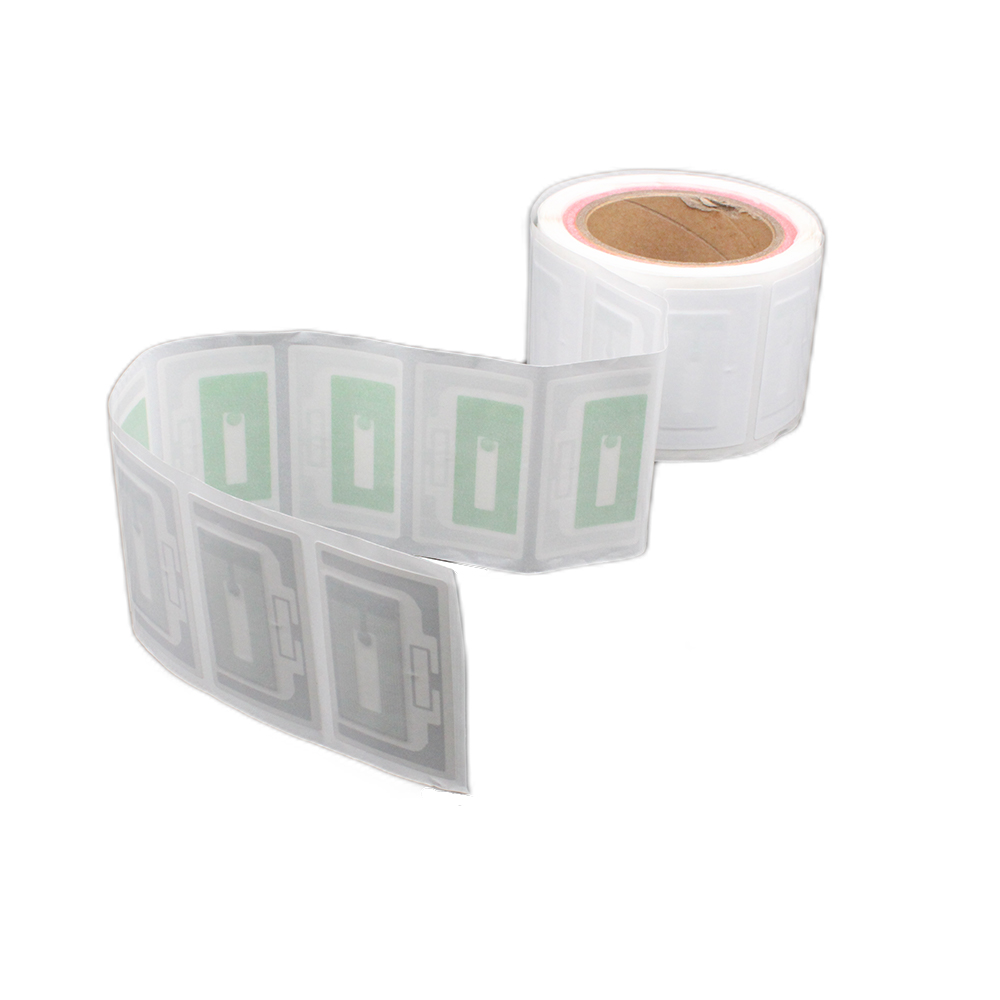
Inventory management has long been a battle against guesswork, but RFID labels are changing that dynamic entirely. Instead of relying on periodic barcode scans that offer only a snapshot, these small tags broadcast real-time data without human intervention. A pallet moving through a warehouse isn’t just a blur of boxes anymore—it’s a stream of exact locations, quantities, and even environmental conditions. That shift turns stock visibility from a reactive chore into a proactive strategy, giving teams the ability to forecast demand spikes or spot shrinkage long before it hits the bottom line.
What’s often overlooked is how this granular insight reshapes entire workflows. Traditional methods demand line-of-sight scanning, forcing workers to hunt down items in crowded shelves or awkward corners. RFID eliminates that dance—readers tucked into gates, handhelds, or even ceiling-mounted antennae capture data as goods pass by or sit still. Suddenly, restocking becomes predictive, not panic-driven. A retail backroom that once needed half a day to reconcile physical counts now sees discrepancies flagged by the minute, freeing staff to focus on high-value tasks instead of endless recounts.
The real magic, though, lies in bridging physical and digital spheres so seamlessly that the line blurs. These labels don’t just report presence; they carry unique identities that link each item to its full history—batch numbers, expiration dates, even transport logs. That means a warehouse manager can trace a single carton from arrival to dispatch without ever touching it, while store associates instantly verify authenticity or freshness with a quick handheld pulse. Behind the scenes, that level of connected intelligence turns inventory from a static asset list into a dynamic, self-auditing system that quietly rewrites the rules of supply chain efficiency.
How Real-Time Data Is Cutting Overstock and Out-of-Stock Chaos
When a sudden heatwave hits, the last thing a retailer wants is a warehouse stacked with unsold coats while fans and air conditioners vanish from shelves within hours. That disconnect between what's actually happening on the ground and what the inventory system assumes is often what fuels both overstock and stockout nightmares. Real-time data changes the game by piping in live signals from point-of-sale terminals, foot traffic sensors, and even weather APIs, letting businesses adjust orders and shelf allocations on the fly instead of waiting for next month's static forecast.
Beyond reacting to the obvious, real-time visibility helps tame the ripple effects further up the supply chain. A distribution center that sees a sudden spike in online orders for a specific SKU can trigger a redistribution alert before local stores empty out, or dial back a replenishment order that's no longer needed because a rival's promotion just stole the spotlight. This granular, minute-by-minute awareness dismantles the inefficiency of bulk safety stock decisions and replaces them with surgical precision—moving inventory where it's actually about to sell rather than where a spreadsheet guessed it might.
The human element can't be overlooked either. Store associates armed with live inventory dashboards can confidently offer alternatives when a requested item is low, or even upsell from neighboring stores with surplus. Instead of stockouts translating into lost sales and frustrated customers, they become opportunities to demonstrate reliability. That shift from scrambling to fix problems after they blow up, to quietly preventing them in the background, is where real-time data stops being a buzzword and starts reshaping everyday retail reality.
Brands That Nailed RFID Implementation (and What They Learned)
When Zara first rolled out RFID across its stores, it wasn’t just about inventory accuracy — it was a complete rethinking of how stock flows from backroom to shop floor. The brand learned that the real magic happens when store associates trust the system. Early on, some employees were skeptical, scanning items felt like extra work. But once they saw how instant stock visibility let them refill bestsellers within minutes instead of hours, adoption took off. The lesson? Technology alone doesn’t transform retail; it’s the everyday habits of the people using it that turn data into action.
Amazon’s Just Walk Out experiments pushed RFID into a different realm, where speed and invisibility are everything. They discovered that even milliseconds matter: tag placement on fast-moving grocery items had to be brutally precise to avoid misreads at the exit gates. Yet the bigger insight was that customers don’t want to “experience” RFID — they want it to feel like the store just knows what they took. That meant hiding antennas in ceilings and refining algorithms until the tech faded into the background. The hard truth? If shoppers ever notice the system working, you’ve already lost the seamlessness they expect.
Walmart’s apparel mandate taught the industry a quieter lesson about compromise. They asked suppliers to tag merchandise, but quickly realized some tags were failing near metal racks or in dense piles of denim. Instead of demanding perfection, they created room for iteration — letting vendors test different inlay designs and sharing failure data openly. That collaborative loop cut read rates from shaky to near-perfect inside a year. The real takeaway was cultural: large-scale RFID succeeds not when you enforce a standard, but when you build a community that improves it together.
The Hidden ROI: Shrink Reduction and Labor Savings with RFID
When retailers first consider RFID, the conversation usually revolves around inventory accuracy and omnichannel fulfillment. But there is a quieter, often overlooked advantage that directly strengthens the bottom line: the dramatic reduction in shrink. By embedding intelligence into every item, RFID makes it significantly harder for products to go missing—whether through administrative errors, internal theft, or shoplifting. Continuous, automated cycle counts replace sporadic manual audits, closing the gaps where losses tend to accumulate unseen.
At the same time, the labor equation is quietly being rewritten. Tasks that once consumed thousands of employee hours—like physical stock counts or hunting down misplaced goods—can now be handled in minutes with a simple sweep of a handheld reader. This doesn't just trim payroll costs; it liberates staff from backroom drudgery, allowing them to refocus on customer-facing activities that actually drive sales. In practice, one high-volume apparel chain discovered that after deploying RFID across 200 stores, inventory accuracy soared above 98% while annual shrink rates fell by over 40%, all without adding a single person to the payroll.
The real insight is this: the return on an RFID investment isn't just in the metrics you plan for. It’s in the savings that seep into the business from all sides—fewer lost items, less time spent chasing numbers, and more resources available for growth. The technology pays for itself in ways that never appear on a typical ROI spreadsheet, quietly turning a supply chain upgrade into a profit engine.
From Factory to Fitting Room: Tracking Every Garment’s Journey
A garment's lifecycle begins long before it lands on a store rack. From the moment raw fabric is cut and stitched in a bustling factory, every piece is assigned a digital identity—a simple barcode or a smart RFID tag. This tiny marker becomes its silent companion, logging its creation details: date, shift, machine line, and even the operator who hemmed the sleeves. As the finished item moves through quality checks, it accrues data, building a birth certificate of sorts. This initial logging transforms an anonymous textile into a traceable asset, ready to navigate the complex web of modern supply chains.
Once packaged, the garment’s journey accelerates. It travels from factory to warehouse, gets sorted, and is dispatched to distribution centers, often crossing borders. At each handoff, scanners capture its passage, updating a centralized system visible to retailers. The real magic happens when the item reaches the fitting room. Here, smart mirrors and interactive tags reveal not just size and color options but the full backstory—where the cotton was grown, how the dyeing process conserved water, or which artisan crafted the embroidery. This transparency turns a simple try-on into a dialogue between the wearer and the maker, bridging the gap from factory floor to fitting room in a way that feels personal, not just logistical.
Even after purchase, the journey isn't over. Some brands now invite customers to scan a QR code on the care label to unlock care tips, repair services, or recycling programs. This ongoing connection loops the consumer back into the product's narrative, encouraging mindful ownership. It also closes the circle for the brand—post-sale data reveals which designs end up in donation bins quickly and which become cherished staples, informing future design choices. In this ecosystem, every garment's journey becomes a continuous story, woven together by invisible threads of data, ensuring that from first stitch to final seam rip, no piece ever truly disappears into anonymity.
FAQ
RFID (Radio Frequency Identification) labels are small tags embedded with a microchip and antenna that use radio waves to transmit data about a garment. Unlike barcodes, they don't require line-of-sight scanning and can be read in bulk, even when items are stacked or inside boxes.
The shift is driven by a need for real-time, accurate stock visibility. RFID drastically reduces the time needed for inventory counts (from days to hours), minimizes human error, and helps prevent stockouts and overstocks, directly boosting sales and customer satisfaction.
Companies like Avery Dennison, Checkpoint Systems (a division of CCL Industries), and SMARTRAC (now part of Avery Dennison) are at the forefront. They offer durable, high-performance tags specifically designed for textiles, often with sustainable materials and customizable designs that blend into garment branding.
A single handheld or fixed reader can capture data from hundreds of tagged items simultaneously. This eliminates the manual errors of scanning each piece, achieving inventory accuracy rates above 99%, compared to 65–75% with manual or barcode methods.
Yes, most top-tier RFID providers ensure their hardware and tags work with popular ERP, POS, and e-commerce platforms. They typically offer APIs and middleware that feed real-time inventory data directly into a retailer's existing software ecosystem.
Modern retail RFID tags are passive (no battery) and only transmit when energized by a reader at close range. Many tags can be permanently deactivated at the point of sale, and they don’t store personal data—only a product identifier, similar to a barcode number.
The industry is moving toward eco-friendly tags made from recycled or biodegradable materials, dual-frequency tags that serve both logistics and customer interactions (like smart mirrors), and embedding RFID directly into wash care labels or hangtags for seamless integration.
Conclusion
Apparel brands are rapidly moving away from traditional barcodes and embracing RFID tags to gain unprecedented control over inventory. Unlike barcodes that require line-of-sight scanning, RFID labels can be read in bulk and at a distance, fundamentally reshaping stock visibility behind the scenes. This shift allows retailers to track every garment’s journey from the factory floor to the fitting room with pinpoint accuracy, ensuring that what the system says is in stock actually matches what’s on the shelf. Real-time data feeds from RFID systems are helping brands cut through the chaos of overstock and out-of-stock scenarios, enabling dynamic replenishment and smarter allocation. The result is not just operational efficiency but a direct boost to sales and customer satisfaction.
Beyond basic inventory counts, the hidden ROI of RFID lies in shrink reduction and labor savings. Automated counts slash the hours employees spend on manual stocktakes, while the precise tracking discourages theft and misplacement. Leading brands that have nailed RFID implementation reveal that success hinges on integrating the technology into existing workflows and training staff to leverage the data effectively. These pioneers have learned that RFID is not just a tool for counting items—it’s a strategic asset that illuminates supply chain bottlenecks and consumer behavior patterns. As more garment RFID label brands innovate, the apparel industry is witnessing a quiet revolution where inventory accuracy becomes a competitive advantage, driving profitability through smarter, leaner operations that respond instantly to market demands.
Contact Us
Contact Person: Esme Mo
Email: [email protected]
Tel/WhatsApp: 0086 191 2931 7837
Website: https://www.osrfidglobal.com/