Four Shaft Shredder Manufacturer Selection: Essential Criteria for Your Business
2026-11-16
Choosing the wrong four shaft shredder manufacturer doesn't just waste money—it stalls your entire operation. Many buyers chase the lowest quote and overlook the engineering details that separate a workhorse from a liability: torque curves, blade hardness, bearing quality, and real after-sales support. This guide cuts through the sales chatter and lays out the essential criteria for your business. And when you're ready to shortlist, Shengzhong Shredder is built to meet those standards—not just on paper, but in daily production.
Torque Density Beyond the Brochure Numbers
Brochure numbers usually quote peak torque at a single rpm, but true torque density depends on how that torque is delivered across a usable band and how much of it survives after heat soak, voltage sag, or packaging compromises. A motor that looks impressive on a spec sheet can feel flat if the controller limits current at lower speeds or if the cooling jacket cannot shed sustained heat.
Real torque density also includes the space claim beyond the rotor and stator: bus bars, coolant ports, sensor wiring, and mounting flanges all eat into the packaging envelope. Two motors with identical listed torque can have wildly different installed density once you account for the ancillary hardware and the clearance needed for thermal expansion.
To evaluate it properly, look at continuous torque per liter over a realistic drive cycle rather than a momentary peak. Manufacturers that publish transient figures without derating curves are telling only half the story. The difference shows up in how the machine behaves after repeated launches or long grades, not on a cold test bench.
Matching Cutter Geometry to Your Actual Waste Stream
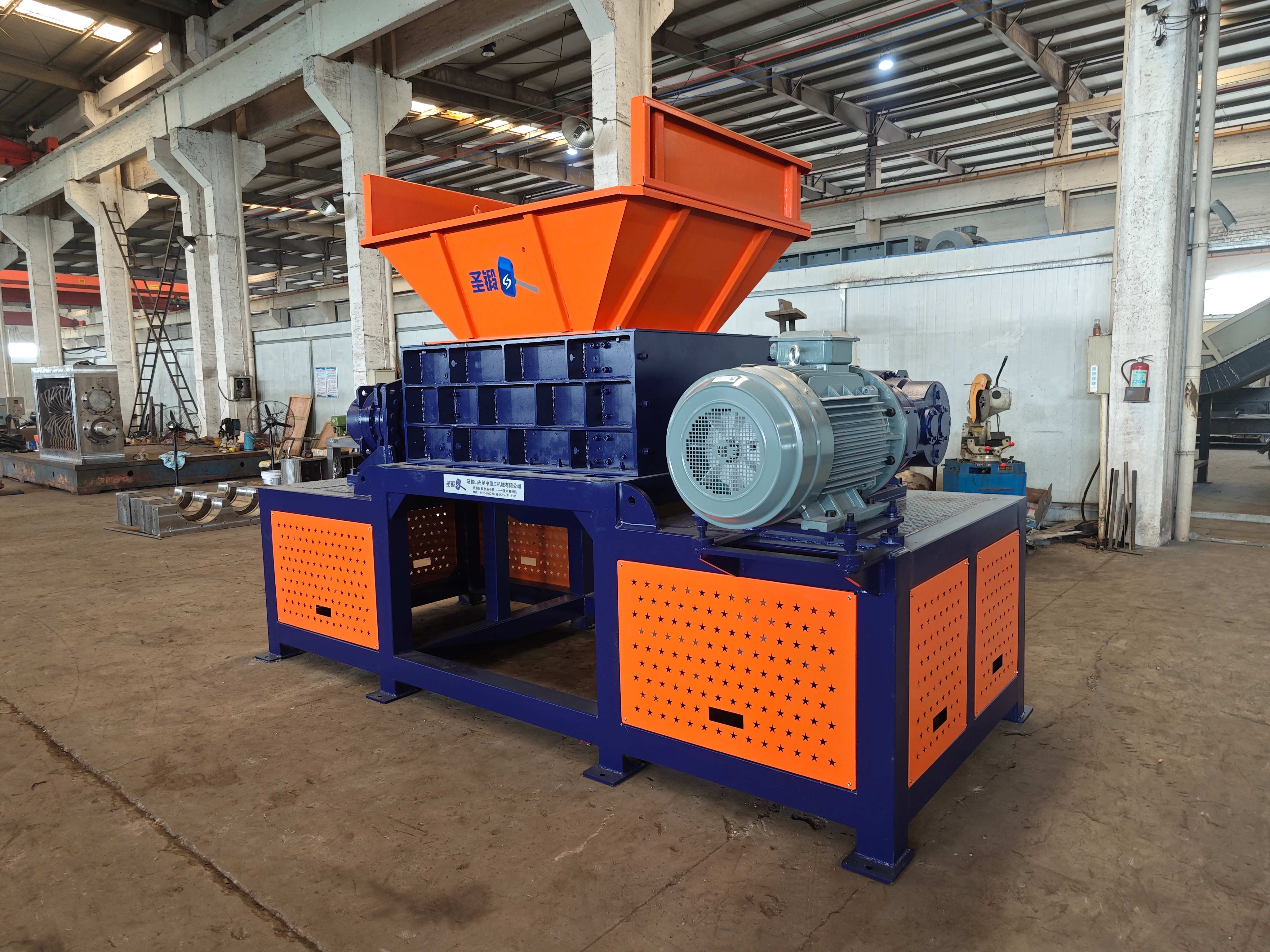
Running a single cutter profile across wildly different waste streams is how you end up with premature edge rounding, heat-checked surfaces, and motors that never quite reach nameplate amps. The geometry that shreds carpet roll smoothly will stall on rigid PVC pipe, and a hook angle tuned for film scrap loses its bite on glass-reinforced nylon. Before swapping blades again, pull samples of the actual material you process on a bad week—not the clean, dry feedstock from the spec sheet.
Look at the failure mode first. If you are seeing long, stringy strips that wrap around the rotor, the rake angle is too shallow for that material's tear strength. Increase it a few degrees and step down the land width so chips curl instead of ribbon. Conversely, if the bed knife is chipping and screws are backing out, the impact is too sharp—drop the rake and add a small radius at the cutting edge to spread the shock over more carbide.
Also match the cutter's chip pocket to the bulk density of your waste. Dense, brittle plastics need fewer, deeper gullets to clear fractured chunks without re-grinding, while fluffy fibers demand more aggressive stagger to prevent clogging between the rotor and screen. Recording the rotor RPM, screen size, and blade gap for each material changeover builds a quick reference matrix. That way, when the same weird batch from a new supplier shows up, you already know the geometry adjustment that keeps throughput flat without burning a shift on trial and error.
Why Frame Rigidity Decides Bearing Life More Than Lubrication
A bearing’s catalog rating assumes perfect alignment, uniform load distribution, and a rigid housing. Real machines rarely offer any of that. The frame flexes under load, the shaft tilts a fraction of a degree, and suddenly the rollers or balls are carrying edge stresses the manufacturer never intended. Lubrication can reduce friction, but it cannot correct a geometry problem. Once the frame allows misalignment beyond a few microns per meter, the contact patch shrinks and local pressure spikes, initiating subsurface fatigue long before any lubricant film would break down.
Think of a car wheel bearing on a bent axle. You could flood it with the finest synthetic grease and still watch it fail in a few thousand kilometers. The reason is simple: rigidity determines whether loads stay where the bearing can handle them. A flimsy frame lets the bearing’s inner and outer rings move relative to each other in ways that squeeze the lubricant out of the critical zone. No oil, however tenacious, can maintain a hydrodynamic wedge when two surfaces are wedged together by structural deflection.
Field data from heavy equipment and industrial gearboxes tells the same story. Machines with stiff, well-ribbed housings routinely see bearing life exceed calculated L10 values by a factor of three or more, even with ordinary mineral oil. On flimsy fabrications, premium synthetic lubricants rarely push life past 50% of rating. The lesson is counterintuitive but consistent: fix the frame first. Lubrication is a maintenance task; rigidity is a design decision, and it is the design that sets the upper limit for bearing survival.
The Real Test: Run Your Material, Not Their Demo
A vendor's canned demo is polished to a shine, but it rarely survives contact with your actual workflow. The moment you hand them a sample from your own production line, the gaps appear. Their algorithm chokes on the edge cases you deal with daily, the integration points you assumed were trivial turn into half-day workarounds, and the pretty dashboard suddenly can't display the metric your team cares about most. That's exactly why you shouldn't judge anything until your material is in the machine.
Running your own material isn't about being difficult; it's about exposing the difference between a rehearsed script and real adaptability. When a system has only ever seen the vendor's curated examples, you're essentially watching a magic trick. Bring your messy, unbalanced, oddly formatted data and see if the solution still speaks your language. If the vendor hesitates, asks to "pre-process" your files, or suggests you change your process to fit their tool, that's your answer. The real test isn't whether the demo works—it's whether the tool works when you're not looking.
What you learn in that hour of testing your own material is worth more than a month of slide decks. You'll see where the model gets confused, how the workflow breaks under your specific constraints, and whether the support team actually helps or just recites documentation. Most importantly, you'll leave knowing whether this is a tool that bends to your reality or one that demands you bend to it. That distinction doesn't show up in a comparison chart. It only shows up when you feed it the stuff you actually need to process, every single day.
After-Sale Support You Can Measure in Hours, Not Promises
When a compressor goes down on a Tuesday afternoon, the last thing you want is a support portal that promises a callback within two business days. Our team picks up the phone in under three minutes, and the person on the other end can actually pull up your order history, serial number, and service notes without transferring you four times.
Most replacement parts ship the same day if you call before 4 p.m. local time, and we send a tracking link before the courier even scans the label. For urgent line-down situations, a senior technician can join a video call within the hour to walk your crew through diagnosis, no ticket escalation required.
We track every open case against a four-hour first-response clock, not a vague 'as soon as possible.' If that clock breaks, the case automatically flags a supervisor. That's the kind of after-sale support you can time with a stopwatch, and we're comfortable being measured that way.
Smart Wear Monitoring Without Costly Downtime
Every minute a critical pump or conveyor sits idle, the cost stacks up fast. Smart wear monitoring shifts the focus from scheduled shutdowns to actual condition, using compact sensors that track vibration, temperature, and surface loss in real time. Instead of tearing down a gearbox just because the calendar says so, maintenance crews get a clear signal when a bearing starts to degrade—often weeks before it would fail.
The payoff isn't just fewer surprises. By catching wear patterns early, teams can order replacement parts before they're urgent, line up a short planned stop, and avoid the cascade of secondary damage that turns a simple seal replacement into a full rebuild. One food processing plant cut unplanned line stops by nearly half after fitting wireless wear sensors on its mixer drives.
What makes the approach practical is that it doesn't demand a massive data science team. Modern wear monitors connect to existing control networks or send alerts straight to a phone, so a shift supervisor can check a trend line as easily as a text message. The result is less guesswork, fewer emergency calls at 2 a.m., and more uptime without the usual price tag.
FAQ
Start with their engineering track record in handling materials similar to yours. Ask for case studies or references from operations that process comparable waste streams, because a manufacturer who understands your material’s abrasiveness, moisture content, and particle size goals will design a much more reliable machine than one offering a generic model.
It’s often the difference between a machine that lasts five years and one that needs constant rebuilds. Look for solid, forged or cast alloy rotors rather than fabricated assemblies, and blades made from wear-resistant tool steel with a clear heat treatment specification. Also check whether the cutting gap is adjustable, since that affects both throughput and wear life.
For most industrial applications, yes. A four shaft shredder is rarely a one-size-fits-all purchase. The best manufacturers will modify hopper size, screen perforations, rotor speed, and even shaft spacing to match your material and desired output. Off-the-shelf units can work for simple jobs, but custom engineering usually pays for itself in lower operating costs.
Request a material test on the exact model you’re considering, preferably with your actual sample material. A reputable manufacturer will run the material through a pilot shredder and provide a detailed report on throughput, particle size distribution, power draw, and wear. If they won’t test or only show a video of similar material, treat that as a warning sign.
Look beyond the equipment itself at the service network. Ask about spare parts availability, typical lead times for wear components, whether they offer on-site training, and how they handle emergency breakdowns. A manufacturer with local service technicians or a strong distribution partner will save you weeks of downtime compared to one that only ships parts from overseas.
They matter more than many buyers realize. Ask about emergency stop placement, rotor lockout systems, hydraulic screen lifters, and automatic overload reversal. A manufacturer that designs for safe maintenance and quick cleanout will reduce your workplace accident risk and keep operators more productive.
Not automatically. Some newer companies bring innovative drive systems or better material-specific designs that older firms lack. Focus on the depth of their engineering team, warranty terms, and willingness to share performance data from existing installations. Longevity can indicate stability, but it should not overshadow a newer manufacturer’s technical advantages if they can prove reliability.
Conclusion
Choosing a four shaft shredder manufacturer starts with looking past marketing specs. Torque density on a brochure rarely reflects how the machine handles your specific material under continuous load, so ask for load curves and real-world throughput data instead of peak numbers. Equally important is cutter geometry: a hook, square, or pyramid tooth profile can make the difference between clean size reduction and constant jamming, depending on whether you feed plastics, wood, e-scrap, or mixed waste. Don't overlook frame rigidity either. A heavily welded, stress-relieved base frame keeps shafts aligned under torsional stress, which does more for bearing life than any premium grease or automatic lubrication system. If the frame flexes even slightly, bearings fail early no matter how well you maintain them.
The only trustworthy evaluation is to run your own material through the shredder, not watch a staged demo with easy feedstock. Send a representative sample, preferably the worst batch you have, and measure output particle size, throughput, and power draw. After the sale, support should be quantified in response and resolution hours, not vague promises. Ask for guaranteed on-site or remote diagnostic turnaround and spare parts availability. Finally, look for smart wear monitoring that uses sensors to track blade and screen wear in real time, allowing planned maintenance without shutting down for manual inspections. These practical checks separate manufacturers who understand your operation from those who just sell equipment.
Contact Us
Contact Person: Leon
Email: [email protected]
Tel/WhatsApp: 8615385558866
Website: https://www.shred-waste.com