
Flexible Stone Veneer: Redefining Industry Standards for Modern Design
2026-08-04
Imagine a material that blends the timeless beauty of natural stone with the flexibility to wrap around curves, corners, and complex surfaces. Flexible stone veneer is doing just that—redefining what's possible in modern design. Unlike rigid slabs, this innovation opens up a world of creative freedom without the weight or hassle. At the forefront of this shift is Magic Stone, a brand that's setting new benchmarks in quality and versatility. But what exactly makes flexible stone veneer a game-changer, and how is it reshaping industry standards? In this post, we'll peel back the layers.
The Secret Behind Ultra-Thin Stone Surfaces
Ever wondered how massive slabs of natural stone can be sliced into wafer-thin layers without losing their inherent strength and beauty? It starts with advanced resin reinforcement and precision cutting techniques that transform a raw block into a flexible, lightweight veneer. Unlike traditional thick stone, these ultra-thin surfaces are bonded with a fiberglass or polyester backing, allowing them to bend slightly and adhere to curved walls or furniture with ease. The result is a material that feels authentic to the touch yet weighs a fraction of what you'd expect, opening up creative possibilities that were once impossible.
The real magic lies in the way the stone is stabilized during the thinning process. Rather than simply grinding away material, manufacturers impregnate the stone with a specialized polymer that fills natural cracks and pores at a microscopic level. This not only prevents shattering during cutting but also enhances the final product's durability and moisture resistance. The stone retains its organic texture and color variations, yet becomes tough enough to be used in high-traffic areas or even outdoors. It's a delicate balance of engineering and artistry that keeps the stone looking raw but behaving like a modern composite.
What often surprises designers and architects is how these ultra-thin surfaces can actually outlast their thicker counterparts in certain settings. Because the stone is so slim, it doesn't store as much thermal energy, making it less prone to expansion cracks from heat. And the same polymer infusion that gives it flexibility also makes it resistant to staining and etching from everyday spills. Whether it's wrapping a pillar in seamless marble or cladding a cabinet with reclaimed slate, the secret isn't just in making stone thinner—it's in rethinking how stone can perform when we strip away the weight but keep its soul intact.
Why Designers Are Switching to Flexible Stone
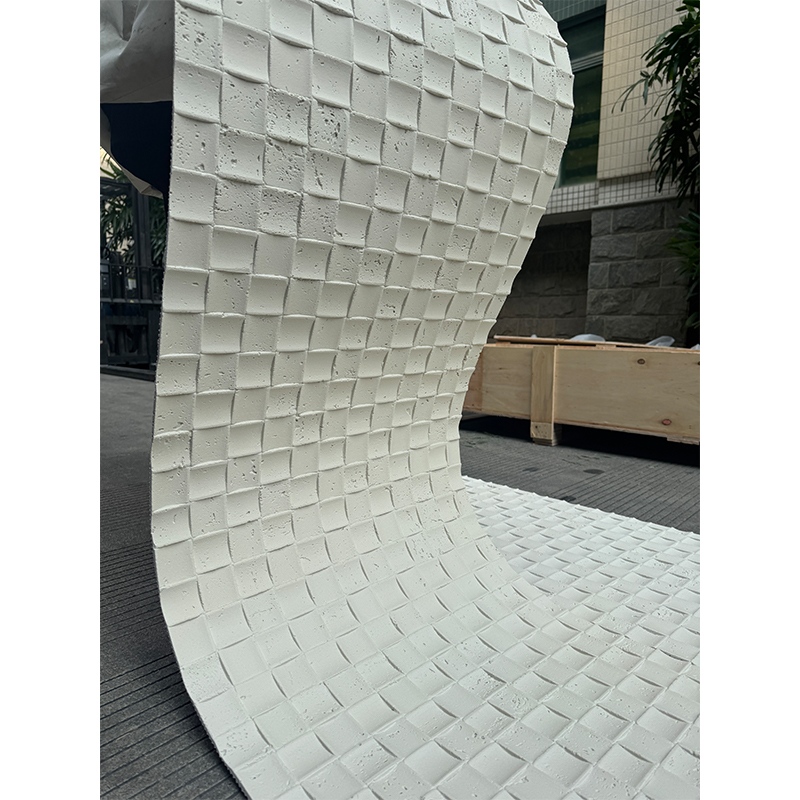
Flexible stone is rewriting the rules of surface design. Unlike rigid slabs that demand perfect substrates and careful handling, this material can bend, curve, and wrap around pillars or uneven walls without cracking. It arrives on-site as a lightweight veneer, often with a peel-and-stick backing, which means fewer trades, less dust, and dramatically shorter install times. For designers who value both form and function, it opens up possibilities that natural stone simply can't match—think flowing organic shapes and seamless arcs that feel sculptural, not forced.
Beyond its pliability, flexible stone carries an understated elegance that feels genuinely contemporary. It's made from real stone—slate, mica, quartzite—sliced into ultra-thin layers and bonded to a flexible carrier. The result retains the tactile grain and subtle color variation of quarried rock, but with a fraction of the weight and environmental footprint. Since it can be backlit or used in moisture-prone areas without heavy sealing, it invites designers to experiment with transparency and texture in ways that heavy masonry never allowed.
There's also a quiet pragmatism driving the shift. Shipping solid stone is costly and carbon-intensive; flexible stone rolls up and fits in a tube. Renovating a historic lobby or a boutique storefront no longer means reinforcing floors or shutting down entrances for weeks. It aligns with the growing demand for materials that look bespoke but behave practically. For the designer, it's about achieving that rare balance where visual impact doesn't come at the expense of logistics—and the more projects push that boundary, the more this material becomes the default, not the exception.
5 Ways Flexible Stone Veneer Transforms Spaces
Flexible stone veneer opens up possibilities that rigid materials simply can’t match. Unlike traditional stone slabs, it bends and conforms to curved walls, columns, or unconventional architectural details without sacrificing the authentic look of natural stone. This adaptability lets you wrap entire feature walls in a seamless layer of slate or mica, turning awkward corners into focal points rather than design obstacles. The lightweight nature also means it can be applied to surfaces that would struggle under the weight of real stone, from ceiling accents to furniture fronts.
Beyond structure, the veneer brings a tactile warmth that shifts the atmosphere of a room. The subtle variations in texture and color catch light differently throughout the day, creating a dynamic backdrop that feels both organic and refined. In a minimalist space, a single accent wall can anchor the design with earthy depth; in a rustic setting, it blends effortlessly with wood and metal. Because it’s available in so many patterns—from stacked quartzite to weathered ledge stone—you’re not limited to one aesthetic. The same material can evoke a modern loft vibe or a cozy cottage feel depending on how you use it.
Installation is another way the material reshapes creative thinking. You’re not dealing with heavy machinery or specialized masons—the peel-and-stick application puts a full stone finish within reach for a weekend project. That ease encourages experimentation: try lining the back of a bookcase, cladding a kitchen island, or covering an entire powder room. The durability factor also means those choices last, resisting moisture and wear in ways that paint or wallpaper never could. Ultimately, the veneer invites you to rethink what walls and surfaces can do, making a space feel custom-built without the custom price tag.
Installation Made Easy: The Flexible Advantage
Getting your system up and running shouldn't require a degree in engineering. That’s where flexibility truly shines. Modular components and adaptable configurations mean you can fit the installation into your unique space—not the other way around. Whether you’re dealing with tight corners, unusual layouts, or legacy infrastructure, the plug-and-play design lets you skip the heavy lifting and custom fabrication.
What really sets a flexible installation apart is how it respects your time and budget. Forget rigid one-size-fits-all kits that demand special tools or outside expertise. With intuitive brackets, adjustable mounts, and pre-terminated cabling, the whole process becomes intuitive. Most users find they can complete the setup in a single afternoon using just basic hand tools.
And when your needs evolve, the system evolves with you. Need to reposition sensors or add new modules? No problem. The non-permanent mounting solutions mean you won’t leave behind a mess of holes or damaged surfaces. It’s this kind of long-term adaptability that keeps the installation working for you, not against you, and proves that “easy” doesn’t have to mean “temporary.”
Sustainable Style: Nature Meets Innovation
Sustainable style has evolved beyond just recycling logos, weaving nature's resilience into fashion’s very seams. Designers now extract dyes from avocado pits and onion skins, transforming kitchen waste into palettes that rival synthetic vibrancy. Garments are grown from mycelium leathers, a root-like network that demands minimal water and decomposes without a trace, challenging the throwaway culture ingrained in fast fashion.
Innovation surfaces in unexpected collaborations: engineers and botanists partner with ateliers to embed living organisms into textiles. Imagine a dress that photosynthesizes, its fabric embedded with algae that absorb carbon dioxide as you walk. These pieces blur the line between garment and ecosystem, turning the wearer into an active participant in urban air purification—a quiet rebellion against pollution, stitched with intent.
Technology amplifies nature’s inherent intelligence through zero-waste pattern cutting, shaped by algorithms that mimic leaf venation to leave no fabric scrap behind. 3D knitting constructs entire sweaters without seams or offcuts, each thread precisely placed. It’s fashion that honors resources, where function and beauty merge, proving that forward-thinking design need not sacrifice the planet for the sake of aesthetics.
Beyond Tile: The Future of Wall Coverings
For decades, tile has been the default choice for walls in kitchens, bathrooms, and beyond. But a quiet revolution is reshaping interior surfaces—one that trades grout lines and rigid geometry for fluid, seamless, and expressive alternatives. From large-format porcelain slabs that mimic marble without the maintenance, to tactile plasters and bio-based panels that breathe, the next generation of wall coverings is all about blurring the line between art and architecture.
It’s no longer just about practicality; it’s about personalization and sensory experience. Textures are becoming softer, warmer, and more varied—microcement, rammed earth composites, and 3D-printed surfaces allow for curvatures and organic forms that tile simply can’t achieve. Color palettes are shifting away from neutral safety nets toward bold pigments and gradient effects that make a wall a focal point, not just a backdrop.
Sustainability, too, is driving change. Recycled glass terrazzo, mycelium-based panels, and circular-design systems that allow for easy removal and reinstallation are rewriting what it means to surface a room. As digital printing advances, we can even apply photorealistic imagery or bespoke patterns onto nearly any substrate, turning walls into canvases that evolve with our needs—no demolition required.
FAQ
Flexible stone veneer is a lightweight surface material made by bonding a thin layer of real stone to a flexible backing, such as fiberglass or polymer. Unlike heavy, rigid stone slabs, it can bend and conform to curved surfaces, opening up design possibilities that traditional stone can't achieve.
It eliminates the need for heavy-duty structural support and specialized masonry skills. The material can be cut with standard tools and applied like wallpaper, drastically reducing installation time and labor costs while still delivering the authentic look of natural stone.
Designers love the blend of organic texture and adaptability. It can wrap columns, flow seamlessly around corners, and even be used on furniture, allowing for a cohesive aesthetic that bridges indoor and outdoor spaces without visible seams or weight constraints.
By using a fraction of the stone quarried for solid slabs — often sourcing from post-industrial stone waste — the veneer drastically reduces resource extraction and transportation emissions. The backing materials are also increasingly incorporating recycled content, aligning with circular design principles.
Yes, when properly sealed, it resists UV radiation, freeze-thaw cycles, and moisture intrusion. Its flexibility actually helps prevent cracking since it can move with substrate expansion and contraction, making it suitable for exterior facades in diverse climates.
Maintenance is minimal — typically just occasional cleaning with mild soap and water. An exterior-grade sealant should be reapplied every few years depending on exposure, but there's no need for regular polishing or joint repairs like traditional stonework.
While the per-square-foot cost of the veneer might be similar to mid-range stone, the overall project cost is often 40-60% lower when factoring in reduced structural requirements, faster installation, and minimal waste. It also widens access to premium stone looks for budget-conscious designs.
Conclusion
Flexible stone veneer is quietly upending long-held assumptions about what natural stone can do. At its core lies a remarkably thin layer of genuine stone, often slate or mica, bonded to a lightweight backing. This is not a synthetic imitation; it is the real thing, split into a veil so delicate it can flex, roll, and wrap around curves that would make traditional slabs crack. Designers are embracing it not just for the aesthetic authenticity, but for the freedom it grants. A single sheet, barely a few millimeters thick, can transform a flat accent wall into a textured slate feature, or cloak a curved reception desk in the organic feel of stacked quartzite. The material shifts the conversation from rigid paneling to something almost fabric-like, enabling organic shapes and fluid interiors that were once only possible with far less durable materials. In residential and commercial projects alike, it is becoming the go-to solution when the design vision demands both the permanence of stone and the flexibility to defy straight lines.
What truly sets this innovation apart, however, is how effortlessly it enters a space. Installation requires no masonry, no heavy machinery—often just a utility knife and adhesive. Panels can be cut to size on site, wrapped around columns, or fitted into tight corners without the mess and weight of traditional stonework. This simplicity drastically reduces labor time and cost, making high-end stone aesthetics accessible for projects that would have never considered it before. Beyond the practical gains, there is an understated sustainability story: the ultra-thin slicing process multiplies the yield from a single quarry block, reducing waste and transport emissions. It is a quiet marriage of nature and ingenuity. As wall coverings evolve, flexible stone veneer is pushing the boundary of what a surface can be—not just a backdrop, but a sculptural element that brings depth, texture, and a tactile connection to the earth into everyday interiors, all while rewriting the rulebook on what stone is supposed to do.
Contact Us
Contact Person: Vito
Email: [email protected]
Tel/WhatsApp: 86 13088879266
Website: https://www.magicstonemcm.com