Dual Fuel Generator Original Manufacturer Selection Tips for Smart Buyers
2026-08-16
Most dual fuel generator listings claim "factory direct" — until you ask for a tour or a load bank test. Then the silence starts. Smart buyers have learned to separate original manufacturers from trading companies, and the difference shows up in warranty support, spare parts, and long-term fuel efficiency. DINGBO POWER doesn't hide behind marketing copy: we build our own engines, test every unit, and welcome audits. Before you sign a purchase order, read what actually matters in manufacturer selection. Your downtime budget will thank you.
What Separates a True Dual Fuel Generator Maker from a Reseller?
Plenty of companies can slap their logo on a generator and call it a day, but a genuine manufacturer lives inside the engineering. They control the fuel system design, the carburetion tuning, and the way propane and gasoline switch over under load. A reseller simply picks a model from an overseas catalog, changes the paint color, and hopes the specs hold up. The difference shows up when you lift the panel: real makers have proprietary ignition maps, reinforced valve seats for dry fuel, and a fuel selector that doesn't hiccup at 80% load.
Warranty support is another tell. A true maker stocks replacement parts for their own castings and coils, often for a decade or more. They can walk you through a pressure regulator issue over the phone because their techs actually built the regulator assembly. A reseller points you to a generic import warehouse, or worse, tells you to buy a whole new unit. Look for a serial number that traces back to a specific production line, not just a shipping container.
Finally, real manufacturers innovate in small, visible ways — a cold-weather propane vaporizer, a dual-fuel hour meter that logs fuel type, or a high-altitude jet kit included in the box. Resellers rarely touch those details because they don't own the tooling. If the brand can't explain how their dual fuel system prevents oil washout during long propane runs, they're probably just moving boxes.
Questions to Ask Before You Trust a Factory’s Fuel System Claims
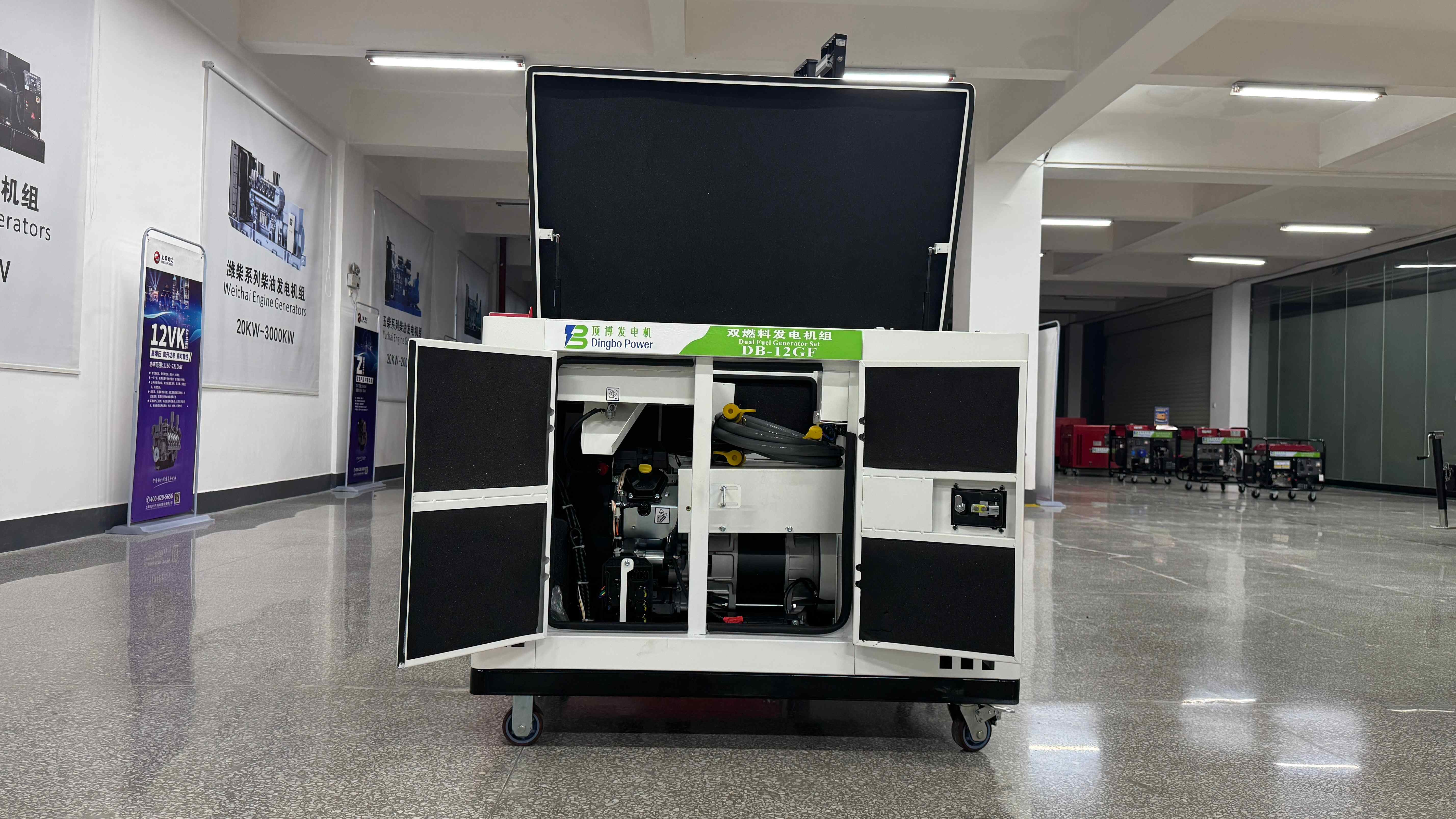
Before accepting any factory's fuel system performance data at face value, ask for the actual test conditions behind the numbers. Many suppliers quote peak efficiency or durability figures without clarifying load profiles, fuel quality, temperature ranges, or maintenance intervals. Request the full test report, not just a summary slide, and compare the stated boundary conditions with your own operating reality. If the factory cannot produce raw data or a third-party validation, that gap is often more telling than the claim itself.
Next, press on failure modes and long-term behavior. A fuel system that works flawlessly for 500 hours in a clean lab may clog, leak, or lose pressure after 5,000 hours with real-world contaminants. Ask how the factory validates seal life, injector fouling resistance, and pump wear under varying sulfur content, biodiesel blends, or cold starts. Concrete answers about known weak points and design trade-offs are a sign of engineering maturity; vague assurances about 'world-class quality' are not.
Finally, ask about production consistency and change control. Prototypes and pilot batches can be hand-tuned to pass audits, while mass production drifts. Request evidence of in-line testing, statistical process control data, and how the factory handles component substitutions or supplier changes. Also ask for references from customers running similar duty cycles, and if possible, speak directly with their maintenance engineers about real failure rates. Trust is built on transparent process data, not polished brochures.
Contract Details That Save You Money When Customizing Dual Fuel Units
When you're finalizing a dual fuel unit purchase, the contract's definitions matter more than the quote itself. Push for a line item that locks the base burner and gas train configuration price, while separating true customization charges. Many vendors bury "engineering review" fees that can be waived if you provide complete fuel specs upfront. Require that any change order after approval be billed at cost plus a capped percentage, not a flat hourly rate.
Another overlooked clause is the delivery penalty. Custom dual fuel units often get delayed because the control panel wiring or emissions testing is treated as an afterthought. Include a weekly penalty for late shipment that starts after a realistic grace period, and make sure the penalty is tied to the actual value of the unit, not a nominal amount. Also ask for a clause that freezes component prices—especially for the dual fuel valve train and low-NOx burners—once the deposit is paid.
Finally, warranty terms can quietly cost you. Don't accept a standard "one year parts only" if the unit has a bespoke combustion control system. Negotiate two years on the controls, and insist that warranty coverage begins at startup, not shipment, if the unit sits in storage. Include a clause that prohibits the manufacturer from voiding warranty due to fuels you've already disclosed, even if those fuels vary seasonally.
Why Propane Tuning Reveals More About a Factory Than Gasoline Does
Most people assume a factory's competence shows up in how it handles the obvious stuff—gasoline engines, standard fuel maps, everyday calibrations. But propane is a different animal. It burns cleaner, runs at different stoichiometry, and demands tighter control over ignition timing and fuel delivery. When a facility tunes for propane, they can't hide behind familiar shortcuts or generic baselines. Every small mistake shows up immediately as hard starts, lean spikes, or uneven idle. That's why watching a team work with propane tells you far more about their actual skill than watching them tune gasoline all day.
Gasoline tuning offers a lot of room for masking errors. You can get away with slightly rich mixtures, lazy timing curves, or modest injector inconsistencies and still produce a drivable result. Propane doesn't give you that cushion. The margin between a perfect tune and a poorly running engine is razor thin. A factory that truly understands fuel chemistry, thermal dynamics, and load-based mapping will show it in how smoothly their propane calibrations come together. Those that rely on trial-and-error or copied base maps will struggle visibly. The propane process becomes an unintentional audit of the entire engineering workflow.
There's also the matter of infrastructure and discipline. Setting up a proper propane tuning cell means paying attention to fuel temperature, vaporizer performance, and regulator response—things gasoline work rarely stresses. If a factory keeps these variables under control and still produces consistent, repeatable results, you know you're looking at a team that respects details. In contrast, a shop that treats propane as an afterthought will expose itself through sloppy data logging and inconsistent test procedures. Ultimately, propane tuning strips away the forgiving nature of gasoline and reveals whether a factory's reputation is built on real knowledge or just accumulated luck.
How to Inspect a Dual Fuel Generator’s Frame, Alternator, and Regulator
Start with the frame. Look for hairline cracks along the welded joints, especially near the engine mounting brackets and the lifting eyes. Use a flashlight and a small mirror to check the undersides that usually get missed. If you spot rust, don't just paint over it—tap the area lightly with a ball-peen hammer to see if the metal has thinned. Check every bolt and nut for tightness by hand; a loose isolator mount can cause excessive vibration that travels into the alternator and regulator over time.
Move to the alternator. With the unit off, spin the rotor by hand if access allows, and feel for any roughness or grinding from the bearings. Inspect the stator windings for discoloration or a baked varnish smell, which points to past overheating. Pull the brush cover and look at the slip rings—deep grooving or uneven wear means the brushes aren't seating properly. On the wiring side, wiggle each terminal lug. A connection that moves even slightly will create resistance and heat under load.
Finally, test the regulator while the generator runs under a steady load. Attach a multimeter to the output and watch the voltage over a ten-minute warm-up. If the reading drifts more than a volt or two, or if the voltage drops sharply when you switch on a heavy appliance, the regulator may be failing to compensate. Check the multi-pin connector at the regulator for green corrosion or pushed-back pins—clean it with electrical contact spray and reseat it firmly before condemning the component.
Factory Visits: What Smart Buyers Look for in Assembly and Testing
On the assembly floor, smart buyers don't just count machines. They watch how operators handle small parts, whether fixture changeovers are chaotic, and if the line stops are logged honestly. A clean, shiny facility can hide sloppy process control; a slightly worn bench with clear visual aids often tells you more about discipline.
Testing is where the real negotiation starts. Instead of nodding through a prepared demo, experienced buyers ask to see a recent failure report or the calibration records for the test rig. They pay attention to how many units get re-tested after an initial fail and whether those “passed” labels were applied by the same person who ran the test—separation of duties matters more than a thick quality manual.
Ultimately, the visit is less about auditing a checklist and more about spotting the gap between what managers say in the conference room and what line workers actually do. Buyers who ask a tester “What happens when you find a borderline result?” often learn more in ten seconds than in an hour of PowerPoint slides.
FAQ
Check whether the factory has its own assembly line for dual fuel kits, not just a warehouse. Ask for recent production floor videos showing multiple units under construction, a dedicated engine test bench, and a load bank large enough for the kVA range you need. A real manufacturer will have torque wrenches calibrated, serial number tracking on major components, and an in-house quality control log for each unit. If they can't show the generator being built from a bare engine block to a finished set, treat their 'factory' claim with suspicion.
Request a live video call from the production line, not a pre-recorded tour. Ask them to point the camera at a unit with your chosen brand of engine and a nameplate being stamped or engraved in real time. Genuine original manufacturers can also share the bill of materials (BOM) and the engine-generator match test record for a specific serial number. If they hesitate or only show finished units in a warehouse, they are likely sourcing from another plant.
The engine is the heart of any dual fuel setup because the fuel mixing system, governor interface, and ignition timing adjustments all happen there. A well-known engine platform means you can find spare parts and local service support easily, but that alone isn't enough. The factory must also have proven experience modifying that specific engine for dual fuel use—otherwise you may end up with poor load acceptance or uneven gas substitution rates under varying load conditions.
Look for ISO 9001 as a baseline for process control, and then match certifications to your destination market: CE for many regions, EPA or CARB for the United States, and sometimes ATEX or CSA depending on the installation environment. Don't just collect certificates—ask for the certificate number and verify it on the issuing body's database. A credible manufacturer will also have test reports from an independent lab for the dual fuel components, not only for the base diesel engine.
Ask for a load test video where the unit's serial number is visible and the date is stated verbally or shown on a screen. Better yet, request a scheduled live stream during a factory acceptance test. Pay attention to the diesel-to-gas transition time, how the governor responds to sudden load steps, and whether gas substitution percentage stays stable. A factory that understands dual fuel systems will be able to walk you through these readings instead of just showing the engine running.
Watch for these red flags: the business license address doesn't match the factory location, they refuse a live video tour, their salesperson can't answer basic questions about fuel mixing ratios or governor settings, and the quotation lacks a factory letterhead or spec sheet with a serial number system. Also be suspicious if sample photos show different workshop backgrounds or if they ask for full payment before allowing any third-party inspection.
Yes, and it's often one of the best places to spend extra budget. A factory that tunes the dual fuel system for your altitude, ambient temperature, and load profile will deliver a unit that starts reliably in winter and doesn't trip under sudden block loading. Generic bolt-on kits can leave you with unstable idle, excessive diesel consumption, or even engine knock. Custom engine mapping also reduces wet stacking and carbon buildup over time, which means fewer service calls.
Clarify whether the warranty covers the dual fuel conversion parts—mixer, gas train, electronic control unit—not just the base engine. Ask for the exact response time for remote diagnosis, how many critical spare parts they keep in stock, and the lead time for emergency shipments. If you operate in a remote area, request a recommended maintenance schedule and either on-site training for your technicians or access to a local service partner before the order is shipped.
Conclusion
Selecting a genuine dual fuel generator manufacturer starts with verifying that the company actually builds its own engines, frames, and fuel systems rather than simply rebranding imported units. A true maker will openly share detailed schematics of the fuel delivery path, explain how the carburetor and regulator are matched to both propane and gasoline, and invite you to inspect the casting and machining of critical components. When you ask about gas flow rates, pressure drop across the regulator, or cold-start behavior under propane load, the answers should come from in-house engineering data, not generic marketing sheets. Look for factories that track each unit's serial number through every assembly station and can demonstrate traceability from raw alternator copper wire to the final load bank test.
Beyond the technical checks, the commercial terms often reveal more than the product itself. Request a customization contract that itemizes the alternator brand, frame gauge, regulator supplier, and the exact test protocol for each build—smart buyers negotiate free replacement of any component that fails within the first 200 hours on propane. During a factory visit, watch how workers align the engine to the alternator, whether they use torque wrenches on critical bolts, and if each generator is run under dual fuel load before crating. A manufacturer that tunes every unit on both gasoline and propane, then stamps the test results on the nameplate, is far more reliable than one that only spot-checks. Ultimately, the right partner shows you their mistakes, explains their rework process, and stands behind the welded frame, copper windings, and regulator calibration as one integrated system.
Contact Us
Contact Person: Rita
Email: [email protected]
Tel/WhatsApp: +8613481024441
Website: https://www.dbdieselgenerator.com/