
Container Freezer Room Company Guide to Choosing Reliable Cold Storage Solutions
2026-11-16
Finding a cold storage solution that won't fail you when it matters most is harder than it looks. A poorly designed freezer room can eat into your profits, spoil your inventory, and leave your team scrambling. Before you sign off on any supplier, you need a clear way to separate genuine expertise from empty claims. PAULAIR has spent years helping businesses avoid those costly mistakes, and this guide walks you through what actually determines a reliable cold storage setup — not the flashy brochures, but the engineering and support behind the walls.
Mapping Your Cold Storage Load Before You Talk to Any Supplier
Most cold storage conversations fall apart before they begin because the buyer can't describe their own load pattern beyond "I need freezer space." Take a week to map what actually moves through your operation: pallets in, pallets out, how long items sit, which SKUs need blast freezing versus holding. Without that snapshot, every supplier pitch sounds equally plausible and you'll end up paying for someone else's assumptions.
A workable load map doesn't need to be fancy. A shared spreadsheet or even a wall chart works. Track daily inbound and outbound volumes for at least 30 days, flag seasonal spikes like holiday production runs or harvest windows, and note temperature requirements down to the decimal if you're handling things like ice cream versus frozen dough. Then calculate your true steady-state capacity plus a 15–20% buffer for growth or unexpected delays. That buffer matters more than most people think—it's the difference between a supplier that can absorb a truck breakdown and one that turns your product away at the dock.
When you finally sit down with suppliers, hand them your load map and ask how their facility handles each peak and valley. The ones who start talking about flexible dock scheduling, dedicated rooms, and transparent billing will rise to the top. The ones who only quote a flat rate per pallet probably haven't thought about your actual operation. You might also discover you don't need a full third-party warehouse at all—maybe a shared space or a strategic partnership with a nearby processor covers your gaps. That level of clarity changes the conversation from "how much do you charge" to "can you actually handle my flow."
What a -25°C Chamber Needs That a 2°C Room Doesn't
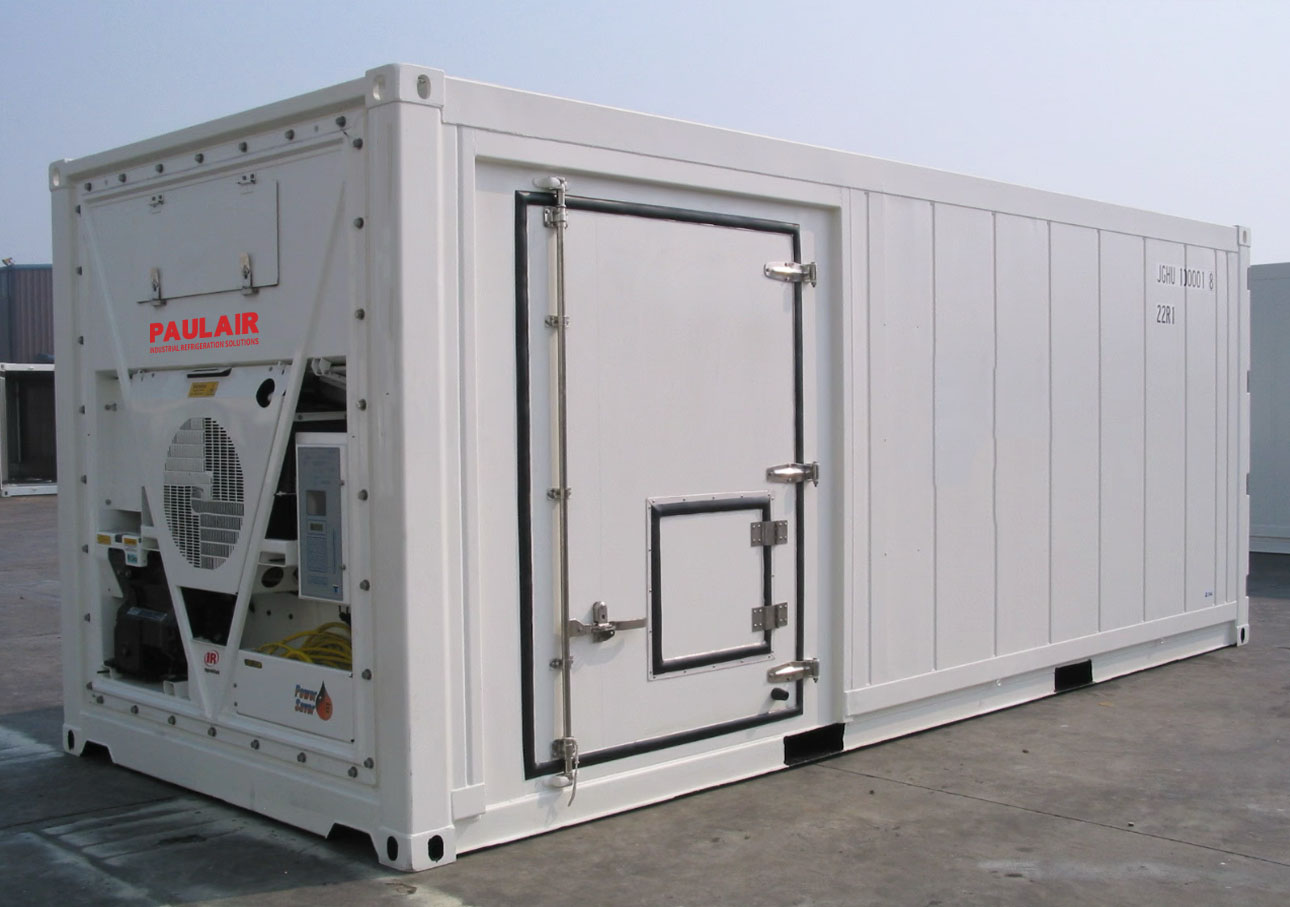
At -25°C, every material choice becomes a potential failure point. A 2°C room can get away with standard door seals, off-the-shelf hinges, and basic wall insulation. But a deep-freeze chamber demands specialized gaskets that won't harden and crack, lubricants that stay fluid instead of turning to wax, and thermal breaks that prevent frost from creeping through metal frames. Even the floor matters: concrete can spall under repeated freeze-thaw cycles unless it's properly insulated and vapor-barriered from below.
Defrost strategy is another hidden difference. A room held just above freezing rarely accumulates significant ice on evaporator coils, so a simple off-cycle defrost or nothing at all works fine. A -25°C chamber, however, pulls moisture out of the air every time the door opens, coating the coil in a thick layer of frost that chokes airflow and drops efficiency. That means you need timed or demand-defrost systems, drip pans with heaters, and drain lines that won't freeze solid inside the insulated envelope.
Then there's the control logic. Holding 2°C is forgiving—if the compressor cycles off for a few minutes, product temperature barely moves. At -25°C, a few degrees of drift can ruin stored material, so the refrigeration system must be sized for rapid pull-down and tight recovery. This often means dual compressors, hot gas bypass for capacity modulation, and redundant sensors placed where air stagnation is worst. You're not just cooling a box; you're engineering a stable thermal environment that fights against convection, infiltration, and the constant thermal mass of stored goods.
Panel Thickness, Floor Load, and Other Details Sales Reps Rarely Mention
Most flooring samples look identical from the top, but flip one over or ask about the core board, and you'll quickly see where corners get cut. Panel thickness, for instance, varies widely even within the same product line—some manufacturers shave off a millimeter here and there to hit a price point. That thin panel might feel fine during a showroom walk-through, but under a rolling office chair or a heavy appliance, it can flex enough to crack the locking joints over time. Sales reps rarely volunteer this because it's easier to sell the visual than the structural reality.
Floor load capacity is another spec almost never printed on the retail tag, yet it matters more than the wear layer for certain rooms. A dense vinyl plank rated for 500 pounds per square inch behaves very differently under a loaded bookshelf than one rated for half that, especially when installed over a slightly uneven subfloor. If you're planning a home gym, a piano, or a wall of records, ask for the manufacturer's point-load test data—not just the total weight limit on the box. Otherwise, you might end up with permanent indentations that no amount of area rugs will hide.
Then there are the quieter details: edge bevel geometry, static load recovery time, and even the adhesive's temperature tolerance before it bonds. A plank with a deep micro-bevel hides subfloor imperfections well but traps dirt in high-traffic hallways. A resilient core with poor memory will show dents from table legs days after the furniture is moved. And if the install happens in a cold garage or a sun-baked sunroom, the glue's open time and cure window can make or break the bond. These are the things you only learn by calling the manufacturer's tech line, not from the glossy one-pager left on the counter.
Why a Cheap Seal Can Ruin a Perfectly Good Freezer Room
A freezer room is only as good as its weakest point, and the door seal is usually that point. When a cheap seal starts to lose its shape or crack in low temperatures, it stops pressing evenly against the frame. Cold air escapes through the gaps, but worse, warm, humid air gets pulled in. That incoming moisture turns to frost along the edges and then builds up on the evaporator coils, forcing the system to run longer and harder just to hold the set temperature.
The damage snowballs from there. The compressor cycles more often, energy use climbs, and the floor near the door gets slick with ice. Stored goods near the opening start to warm up, and if the room is used for food or medical supplies, that temperature drift can ruin entire batches. A high-quality seal costs a fraction of what it takes to fix a burned-out compressor or re-stock spoiled inventory, yet cheap seals keep getting installed because they look fine on day one.
Once the frost line forms and the door no longer closes tightly, the problem feeds itself. The seal becomes stiffer, the gaps widen, and the ice buildup makes it even harder to get a proper shut. Replacing the seal early is cheap insurance; waiting until the freezer is fighting a losing battle turns a minor maintenance item into a major repair bill.
Energy Bills After Installation: The Metric Most Buyers Overlook
It's easy to get tunnel vision on the upfront cost—equipment, labor, maybe a new thermostat—and completely forget that this thing is about to become a monthly line item on your utility bill. A slightly cheaper unit can waste enough energy in the first two years to erase what you saved at checkout. Checking the estimated annual operating cost before you commit is the single most useful habit most buyers never develop.
The efficiency label only tells part of the story. Your actual energy use also depends on outdoor temperatures, insulation quality, and whether anyone in the house likes to crank the thermostat down to 68 in July. Two homes with identical equipment can have wildly different bills. If possible, ask neighbors or friends with a similar setup what their summer and winter bills actually look like—that real-world data is worth more than any spec sheet.
The smartest way to compare options is to add the projected energy cost to the purchase price over the time you plan to stay in the home. A system that saves $2,000 today but costs an extra $40 a month to run becomes the more expensive choice in about four years. By the time you sell or replace it, you could be out several thousand dollars without realizing it. That's the overlooked metric hiding in plain sight.
Service Agreements That Actually Show Up When the Compressor Fails
Most service agreements read great until a compressor seizes on a 95-degree Friday afternoon. The ones that actually matter skip the vague “prompt response” language and put specific numbers on paper: a four-hour emergency window, a fully stocked compressor kit on the truck, and labor rates locked for the entire repair, not just the diagnosis. If the agreement hedges on whether a full compressor replacement is covered or treats refrigerant recovery as an add-on, you’re already paying for someone to read the fine print instead of fixing the unit.
A useful test is to ask the provider what happens when the failure is catastrophic rather than a simple capacitor swap. The companies that show up already have a process for overnight parts, a direct line to a real dispatcher, and a technician who can start the teardown without waiting for three levels of approval. They also don’t hide behind “normal wear and tear” exclusions for a compressor that failed at year seven when the agreement promised coverage through year ten.
Before signing, get one detail in writing: the maximum time from your first call to a running system, not just a visit. A contract that guarantees “technician arrival” but says nothing about repair completion leaves you with a cool waiting room and a warm building. The agreements worth keeping are the ones that treat compressor failure as an event with a clear end, not an open-ended service ticket.
FAQ
Look beyond the price tag. Ask for details on panel thickness, door sealing quality, and whether the refrigeration unit is sized for your exact temperature needs. A trustworthy company will walk you through load calculations without hesitation.
Inspect the insulation density and the cooling system's capacity at high ambient temperatures. Reputable suppliers often provide performance data for extreme conditions, not just ideal lab settings.
Usually yes, if your site has space constraints or unusual workflow. Off-the-shelf units force compromises; a tailored layout can improve air circulation and reduce long-term energy waste.
Regular coil cleaning, checking door gaskets for cracks, and monitoring defrost cycles prevent most failures. Schedule a professional inspection at least twice a year to catch refrigerant leaks early.
With proper maintenance, expect 15 to 20 years from the structure and 8 to 12 years from the refrigeration components. Cheap units often need compressor replacement within five years.
Clarify who handles site preparation, electrical connections, and initial temperature pull-down. Ask whether the company offers emergency call-outs and how quickly they can dispatch technicians in your region.
Yes, if it was designed as a modular unit with lifting points and a reinforced frame. Confirm that the warranty covers disconnection, transport, and reinstallation by certified technicians.
Underestimating door usage. Frequent openings or heavy forklift traffic demand reinforced floors, rapid-recovery cooling, and strip curtains. Ignoring this leads to temperature swings and spoiled inventory.
Conclusion
Before you reach for a supplier's brochure, figure out exactly what your cold storage has to hold, how often doors open, and what kind of product tolerates temperature swings. A -25°C chamber isn't just a colder version of a 2°C room; it needs heavier insulation, defrost strategies that don't shock the stored goods, and floor heating to stop frost heave. Many buyers only compare quoted prices, but panel thickness, floor load ratings, and the quality of door seals decide whether the room holds temperature when ambient heat spikes or a forklift clips the frame. A cheap seal can let in enough moist air to ice up the evaporator and ruin an otherwise solid freezer within months.
Then look past the invoice. Energy bills after installation often reveal whether the system was sized correctly or just sold to hit a number. Compressors that short-cycle, lights left on, and poorly fitted panels all show up on the monthly utility statement. Equally telling is the service agreement. If the fine print excludes emergency call-outs after hours or waits days for a replacement compressor, you'll learn the hard way when product starts thawing. Ask about actual response times, spare parts kept locally, and whether technicians inspect seals and door alignment during routine visits. The most reliable cold storage solution isn't necessarily the one with the lowest upfront cost; it's the one whose supplier asks about load mapping before quoting, details panel specs without being prompted, and backs the whole room with a service contract that treats a compressor failure as an urgent event, not a scheduling inconvenience.
Contact Us
Contact Person: Jack
Email: [email protected]
Tel/WhatsApp: +86-13335127698
Website: https://www.paulair-refrigeration.com