
Coal-Based Activated Carbon Manufacturer: Pioneering High-Performance Purification Solutions
2026-07-28
From safeguarding industrial processes to ensuring environmental compliance, the demand for superior purification has never been greater. Meet Tundrr—a coal-based activated carbon manufacturer turning challenges into breakthroughs with high-performance solutions. What sets them apart? Read on to discover the science behind their pioneering approach.
The Science of Superior Adsorption in Coal-Based Activated Carbon
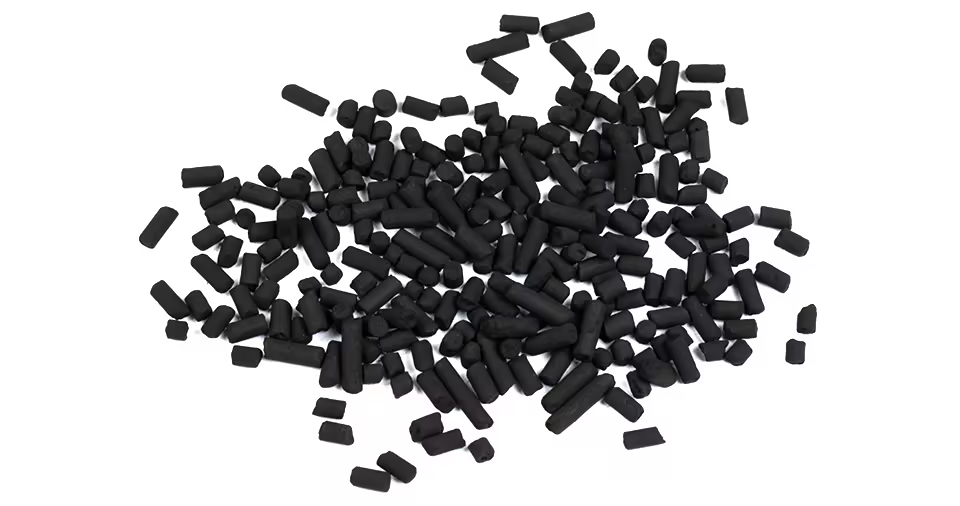
At the heart of coal-based activated carbon's remarkable performance is its highly developed internal pore structure, crafted through meticulous activation processes. During production, raw coal undergoes thermal treatment in a controlled atmosphere, which selectively erodes the carbon matrix to create a vast network of micropores, mesopores, and macropores. This intricate labyrinth provides an enormous surface area—often exceeding 1,000 square meters per gram—where contaminants are trapped. The microporosity, in particular, acts like molecular sieves, capturing small organic molecules and volatile compounds through van der Waals forces, while mesopores contribute to the rapid transport of larger adsorbates. This structural hierarchy is not accidental; it is engineered by adjusting activation time, temperature, and the type of activating agent, ensuring the carbon’s dominance in applications ranging from water purification to air treatment.
Beyond physical trapping, the surface chemistry of coal-based carbon significantly elevates its adsorption capabilities. The activation process introduces oxygen-containing functional groups—such as carboxyl, hydroxyl, and carbonyl—onto the carbon surface. These groups alter the electrostatic landscape, enabling chemisorption where pollutants form chemical bonds with the carbon. For instance, in the removal of heavy metals from water, these acidic sites act as ion-exchange centers, catching cations like lead or mercury. Moreover, the inherent aromatic graphene layers in coal-based carbon facilitate π–π interactions with aromatic organic pollutants, providing another layer of selectivity. The synergy between high surface area and tailored surface chemistry explains why this material outperforms other sorbents in complex, real-world mixtures where multiple contaminant types coexist.
Another often-overlooked factor is the mechanical resilience and reactivation potential of coal-based activated carbon, which extends its operational life and economic viability. Unlike some alternative carbons derived from softer precursors, coal provides a robust skeletal framework that withstands pressure drops, abrasion, and thermal cycling in industrial columns. This durability reduces losses during backwashing and handling. Additionally, when saturated, the carbon can be thermally regenerated multiple times without catastrophic pore collapse, as the graphite-like crystallites in coal retain their architecture. The reactivation process restores most of the original adsorption capacity, making it a sustainable choice for large-scale environmental remediation. Ultimately, the superior adsorption stems not from a single property, but from this interplay of structural, chemical, and physical advantages that coal uniquely offers.
Tailored Solutions for Complex Purification Needs
Purification challenges rarely fit neatly into standard product categories. That’s why we focus on custom workflows that adapt to your specific sample types, contaminant profiles, and throughput demands. Whether you’re dealing with viscous lysates, heat-sensitive biomolecules, or trace-level impurities, our approach blends chemistry expertise with equipment flexibility to deliver a process that feels like it was designed exclusively for you.
We start by mapping out your entire workflow—from initial clarification to final polishing steps—and then configure a combination of resins, membranes, and buffer systems that complement each other. This isn’t about offering a generic kit; it’s about orchestrating a chain of unit operations where each stage is optimized for the unique constraints of your product. The result is a streamlined path that reduces trial-and-error and helps you move to scale with confidence.
Crucially, our solutions are built with change in mind. Should your expression levels shift or your target impurity profile evolve, the process can be adjusted without a complete overhaul. That level of built-in flexibility means your purification strategy remains robust, even as your product pipeline grows or pivots, saving you effort and resources over the long term.
A Closer Look at Our Advanced Manufacturing Facility
Step inside and you'll notice a rhythm that feels almost organic—robotic arms synchronized with human oversight, clean lines of motion, and an atmosphere that balances precision with adaptability. It's not just automation for its own sake; it's a deliberate choreography where each station communicates seamlessly with the next, reducing waste and spotting potential issues before they become real problems. The technology is impressive, but what stands out is how it amplifies our teams' expertise rather than replacing it.
We've invested in modular workcells that can be reconfigured within hours, not weeks. That flexibility means we can pivot production lines without disrupting quality or throughput, whether we're scaling a proven design or refining a prototype. Real-time monitoring feeds data back to a central system, but the decisions still rest with experienced engineers who understand the nuance behind the numbers. It's a blend of smart hardware and human judgment that doesn't fit neatly into a brochure but defines our everyday operations.
Beyond the machinery, the facility itself reflects an ethos of continuous improvement. Natural light pours into fabrication areas, ergonomics shape each workstation, and sustainability isn't an afterthought—energy recovery systems and closed-loop water usage are integrated into the building's core. Walk the floor and you'll see reminders that manufacturing here is a craft refined over decades, now fused with tools that let us push boundaries without compromising on the care that built our reputation.
Rigorous Quality Checks That Guarantee Consistent Purity
Every material that enters our facility is treated as an unknown until proven otherwise. We run a full fingerprint analysis on each shipment—comparing spectroscopic and chromatographic data against a master reference—to catch any drift in composition before it ever touches a production line. Even after initial approval, retained samples are re-tested at intervals, so we’re not just relying on a single snapshot. This layered scrutiny picks up shifts that a one-and-done check would miss, keeping purity from ever becoming an assumption.
The real backbone of our process is the chain of custody that follows every batch. From weighing to final packaging, each step is logged and cross-referenced, creating a traceable thread that links the finished product straight back to the raw material lot. If a question ever arises, we can isolate exactly where it started—no guessing, no sweeping generalizations. It’s a level of accountability that means when you open a container, the purity you expect is the purity you get.
Key Industries Benefiting from Our Carbon Technology
Heavy manufacturing has quietly undergone a transformation, not through sweeping policy changes but through the integration of modular carbon capture units that bolt directly onto existing flue stacks. These systems siphon CO₂ before it ever meets the atmosphere, turning a compliance burden into a recoverable asset. The real shift isn't in the hardware—it's in the economic model that treats captured carbon as a feedstock for synthetic fuels and chemical intermediates, effectively closing a loop that once bled value.
In the energy sector, the conversation has moved beyond sequestration toward utilization. Gas-fired plants and waste-to-energy facilities now route their emissions through carbon purification arrays that feed greenhouses, concrete curing chambers, and even beverage carbonation lines. This isn't future-facing speculation; it's a pragmatic response to rising carbon pricing and neighbor- ing industries hungry for reliable CO₂ streams. The technology simply makes the molecule available at the right purity and pressure, on demand.
Perhaps the most unexpected adoption comes from maritime logistics, where onboard carbon capture units are being trialed as a stopgap between traditional bunker fuels and a fully electrified fleet. By stripping carbon from exhaust gases during long-haul voyages and offloading it at port for sequestration or reuse, vessels can extend the operational life of existing assets while meeting tightening IMO targets. It's a practical nod to the reality that fleet turnover takes decades, and interim solutions must be both scalable and crew-friendly.
Driving Sustainability Through Continuous Innovation
Real progress in sustainability doesn't come from one-off fixes—it emerges when innovation becomes a habit rather than a reaction. By constantly rethinking how materials are sourced, energy is used, and waste is handled, organizations can stay ahead of both environmental pressures and evolving expectations. This means revisiting processes that were once considered efficient and asking whether they still make sense in a world demanding lower footprints and circular thinking. Small, successive improvements often carry more lasting impact than grand but static pledges, because they build resilience into the core of how things are done.
The link between innovation and sustainability is most powerful when it's woven into everyday decision-making. Instead of treating greener practices as a separate initiative, forward-looking teams embed them into design, logistics, and customer interactions from the start. For example, re-engineering a product to use fewer resources or last longer isn't just a technical challenge—it's a chance to create value that resonates with clients who care about where their purchases come from and where they'll end up. That kind of thinking turns sustainability into a lens for problem-solving, not a box to tick.
Continuous innovation also means learning from setbacks and sharing insights openly. When a new approach to packaging doesn't perform as expected under real-world conditions, the lesson is just as valuable as a success. By fostering a culture where experiments are encouraged and knowledge circulates freely, organizations avoid the trap of reinventing the wheel—or worse, clinging to outdated methods out of comfort. Over time, this mindset not only reduces environmental impact but also strengthens the ability to adapt as circumstances change, making steady, thoughtful advancement a natural part of the workflow.
FAQ
We rely on carefully selected bituminous coal due to its high carbon content and natural porosity. This feedstock yields a product with exceptional microporosity and hardness, making it ideal for demanding purification tasks where durability and high adsorption capacity are critical.
Coal-based carbon tends to have a broader pore size distribution, combining micropores with a significant fraction of mesopores. This makes it particularly effective for adsorbing a wide range of molecules, from small contaminants to larger organic compounds, whereas coconut shell carbon is predominantly microporous and wood-based often has lower density and hardness.
Our products are widely used in water treatment, air purification, gold recovery, food and beverage processing, and flue gas treatment. Any industry requiring reliable removal of pollutants, odor, or color can benefit, especially in large-scale operations where consistency and longevity matter.
We use a precisely controlled steam activation method at high temperatures. This process develops an extensive internal pore structure without the use of chemicals, resulting in a clean, high-surface-area material that can exceed 1,000 m²/g. The conditions are fine-tuned to achieve the optimal pore volume for targeted contaminants.
Every batch undergoes rigorous testing for iodine number, molasses number, ash content, hardness, and particle size distribution. We also conduct performance simulations based on customer-specific conditions. Our in-house laboratory follows ASTM and ISO standards, and we provide full certificates of analysis with each shipment.
Through close collaboration with clients, we adjust parameters like particle size, activation level, and impregnation with catalysts or other additives. For example, we can enhance mercury removal by impregnating with sulfur or improve VOC capture by optimizing pore structure. Pilot-scale testing helps fine-tune the solution before full-scale delivery.
We invest in emission control systems to minimize our environmental footprint during production. Spent carbon reactivation services are offered to reduce waste and resource consumption. Additionally, we source coal from mines with progressive land reclamation policies and continuously work on reducing water and energy use in our plants.
Our technical team is reachable through the contact channels on our website. We offer complimentary sample quantities for evaluation and can assist with column studies or field trials. Support includes on-site visits and remote guidance to ensure optimal application design and performance.
Conclusion
At the heart of modern purification lies the remarkable adsorption capacity of coal-based activated carbon, a material that leverages a highly developed porous structure and immense surface area to trap impurities down to the molecular level. Our manufacturing process begins with carefully selected coal feedstocks, which undergo precisely controlled carbonization and activation stages. This yields a carbon matrix engineered for maximum porosity and tailored pore size distribution, enabling it to adsorb a broad spectrum of organic compounds, volatile organic chemicals, and chlorine. By manipulating activation parameters, we can fine-tune the carbon’s surface chemistry and pore architecture to favour specific molecular interactions, whether it calls for micropores that capture low molecular weight contaminants or mesopores designed for larger colour bodies and macromolecules.
This scientific foundation translates into real-world purification solutions across industries as diverse as water treatment, air purification, food and beverage processing, and pharmaceuticals. Our facility integrates state-of-the-art rotary kilns, fluidized bed reactors, and automated control systems that ensure every batch meets stringent quality benchmarks. From iodine number and molasses number to ash content and particle size, rigorous in-process and final product testing guarantees consistent purity and performance. Custom impregnation and acid-washing options further extend the carbon’s utility for specialized applications like mercury removal or decolourization. Sustainability remains central to our ethos: we recover and reuse thermal energy, employ advanced scrubbing systems for emissions control, and continually refine our reactivation services to extend material lifecycles. By bridging deep materials science with responsive engineering, we deliver purification solutions that not only meet today’s exacting standards but also anticipate tomorrow’s regulatory and environmental demands.
Contact Us
Contact Person: Ellen Zhang
Email: [email protected]
Tel/WhatsApp: +86(21) 2287 6756
Website: https://www.tundrr.com/en/