
China Yoga Socks Factory Checklist for First-Time Importers
2026-11-19
Your first yoga socks import from China usually starts with the same uneasy question: how do you know a factory won’t cut corners before the cartons leave the loading dock? The answer rarely sits in a single certificate or a polished trade-show pitch. It hides in the details a proper China yoga socks factory checklist forces you to examine—yarn blends, grip patterns, sizing tolerances, packaging, and the silence between emails when something goes wrong. At Fuli Socks, we’ve seen which checklist items separate smooth first orders from costly surprises, and this guide walks you through them without the usual filler.
Real Yoga Sock Production Experience Matters More Than a Trade License
Anyone can hang a framed business permit on the wall, but that piece of paper never sewed a single toe seam. When it comes to yoga socks, what actually reaches your mat is shaped by years of factory floor decisions: how the grip dots are cured so they don’t peel after ten washes, how the heel tab is reinforced without creating a blister point, and why the cotton blend is chosen for barefoot traction rather than just shelf appeal. A trade license tells you the business exists. Production experience tells you whether each pair was made by hands that have seen what fails.
We’ve watched new suppliers copy a sample, then ship bulk orders with inconsistent silicone placement or socks that slip halfway through a downward dog. That rarely happens when the people cutting and stitching have built yoga-specific lines for multiple brands across different climates and wash habits. It shows up in small, almost invisible details: a slightly wider cuff that doesn’t cut into the ankle, grip patterns spaced to match actual foot flexion points, and packaging that doesn’t transfer plastic smell onto the fabric.
So when you’re comparing suppliers, ask about the machines they run, how they test adhesion after repeated laundering, and what error rate they accept before a batch gets pulled. A license is just the entry ticket. Real production experience is the only thing that keeps your customers from returning pairs after a single hot yoga class.
Grip Testing Should Cover Studio Floors, Not Just a Desk Surface
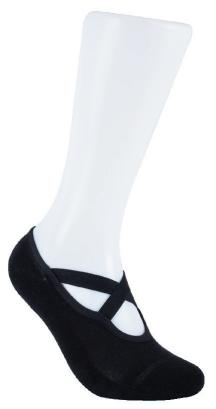
Studio floors catch every mistake a desk surface lets you hide. A puck that glides smoothly across a small rubber pad can feel completely different once it meets the texture of sealed concrete, worn vinyl, or a painted dance floor. Testing grip only at arm height ignores how your wrist angle shifts when you lean into a low shot or push off after a quick reposition. The real question isn't whether the base holds still—it's whether the contact stays predictable across the surfaces where the work actually happens.
Floor testing also reveals wear patterns that desk tests never show. Repeated drags over a studio floor create micro-abrasion on the base edges, changing friction in ways a smooth desk pad masks. You might find a grip compound that feels aggressive on a desk becomes slick after ten minutes of sliding across a floor with dust or hair. That kind of drift matters more than any spec sheet number.
If your setup lives in a studio or on location, your grip test should start at your feet. Mark out a small zone, run the same move sequence you'd use on a real shoot, and note where the base sticks, skips, or chatters. A floor-level pass doesn't replace desk testing—it adds the context a desk can't provide.
Yarn Content and Shrinkage Numbers Change the Final Fit
A knit fabric’s stated fiber content only tells part of the story. Two sweaters can both be labeled 100% cotton, yet one may relax into a boxy shape after the first wash while the other stays slim. The difference comes down to yarn structure, twist, and how the fibers were spun. High-twist yarns hold their shape more readily, while loosely spun yarns tend to bloom and stretch. Shrinkage percentages printed on a care label are an average, not a promise for every part of the garment.
When you add shrinkage into a fit calculation, the numbers rarely move in one direction. A body panel may lose length while the ribbed cuffs tighten sideways. Seams can pucker if the yarn shrinks more than the thread. Even a 3% shrinkage rate changes a 20-inch chest measurement by more than half an inch, which is enough to shift a tailored fit into something uncomfortable. Knowing your yarn’s behavior lets you adjust the pattern before cutting, not after the first laundry cycle.
The practical takeaway is to test a swatch the way the finished garment will be washed. Measure it dry, wash it, dry it again, then compare the numbers. Record the lengthwise and widthwise change separately, because they rarely match. Use those real measurements to redraw your pattern lines instead of relying on the yarn label. A small adjustment at the drafting stage saves you from a final fit that looks fine on the hanger but wrong on the body.
Toe Seam Thickness and Cuff Tension Need Rejection Limits
Toe seams rarely fail all at once, which is exactly why they get overlooked until a batch is already packed. A seam that measures slightly above the agreed upper limit will pass visual inspection on most pairs, but it returns as a blister complaint after the first long walk. Setting a clear rejection limit for toe seam thickness—typically measured with a dial thickness gauge at the highest point of the seam—turns a subjective “this feels bulky” into a go/no-go decision that the production floor can actually use.
Cuff tension is the same problem in a different location. When the limit is missing or described only as “not too tight,” factories chase an invisible target. One sewing line keeps tension high to avoid slouching, another drops it to make the sock easier to pull on, and neither is obviously wrong until customers report deep marks on the ankle or a cuff that will not stay up. A simple pass/fail band, checked with a calibrated tension gauge or a fixed stretch fixture, removes that guesswork and makes the final audit reproducible.
Without written rejection limits, both defects become negotiation points instead of quality checks. The inspector feels the seam, the factory argues about acceptable variation, and the shipment goes out with the same risk it came in with. Agreeing on numeric limits—maximum seam thickness, minimum and maximum cuff tension—does not just protect the wearer; it gives the supplier and the buyer a shared standard before the carton is taped shut.
Non-Slip Dot Bonding Is What You Should Watch Live
A live feed of the dot bonding line shows what spec sheets leave out. The silicone dots don't just sit on the surface; they press into the fibers for a few seconds while the plate holds steady, and that dwell time changes the texture more than most people expect.
Watch the edge of the pattern instead of the middle. That's where hesitation shows up, and where a tiny delay in lifting the plate can drag a crisp dot into a short tail. Once you see it happen, you'll automatically check for those tails on finished pairs.
The smell of curing isn't something a video can carry, but the slight steam release after each contact cycle gives a hint of the heat involved. That brief vapor is a better quality signal than the dot count printed on the packaging.
Label and Carton Details Determine Whether Goods Clear Smoothly
Small mismatches on shipping documents are one of the fastest ways to stall a customs hold. A label that misses a required country of origin mark, or a carton count that does not line up with the packing list, can trigger a physical inspection that burns a full day or more. Once inspectors find one wrong detail, they often start opening additional boxes to see what else might be off.
The details that matter most tend to be overlooked during busy packing days. Cartons get a generic description like “parts” instead of “stainless steel bracket set,” or the gross weight on the carton label is rounded in a way that no longer matches the bill of lading. These gaps are easy to fix before pickup but become expensive once the shipment is sitting in a warehouse queue.
A smarter practice is to run a quick visual check before the truck leaves: hold one label next to the invoice, compare the carton total against the packing slip, and confirm that marks like “fragile” or “keep dry” appear where needed. This extra five minutes removes most of the reasons a border officer would set a shipment aside, and it keeps the clearance timeline predictable for the customer.
FAQ
Request two things up front: a completed factory questionnaire and a physical sample from current production, not a custom-made sample. The questionnaire should cover annual capacity, export markets, and whether the silicone grips are made in-house or bought from a sub-supplier. If the grips are subcontracted, ask for the grip supplier's material data sheet as well.
Ask for a short live video walk-through of the knitting floor and the grip application area. Look for fine-gauge knitting machines, usually 144 or 168 needles for yoga socks, and a dedicated silicone printing or dotting line. If a supplier hesitates to show live video or only sends polished photos, treat that as a warning sign.
You want wash-cycle test results, not just a marketing claim. A reasonable factory will have data on grip performance after 20 to 30 home washes, plus adhesion tests for the silicone dots or strips. For the US and EU, ask whether the grips meet REACH and CPSIA requirements for skin contact. If they cannot answer quickly, request the compound's test certificate.
Most specialized yoga sock factories quote between 1,000 and 3,000 pairs per color for custom orders, but some smaller workshops will do 500 pairs per design if you accept stock yarn colors. If a factory offers 200 pairs with full custom sizing, be careful: they may be a trading company or using leftover yarn.
The main problems are short foot length, tight ankle cuffs, and weak elastic after washing. Before production, confirm the sock length in centimeters, cuff height, and elastane content in the yarn blend. Ask for a fit test on at least three foot sizes using the actual yarn and a pre-production sample rather than relying on a generic size chart.
Approve the exact yarn type, silicone pattern, color, stitch density, cuff tension, and packaging label placement. Have the factory seal an approved sample and sign off on a specification sheet. If you change anything after approval, request a revised sample instead of letting them adjust during bulk production.
Use an AQL-based inspection, usually 2.5 or 4.0 for socks, with extra attention to silicone adhesion, seam strength, and correct pairing. Specify a pull test on the dots or strips from each carton and require the factory to send photos of the packing process, not only the finished cartons. A third-party inspection is worth the cost for a first order.
Conclusion
A trade license will not tell you if a factory has ever run yoga socks, and that distinction shows up quickly in the samples. Ask for the actual production history behind the style: how many pairs, which overseas buyers, what happened with repeat orders. At the same time, reject any grip test done only on a desk. Yoga socks fail or pass on hardwood studio floors, rubber mats, and lightly dusty surfaces, so request video of the traction test under those conditions before you sign off. Yarn content is another place where first-time importers get surprised. Cotton-heavy blends can feel softer at first but shrink unevenly after washing, while synthetics hold shape yet change the grip geometry. Get shrinkage and fiber blend numbers matched to your size chart, not just a general material description.
You also need hard pass/fail limits for toe seam thickness and cuff tension. A slightly bulky toe seam becomes a distraction in a 60-minute class, and a loose cuff slides under the arch. Set a measurable rejection point for both and make sure the QC team checks at the start, middle, and end of production. Non-slip dot bonding should be watched live, not evaluated from photos. The temperature, pressure, and dwell time affect whether the dots stay attached after repeated washing, so a factory walkthrough during this process reveals more than a final inspection. Label and carton details tend to feel administrative until customs holds your shipment. Fiber composition, country of origin, care symbols, and carton markings need to match your import documents exactly, because a small mismatch at the port can cost more than a production delay.
Contact Us
Contact Person: Ryan Li
Email: [email protected]
Tel/WhatsApp: +86 13757342500
Website: https://www.fulisocks.com/