
China Milk Production Line Manufacturer: Key Factors for Modern Dairy Success
2026-08-19
Modern dairy success hinges on precision, hygiene, and efficiency—three areas where your milk production line either drives growth or quietly erodes your margins. Choosing the right China milk production line manufacturer isn’t just about equipment; it’s about securing a partner who understands the nuanced demands of today’s competitive dairy market. That’s where INTOP Machinery steps in, combining robust engineering with the adaptability that modern dairies need to thrive. In this article, we’ll unpack the key factors that separate a good production line from a great one, and why more dairy operations are looking to Chinese manufacturers for that edge.
China’s Quiet Revolution in Dairy Processing Equipment
For decades, the dairy lines running across Inner Mongolia or Heilongjiang were almost always imported—German separators, Swedish homogenizers, Danish spray dryers. That picture has changed without much fanfare. A cluster of Chinese engineering firms now builds complete processing lines that match the throughput of European equipment, often at half the capital cost. The shift is not about copying; it is about rethinking machine architecture around local conditions, from short CIP cycles for small batches to controls that tolerate unstable rural power grids.
The real breakthrough is less visible than shiny tanks. It sits in software and services. Chinese suppliers ship machines with remote diagnostics that let a technician in Shanghai adjust pasteurization timing for a plant in Gansu. They also build compact modular units that can be installed in a few weeks instead of a year. Dairy processors, once loyal to legacy brands, have started mixing local and imported lines on the same floor, and the local lines increasingly handle the higher-margin products like ESL milk and whey fractionation.
Export numbers tell part of the story. Turnkey plants from Shandong and Jiangsu now operate in Southeast Asia, Central Asia, and parts of Africa. Buyers are not simply chasing price; they want equipment that can be repaired with locally available parts and serviced by engineers who speak their language. That combination of reasonable cost, rapid installation, and flexible after-sales support has quietly moved Chinese dairy equipment from the margins to the center of many new projects.
Turnkey Lines Versus Modular Builds for Modern Milk Plants
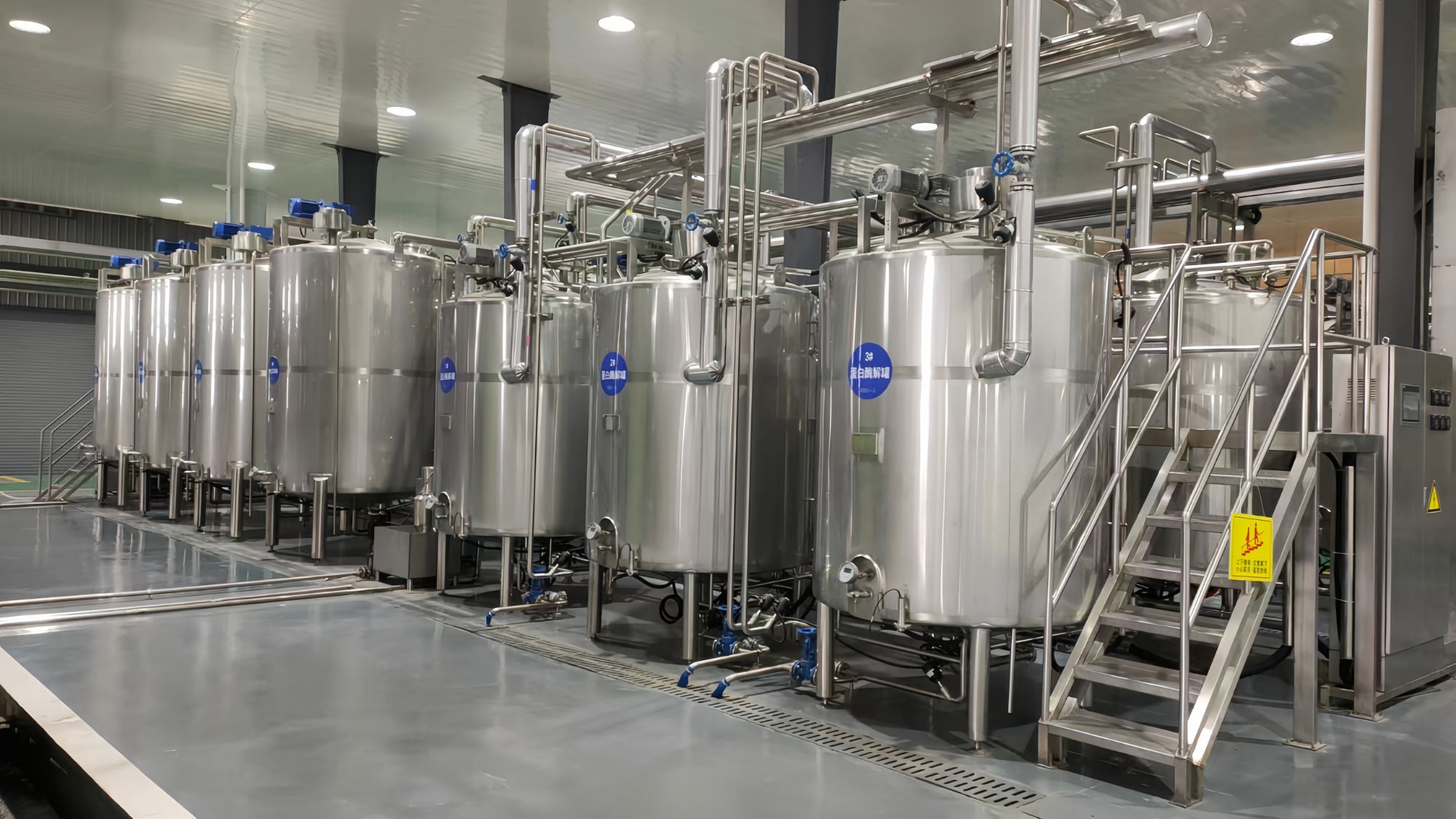
When planning a modern milk processing facility, the choice between a turnkey line and a modular build often hinges on how much control the dairy wants over every stage of production. A turnkey solution bundles equipment, installation, and commissioning from a single vendor, which can shorten the timeline from groundbreaking to first pasteurized batch. This approach suits operations that prefer a single point of accountability and have limited in-house engineering staff, though it may lock the plant into one supplier's component ecosystem.
Modular construction, by contrast, breaks the plant into standardized skid-mounted units for receiving, separation, standardization, and filling. These units are factory-tested before shipping, allowing the dairy to rearrange or expand capacity without ripping out entire process lines. This flexibility matters for plants that expect fluctuating product mixes—say, shifting from drinking milk to high-protein yogurts—because a modular pasteurizer can be swapped or re-piped with far less downtime than a monolithic turnkey installation.
Cost behavior also differs sharply. Turnkey projects often carry a premium for convenience but deliver predictable capital expenditure and a single warranty envelope. Modular builds may require more upfront coordination across vendors, yet the ability to phase investment over several budget cycles and reuse standardized components can lower total ownership cost over a decade. Dairies evaluating both options should map their expected SKU growth, automation tolerance, and maintenance staffing before committing to either path.
Sanitary Welding and Surface Finishes That Meet Global Standards
In hygienic processing environments, the integrity of weld seams and surface contours directly influences cleanability, corrosion resistance, and long-term compliance. A proper sanitary weld begins with purged, full-penetration joints free of cracks, pits, or undercuts. The finish that follows is not a cosmetic afterthought but a functional requirement, with roughness values typically specified in Ra microinches or micrometers. Materials like 316L stainless steel are common, yet even premium alloys fail if the final surface traps bacteria or product residue. Understanding how different finishing methods—mechanical polishing, electropolishing, and passivation—alter the microscopic profile helps engineers match the right surface to each process line.
Global standards such as ASME BPE, 3-A Sanitary Standards, and EHEDG guidelines set measurable limits on surface roughness and weld acceptance criteria. For example, product-contact surfaces often require an Ra of 0.8 µm (32 µin) or better, achieved through a combination of abrasive blending and electropolishing. Electropolishing removes a thin layer of material to level peaks and valleys, enhancing both cleanability and the chromium-to-iron ratio at the surface. This step also improves the passive layer, giving the metal better resistance to aggressive cleaning chemicals. Without it, even visually smooth welds can harbor micro-crevices that lead to biofilm formation or product contamination.
A differentiated approach lies in treating surface finishing as a system rather than a series of isolated steps. Weld design, filler metal selection, heat tint removal, and final roughness verification all interact. Heat tint from welding must be completely removed because it depletes chromium and creates initiation sites for corrosion. Mechanical grinding alone can smear metal and leave embedded abrasives, so combining a controlled grit sequence with acid pickling and passivation yields a more reliable surface. For high-purity applications, documenting the entire finishing protocol—from weld map to final Ra readings—gives operators confidence that every inch of product-contact stainless steel meets the same global benchmark, no matter where the equipment is fabricated.
Automation Layers That Cut Labor Costs Without Sacrificing Quality
Most businesses assume that cutting labor costs means trimming headcount or rushing tasks, but that trade-off rarely holds up. Automation layers offer a different path: they absorb repetitive, low-value work so teams can focus on judgment-heavy tasks. Instead of replacing people, these layers compress the time spent on data entry, status updates, or routine checks — the kind of work that quietly eats hours without improving the final deliverable.
A practical setup starts small. For example, a customer support team can automate ticket tagging and draft responses based on past resolutions, then let agents review and personalize before sending. The quality doesn’t drop because the human eye still catches nuance; what changes is that the agent no longer starts from a blank screen. The same logic applies to invoicing, inventory reconciliation, or report generation — the automation handles the mechanical parts, while the team handles exceptions and edge cases.
Over time, these layers compound. One automated step reveals another bottleneck, and the system becomes a quiet productivity engine rather than a one-off tool. The key is to avoid automating decisions that require context or empathy. Stick to sequences that follow clear rules, and you’ll see labor costs shrink without the usual quality slump that comes from overworked staff or rushed shortcuts.
Service Networks That Keep Chinese Dairy Lines Running Around the Clock
Keeping a modern dairy processing line in China running without interruption takes more than well-maintained equipment. It depends on a dense service network that links equipment suppliers, regional parts depots, and on-call technicians. In major dairy provinces like Inner Mongolia and Heilongjiang, service hubs are positioned close enough that a technician can often reach a plant within a few hours, not days. This geographical spread matters because a single hour of downtime during peak milk collection season can disrupt supply contracts and waste thousands of liters of raw milk.
These networks rely heavily on remote monitoring to stay ahead of failures. Sensors on separators, homogenizers, and filling lines stream performance data to supplier platforms, where algorithms flag pressure drops, vibration changes, or temperature drift before a breakdown occurs. When a warning appears, local engineers receive a pre-diagnosis and the right spare parts are released from a nearby warehouse. In many cases, a fix is scheduled during a planned cleaning window, so the line never actually stops producing.
Training is another quiet but critical layer. Service providers run regular workshops for plant operators in cities like Hohhot and Shijiazhuang, covering everything from CIP system troubleshooting to quick-changeover procedures for different package sizes. This local knowledge means smaller issues are resolved in-house within minutes, while the wider service network stands ready for larger overhauls or emergency repairs. The result is a support structure that matches the pace of China’s dairy industry: fast, distributed, and designed for round-the-clock output.
Designing Lines for UHT Milk and Beyond
A well-planned UHT line starts with the product matrix, not just the machinery. Low-fat milk, full-cream milk, lactose-free variants and high-protein drinks each behave differently under heat. The design must account for viscosity shifts, protein denaturation rates and the risk of fouling on plate or tubular heat exchangers. Getting the holding tube length and the cooling profile right is what prevents that cooked flavour and keeps nutritional damage in check.
Flexibility matters more than raw speed. Modern lines use modular valve clusters and piggable transfer systems so a dairy can switch from plain milk to a flavoured, vitamin-fortified beverage in under an hour. Clean-in-place is designed as a continuous loop, not an afterthought, with sensors tracking conductivity and temperature to verify that no residue remains. This reduces water and chemical use while keeping downtime low.
Beyond conventional milk, the line has to handle plant-based drinks, cream blends, and even high-sugar or high-protein formulations. That often means combining indirect heating with a short steam infusion step for delicate products, plus aseptic buffer tanks that absorb production surges. Gentle product handling through deaeration and homogenisation helps prevent phase separation later, so the final pack stays stable on the shelf without relying on excessive additives.
FAQ
A dependable manufacturer shows consistency in material choices, weld finishes, and control system integration rather than just quoting the lowest price. Look for their track record with dairy-grade stainless steel, how they handle crevice-free piping, and whether they can provide detailed documentation for each component. References from existing dairy plants often reveal more than a glossy brochure.
Most serious manufacturers now align with international frameworks like 3-A sanitary standards or EHEDG guidelines, even if local regulations differ. You should ask about their CIP validation reports, surface roughness measurements on product-contact areas, and whether they test for cleanability before shipping. The gap between a basic fabricator and a true dairy equipment supplier usually shows up in these details.
Dairy plants rarely have identical layouts, product mixes, or throughput goals. A manufacturer that forces you into a fixed design will create bottlenecks later, whether it's a pasteurizer sized wrong for your fat content or a filler that can't handle your bottle shape. Customization should cover everything from tank geometry to software alarms, not just adding an extra valve.
Automation has moved beyond simple on/off controls to full recipe management, real-time energy monitoring, and predictive maintenance alerts. A well-automated line reduces operator error during changeovers, keeps pasteurization records auditable, and lets a smaller team run a larger plant. The key is open architecture so you can tie the Chinese equipment into your existing MES or ERP without proprietary lock-in.
Insist on a factory audit rather than relying on online photos. During the audit, check weld penetration, surface finish, and whether they perform hydrostatic testing on tanks. Ask for a list of active installations you can contact, and if possible, visit one running at full capacity. Third-party inspection services are worth the cost for large projects.
Overlooking utility requirements is a big one: voltage, steam pressure, and water quality assumptions often differ from what the manufacturer expects. Another mistake is ignoring spare parts availability for pumps, seals, and sensors. Some buyers also focus only on the initial quote and forget to ask about installation supervision, training, and local service response times.
Even a well-built line will need adjustments, wear parts, and software tweaks after startup. Manufacturers with a dedicated support team can help you diagnose issues over video call, ship parts within days, or send an engineer when a critical pump fails. Without that support, a minor problem can turn into days of lost production, which quickly eats into any upfront savings.
Energy recovery systems, water-saving CIP designs, and modular skid-mounted units are becoming more common as dairy plants face tighter environmental rules. There is also growing interest in flexible lines that can switch between milk, yogurt, and plant-based drinks without major reconfiguration. Manufacturers who invest in these areas tend to stay ahead of commodity equipment suppliers.
Conclusion
For years, dairy processors looking for reliable filling and processing lines rarely looked beyond a handful of European suppliers. That assumption has been upended by a quiet but decisive shift in China's dairy equipment sector. Manufacturers now combine sanitary welding practices and surface finishes that meet the same 3-A and EHEDG benchmarks expected in export markets, yet they deliver at price points and lead times that make capital planning far less painful. The choice between a fully integrated turnkey line and a modular build has also become more nuanced: Chinese suppliers increasingly offer both, letting plants start with a pasteurizer and separator, then add homogenizers, UHT units, or ESL fillers as demand grows. This flexibility is paired with automation layers that reduce manual touchpoints in CIP cycles, valve routing, and batch traceability, so labor savings do not come at the cost of product safety or consistency.
What often seals the decision, however, is support after installation. A growing network of regional service engineers and remote diagnostics means a line in Southeast Asia or East Africa can be back online within hours rather than days. For plants producing UHT milk, flavored dairy drinks, or extended shelf-life products, this reliability matters as much as the initial weld quality. Chinese manufacturers are also moving beyond single-product lines; they now design for rapid changeovers and tighter thermal profiling, which helps dairies shift from plain milk to high-margin products without retooling the entire floor. The result is a supply model built around uptime, modular expansion, and hygiene compliance, not just equipment sales.
Contact Us
Contact Person: Laura
Email: [email protected]
Tel/WhatsApp: +86 13957758832
Website: https://www.intopmachinery.com