
China Load Break Switch: What You Need to Know Before Buying
2026-08-14
Load break switches aren't the most glamorous part of a power system, but choose poorly and you'll be chasing faults for years. If you're sourcing from China, the gap between spec sheets and real-world performance can be jarring. This guide cuts through the noise so you know exactly what to check before signing off—and why teams like Deepwill keep showing up in shortlists.
What IEC Compliance Actually Means for Chinese Load Break Switches
For Chinese manufacturers, IEC compliance with standards like IEC 60947-3 or IEC 62271-103 goes far beyond passing a one-time lab test. It means the load break switch has been engineered to interrupt and make currents under specified conditions repeatedly without contact welding, excessive erosion, or dielectric breakdown. The arc quenching system—whether a de-ion plate stack, puffer arrangement, or magnetic blowout—must survive the full sequence of mechanical endurance and electrical endurance tests. Compliance also requires that temperature rise at the terminals stays within limits defined for the insulation class after continuous current loading, and that the switch can handle the rated short-circuit making current without mechanical damage.
Another layer that often gets overlooked is production consistency. A prototype passing type tests does not automatically mean every unit shipped from a Chinese factory meets the same bar. Real IEC compliance involves routine tests on each switch: checking contact resistance, operating force, and dielectric withstand at the production line. It also means material traceability—from the silver alloy contacts to the flame-retardant insulating moldings—so that performance does not drift over batches. For many Chinese manufacturers, achieving this requires upgrading quality systems and supplier audits, not just purchasing UL or VDE certified components. The practical outcome is a load break switch that behaves predictably in the field, whether it is installed in a distribution board in Southeast Asia or a wind turbine converter in Europe.
The Three Specs Behind Most Field Failures
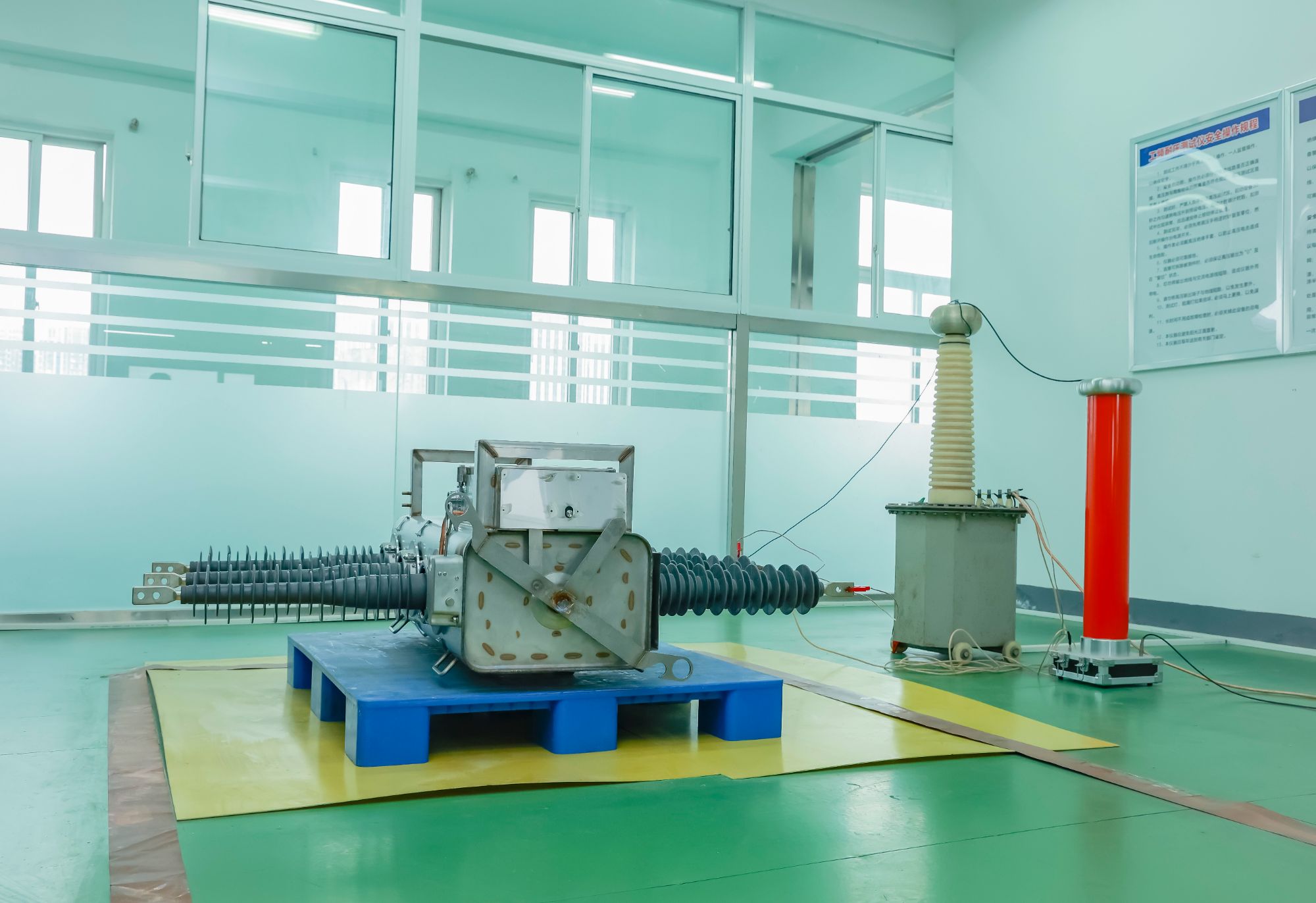
Most field failures trace back to a surprisingly small set of electrical and mechanical stress points. The first is operating voltage margin, where a part rated just above the nominal rail gets pushed past its safe region by transients or load steps. The second is thermal cycling range, because repeated expansion and contraction fractures solder joints and wire bonds long before a steady-state temperature limit is ever reached. The third is moisture sensitivity level, since absorbed humidity turns into trapped steam during reflow or high-power operation, cracking the package from the inside out.
What makes these three specs so dangerous is that they rarely show up as obvious violations on a datasheet comparison. A designer can select a capacitor with sufficient capacitance and voltage rating, yet still lose units in the field because the ripple current pushes internal heating beyond the thermal cycling budget. Likewise, a connector that passes all mechanical tests on the bench may fail after six months of outdoor humidity because its moisture sensitivity classification was ignored during storage and assembly. The failures are slow, intermittent, and often blamed on "bad batches" when the root cause is a specification gap that was never checked.
Engineers who dig into field return data usually find that changing just one of these three parameters eliminates the majority of repeat failures. Increasing the voltage derating from 20% to 50% absorbs unexpected transients without adding cost. Specifying a component with a wider operating temperature range, or adding a conformal coating for moisture protection, costs pennies but saves thousands in warranty claims. The lesson is not to chase exotic reliability tests, but to scrutinize the three basic specs that quietly determine whether a product survives the real world.
How to Tell If a Factory Really Builds What It Quotes
A factory can quote a product that looks perfect on paper yet never produce a single unit that matches the spec. The fastest way to cut through the noise is to ask for a live video walkthrough of the production floor, not a polished marketing clip. Have them show the molds, jigs, or tooling that would actually be used for your part. If they hesitate or keep pointing the camera at finished samples on a shelf, treat that as a red flag.
Request a sample pulled from a current production run rather than a hand-picked prototype. A real builder will have no trouble grabbing a unit off the line and sending it with minor blemishes or normal variation. Also ask for the bill of materials with supplier names and lot numbers; many trading companies can copy a quote but cannot show traceable inputs. Compare the quoted tolerance and surface finish against what the sample actually measures.
Finally, ask a process question they cannot answer from a catalog. For example, how do they handle warpage on a specific resin or what tool steel is used for high-volume injection molding? Factories that build in-house will answer with specifics, mention machine models, cycle times, and past failures. Middlemen tend to give generic replies or promise everything. One unannounced video call during your local evening hours often reveals more than a month of email exchanges.
Why Cheaper Units Often Cost More After Two Years
A low sticker price feels like a win until the first service call. Cheaper units tend to use thinner materials, looser tolerances, and less refined components, so small failures start showing up well before the two-year mark. Those repairs might be covered initially, but once the short warranty lapses, each visit comes out of your pocket and the downtime adds up in ways the original savings never accounted for.
Then there is the efficiency gap. Budget models often draw more power or need replacement filters, belts, or refrigerant more often, quietly raising your operating costs month after month. When you compare total spend over roughly twenty-four months, the discount has usually vanished. The pattern is predictable: the cheaper unit is not the lower-cost choice; it is just the one that delays the bill.
Red Flags in Chinese Supplier Quotes Worth Walking Away From
A quote that arrives suspiciously fast and undercuts every other supplier by 30% or more is rarely a deal. That gap usually means something has been left out—cheaper raw materials, thinner plating, fewer QC checks, or an unspoken expectation that you'll handle the defects on your end. Before celebrating the savings, ask for a full cost breakdown. If they can't justify the number with concrete material and labor costs, walk.
Another sign is vague language around specifications. If the quote lists “standard quality” or “as per sample” but never pins down tolerances, certifications, or exact alloy grades, you're buying a promise, not a product. Reputable factories are comfortable writing down what they'll deliver. When they dodge requests for mill certificates, RoHS compliance, or dimensional drawings, that's your cue to end the conversation.
Pay attention to how they handle payment and lead time changes. A supplier who demands full payment upfront but then stretches a 30-day lead time to 60 without any explanation is testing your patience. Real production schedules shift sometimes, but serious suppliers communicate early and offer workable terms. If every answer becomes “don’t worry, trust us” instead of a clear production plan, trust is exactly what you should not give.
A Pre-Shipment Inspection Checklist That Catches Hidden Defects
Most standard checklists stop at visible damage, quantity, and basic function. The defects that cost you later are usually tucked under seams, inside wiring, or behind finishes. A useful pre-shipment inspection looks for five things: improper torque on fasteners, inconsistent gap tolerances, incorrect material thickness at stress points, poor sealing on edges, and packaging that allows movement during transit. Have the inspector measure and record these instead of relying on a quick visual pass.
Hidden issues often show up first in small samples, not in the full batch. Pull at least three random units from different cartons, not the ones placed on top. Ask the inspector to remove a side panel, check internal solder joints or stitching, and test under a load for a few minutes. If the factory knows which units will be inspected ahead of time, that alone hides many problems.
Your checklist should also include a comparison against the approved sample and the actual spec sheet, not just a generic pass/fail box. Note down the exact location of any deviation, take photos with a ruler in frame, and require the factory to sign off on the findings. That way a borderline defect does not become a dispute after the container has left.
FAQ
Most factories focus on air-insulated, SF6-insulated, and vacuum interrupters. Air-insulated models are cheaper and fine for indoor use, while SF6 and vacuum types handle higher voltages and harsher environments. You'll also see fused and non-fused versions depending on whether you need overcurrent protection built in.
Ask for type test reports from an independent lab, not just the manufacturer's own certificate. Look for the specific standard number on the nameplate and in the manual — GB 3804 or IEC 62271-103 are common references. A reputable supplier will send you copies of the reports without hesitation.
Yes, but you need to specify the enclosure protection level. IP54 or higher is typical for outdoor use, and the mechanism should be rated for your temperature range. Also check if the hinges, gaskets, and padlock points are stainless steel or at least corrosion-resistant.
Common ratings are 12kV, 24kV, and 36kV with current from 400A to 1250A. Don't just match your existing equipment — leave some headroom for future load growth. Also check the short-circuit making capacity, because a load break switch is not a circuit breaker and won't interrupt fault currents by itself.
Most manufacturers are flexible with busbar orientation, cable entry from top or bottom, and even integrated earthing switches. You'll need to provide a simple sketch or one-line diagram. However, custom designs can add a week or two to the lead time, so confirm before you pay.
Request the type test report, routine test records, a detailed dimensional drawing, and a packing list. If possible, ask for reference contacts from previous buyers in your region. Also confirm the warranty terms in writing — many Chinese suppliers offer 18 to 24 months, but only if the installation follows their manual.
Standard models often ship within 15 to 25 days after deposit. Customized units can take 30 to 45 days. Sea freight to Europe or North America adds another three to five weeks, so plan your project schedule accordingly. Air freight is possible for urgent replacements, but the cost is usually not worth it for heavy switchgear.
Conclusion
Buying load break switches from China isn't simply about matching a datasheet. IEC 60947-3 compliance is often stamped on the nameplate, but that alone doesn't guarantee the unit was type-tested under fault conditions—many factories rely on copied certificates or partial testing. The three specs that matter most in field use are making capacity, short-time withstand current, and dielectric strength; skimp on any of these and you get contact welding or flashover after a few operations. A factory visit or third-party audit should confirm that the copper thickness, contact plating, and arc chute materials in the quote match what actually goes onto the production line. If a supplier avoids opening the breaker for you or changes the bill of materials without notice, that's usually a sign the quoted design isn't what they build.
Cheaper units often fail within two years not because of the switch mechanism itself, but because of undersized busbars, low-grade insulating plastics, or missing anti-corrosion treatment on steel parts. Replacement, downtime, and labor quickly erase the upfront savings. Red flags in quotes include vague phrases like "similar to major brand," missing type-test report numbers, or delivery terms that push all risk onto the buyer before shipment. A pre-shipment inspection should not be a box-ticking exercise; it needs to check contact gap, torque on terminal bolts, coating thickness, and operation at rated duty. Ask to see the actual test setup, not just a photo. More importantly, have the inspector open several units at random—hidden defects in Chinese load break switches tend to cluster in the second or third batch, not the showroom sample. That kind of verification, done consistently, separates reliable suppliers from those selling hope at a discount.
Contact Us
Contact Person: Julion
Email: [email protected]
Tel/WhatsApp: 8617351370631
Website: https://www.deyunelectric.com