
China Juice Production Line Manufacturer Insights: Boosting Output with Smart Automation
2026-07-09
As global demand for juice continues to surge, manufacturers face mounting pressure to maximize output without compromising quality. The secret lies in smart automation—where advanced technology transforms traditional production lines into high-efficiency systems. Leading this shift is INTOP Machinery, whose innovative juice production solutions are redefining industry benchmarks. In this article, we explore how intelligent automation can unlock new levels of productivity, reduce downtime, and keep your operation ahead of the curve.
Beyond Manual Operations: China’s Juice Lines Embrace Smart Tech
Walking through a modern juice facility in China today, it’s clear the era of workers hand-sorting fruit and manually adjusting processing speeds is fading. In its place, intelligent optical sorters scan each piece of fruit up to a dozen times per second, using multispectral imaging to spot imperfections invisible to the human eye. This shift isn’t just about speed—it fundamentally changes how consistency is maintained, removing the variable of human fatigue and subjective judgment from the equation.
The real leap comes from the way these systems talk to each other. When a sensor upstream detects a batch of unusually ripe mangoes, the blancher and extraction units downstream automatically recalibrate their parameters—temperature, dwell time, pressure—without any operator intervention. That level of closed-loop control means the line adapts to natural product variation in real time, squeezing out inefficiency while keeping flavor profiles stable. It’s a quiet revolution, one that turns the production floor into a living, self-correcting organism rather than a sequence of isolated manual checkpoints.
How Intelligent Systems Slash Downtime and Boost Yield
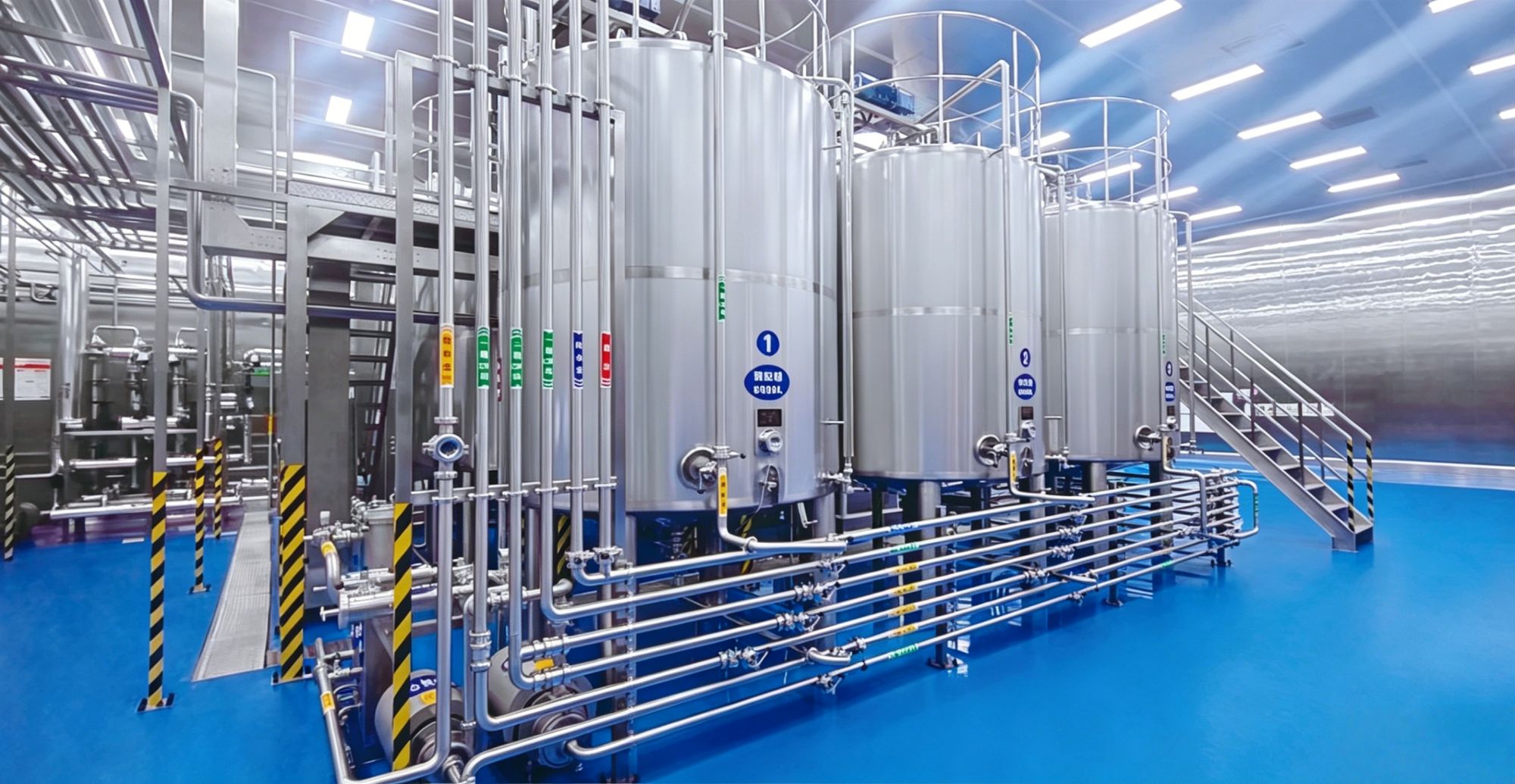
When production lines sense trouble before it strikes, the entire game changes. Intelligent systems pull data from sensors embedded in machinery, spotting subtle shifts in vibration, temperature, or power draw that hint at future breakdowns. Instead of waiting for a failure that halts output for hours, maintenance teams get a clear heads-up—sometimes days in advance—so they can swap out worn parts during planned pauses. This shift from reactive scrambling to proactive rhythm keeps throughput steady, while the equipment itself lasts longer because it never runs under silent duress.
Beyond predicting failures, these systems continuously tune process parameters to squeeze more value from every material batch. A slight drift in humidity or raw material consistency once meant off-spec product and wasted hours. Now, real-time adjustments hold quality within a tight band automatically, learning from each minor deviation to refine the control models further. Yield climbs not through guesswork, but through thousands of micro-corrections a human operator could never match. The result is less scrap, fewer reruns, and a line that practically improves itself month over month.
Perhaps most striking is how downtime transforms from a dreaded event into a data point. Every stoppage—whether planned or unexpected—feeds back into the system, enriching its understanding of the plant's unique character. Over time, the same algorithms that caught the first anomaly begin to pinpoint deeper, systemic choke points, sometimes revealing that a bottleneck thought to be mechanical was actually rooted in a scheduling pattern. By teasing out these hidden connections, intelligent platforms don't just slash today's downtime; they build a roadmap for a future where yields climb steadily and surprises become rare.
From Fruit to Bottle: Ensuring Consistency with Automated QC
Turning fruit into a flawless bottled product demands precision at every stage, and automated quality control is the quiet force that makes it possible. From checking the ripeness of incoming raw material to verifying fill levels and seal integrity, smart sensors and vision systems catch inconsistencies that human eyes might miss. This isn't about replacing craftsmanship—it's about giving producers a reliable set of digital eyes that never tire, ensuring each bottle meets the same exacting standard as the one before it.
A key advantage of modern automated QC is its ability to adapt without massive reprogramming. Machine learning models can be trained on a few images of good and flawed products, then immediately begin flagging issues like cap misalignment, label wrinkles, or sediment in real time. Even subtle variations in color or clarity—often the earliest signs of a process drifting out of spec—become triggers for instant feedback. By catching these drifts early, the system helps avoid waste and costly rework, all while building a rich data history that reveals patterns no spreadsheet could surface.
The real payoff comes when automated QC connects seamlessly with the rest of the production line. Imagine a filler that adjusts its nozzle speed after a vision system detects a sudden drop in volume consistency, or a capper that receives a nudge in torque settings based on ongoing inspection results. These closed-loop adjustments keep the entire journey from fruit to bottle harmonious, turning what used to be reactive troubleshooting into proactive, data-informed orchestration. Consistency stops being a goal you chase and becomes a rhythm you simply maintain.
Green Manufacturing: Saving Energy Through Automation
Shifting production schedules to off-peak hours might sound like a minor tweak, but automated systems that align energy‑intensive tasks with lower grid demand can slash electricity bills without any drop in output. It’s a quiet, behind‑the‑scenes adjustment that makes a measurable dent in both carbon footprint and operational cost.
Beyond scheduling, smart automation keeps a constant finger on the pulse of machinery—tracking temperature thresholds, motor loads, and idle times. When a conveyor or pump drifts outside its optimal range, the system either nudges it back or shuts it down temporarily, preventing the kind of wasteful over‑consumption that often goes unnoticed in a busy plant.
The ripple effect extends to lighting, HVAC, and auxiliary systems, where networked controls respond to real‑time occupancy or daylight levels. These adjustments might seem small on their own, but over months and years they add up, transforming manufacturing floors into lean, self‑regulating environments that think about energy as carefully as they think about quality.
Customizing Lines for Exotic Fruit Juices
Crafting a line of exotic fruit juices starts with letting the fruit’s natural character take the lead, not just chasing the next superfood trend. Instead of dumping everything into a generic tropical blend, we look for a single standout note—maybe the peppery kick of fresh noni, the floral tang of soursop, or the creamy sweetness of mamey sapote—and build the surrounding recipe to amplify that personality. A squeeze of calamansi might sharpen the edges, while a splash of coconut water can round out harsh corners without smothering the signature flavor. The goal is a bottle that tastes like it came from a specific place and moment, not a factory formula.
Texture is where many standard juice lines fall flat, so we treat mouthfeel as a key customization lever. Some fruits, like passion fruit, practically beg for a bit of crunch from crushed seeds; others, like dragon fruit, are so delicate that they need a gentle hand to preserve their silky, almost creamy body. We often experiment with varying levels of soluble fiber—keeping it in for a smoother, more satiating drink, or dialing it back for a lighter, thirst-quenching effect. Even the choice of processing technique matters: a cold-press method can lock in volatile aromatics for a bright, just-squeezed sensation, while a gentle micro-filtration might give a subtler clarity that lets the color shine. It’s these unspoken details that make someone reach for a second sip without quite knowing why.
Finally, customizing the line means understanding that not every exotic fruit wants to be a hero—sometimes it’s the supporting role that sells the bottle. A bold, funky durian juice might find its audience when cut with pandan and a hint of coconut cream, turning an acquired taste into a surprisingly balanced treat. We take cues from regional traditions: how a street vendor in Thailand balances tamarind’s sour punch with palm sugar, or how a Caribbean punch layers guava, lime, and a whisper of ginger. By weaving these influences together, each juice becomes less of a science experiment and more of a small story—one that invites the drinker to step off the beaten path and into a sensory adventure they hadn’t expected from a simple bottle of juice.
Predictive Analytics: The Next Frontier in Juice Production
In the competitive juice industry, relying on gut instinct to forecast demand or manage inventory is no longer enough. Predictive analytics uses historical sales data, weather patterns, local events, and even social media trends to anticipate exactly how much orange, apple, or cold-pressed green juice will be needed next week in a specific region. This means production lines can be fine-tuned to reduce waste and avoid the all-too-common scenario of dumping unsold fresh juice down the drain. Rather than guessing, operations managers now receive dynamic adjustments that keep shelves stocked with exactly what customers are thirsting for, during a heatwave or a wellness fad.
Beyond demand forecasting, predictive models are reshaping quality control from the orchard to the bottle. Sensors on bottling lines capture subtle fluctuations in viscosity, color, and acidity in real time. By comparing these readings against a library of millions of past batches, the system flags deviations before a full run goes off-spec. This means a barely perceptible shift in pulp consistency or a slight browning from oxidation can be corrected instantly, preserving the fresh taste that consumers expect. For craft juice makers, predictive analytics is becoming the silent guardian of their brand’s reputation, allowing them to maintain artisanal consistency at scale without constant manual tasting panels.
The supply chain also benefits enormously from this data-driven approach. Freight routes can be optimized not just for cost, but for predicted delays from weather or traffic, ensuring cold chain integrity. Even procurement of raw fruit becomes more precise: by analyzing satellite imagery of citrus groves and long-range climate models, juice companies can predict fluctuations in sugar content or supply shortages months in advance. This early warning system empowers them to lock in supplier contracts at favorable terms or adjust recipes subtly, turning a potential crisis into a well-managed shift in sourcing strategy. Ultimately, predictive analytics is transforming juice production from a reactive, perishable-goods gamble into a proactive, waste-slashing science.
FAQ
Chinese manufacturers have rapidly adopted smart automation technologies, integrating IoT sensors and AI-driven controls that allow real-time monitoring and adjustments. This not only reduces manual labor but also ensures consistent product quality even at high throughput levels.
By automating tasks like sorting, pressing, and filling, production lines operate at a steady pace without the fatigue or error rates of human workers. Advanced automation systems can also self-optimize based on fruit quality and volume, squeezing more efficiency out of every batch.
Absolutely. Modern designs incorporate modular stations that can be quickly reconfigured. Whether you’re processing apples, oranges, or tropical fruits, the line adjusts parameters like pressure, temperature, and dwell time with minimal downtime.
Look for predictive maintenance alerts, remote troubleshooting capabilities, and data analytics dashboards. These features not only prevent breakdowns but also provide insights into energy consumption and yield rates, helping you fine-tune operations.
Most established manufacturers use industry-standard protocols and offer customization. They often provide engineering support to ensure seamless integration, whether you’re adding a single module or a complete line.
They benefit from a robust local supply chain for components and a large pool of skilled engineers. By optimizing design and cutting unnecessary complexity, they deliver high-tech solutions at prices that often surprise Western buyers.
Many now offer comprehensive packages including remote diagnostics, on-site training, and rapid spare parts delivery. Some even provide performance guarantees and continuous software updates to keep the automation evolving.
Conclusion
China’s juice production sector is shedding its manual past. Factories once staffed by workers checking gauges and moving fruit now run on interconnected smart systems. Sensors monitor everything from pulp texture to motor temperature, making real-time tweaks that keep the line flowing. The impact is tangible—predictive alerts nip equipment issues in the bud, cutting unplanned downtime sharply. Meanwhile, self-optimizing presses and fillers wring more juice from each fruit and trim overfill, directly lifting output. It’s precision manufacturing in action, where every drop counts and every minute of runtime is maximized.
Automation extends well beyond speed and volume. Quality checks are now handled by high-speed cameras and near-infrared sensors that inspect color, clarity, and fill level without slowing the belt. Sustainability is built in: smart lines recover heat from pasteurization and match motor speeds to real demand, slashing energy and water use. Customization has become a quiet strength—modular designs let a line switch from orange juice to exotic pitaya or guava with minimal retooling, opening doors to niche markets. On the horizon, predictive analytics will take things further, using machine learning to forecast taste variations and auto-adjust recipes. This blend of smart tech is turning Chinese juice makers into nimble, green competitors on the global stage.
Contact Us
Contact Person: Laura
Email: [email protected]
Tel/WhatsApp: +86 13957758832
Website: https://www.intopmachinery.com