
Best Wool Socks Supplier for Lasting Warmth and Everyday Comfort
2026-11-23
Cold feet have a way of ruining an otherwise good day, and not every wool sock is up to the job. Some feel great for a week, then stretch, pill, or thin out exactly when you need them most. That’s why KINDWAY takes a different route—pairing responsibly sourced wool with a fit and finish built for daily wear. As a best wool socks supplier for lasting warmth and everyday comfort, the brand focuses on the details you actually feel: breathable insulation, no-slip cuffs, and durability that survives more than one winter. Here’s what to look for before your next restock.
Merino Wool Blends That Warm Without the Weight
There's a reason merino keeps showing up in gear lists for people who move fast through cold places. The fiber itself is far finer than traditional wool, which means it can trap heat in tiny air pockets without piling on bulk. When blended with synthetics like nylon or elastane, it gains just enough structure to hold its shape through long days, yet still feels nearly weightless against the skin. You get that dry, warm sensation even after a sweaty climb or a wet commute, because the fabric moves moisture away instead of letting it sit cold against you.
What makes the blend work so well is the balance between softness and resilience. Pure merino can be delicate, prone to sagging or pilling with hard use. Adding a small percentage of nylon gives the knit more tensile strength, so cuffs don't stretch out and elbows don't thin after a season. Meanwhile, the merino does what synthetics alone can't: it regulates temperature across a wider range, staying comfortable when you step from a windy ridge into a packed train car.
The result isn't heavy armor against the cold, but a quiet adaptation to it. You can layer it under a shell without feeling bulky, or wear it alone and still feel protected when the temperature dips. It's the kind of fabric that disappears from your mind once it's on, which is exactly the point.
Socks That Stay Soft After Dozens of Washes
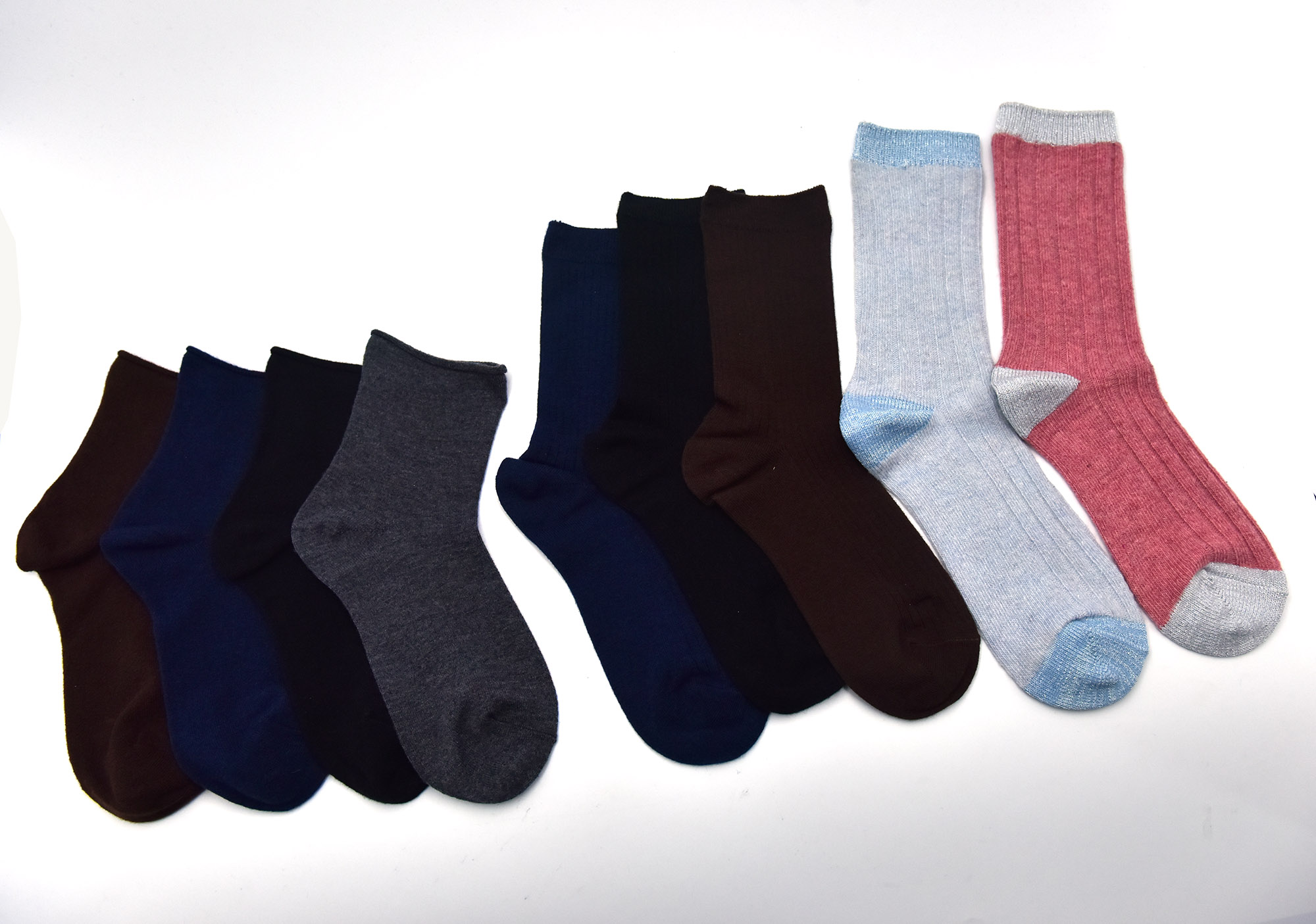
There is a particular disappointment reserved for socks that feel plush on day one and turn sandpapery by the third wash cycle. These hold a different line. The yarn is spun with long-staple cotton and a touch of reinforced synthetic through the heel and toe, which keeps the fibers from collapsing when they rub against the drum. After two dozen washes, the looped interior still has that gentle, worn-in give instead of a stiff, flattened feel.
The trick is less about coating the surface and more about keeping the twist balanced. We run the pairs through a pre-shrink wash before they ever reach a drawer, so most of the initial tightening happens in the factory, not on your feet. The result is a sock that comes out of the dryer with the same shape it went in with, no pilled fuzz around the ankle and no crusty band across the arch.
They are not overly thick, which is what usually turns softness into sweat. Instead, the cushion sits exactly where you land—under the ball of the foot and around the heel—leaving the top of the foot breathable. That balance is what keeps them in rotation long after softer-looking pairs have been demoted to shoe-polish duty.
Cushioning in the Right Places for All-Day Wear
Most shoes throw a single slab of foam under the entire foot and call it a day. That approach ignores how pressure actually travels as you move. Forefoot, arch transition, heel strike—each zone peaks at a different moment and needs a different response. We mapped plantar pressure across thousands of steps before shaping the midsole. Dense pods sit under the metatarsal heads where push-off happens, while a softer ring wraps the heel to soften initial impact without letting it collapse. The midfoot gets a firmer bridge, so the arch doesn't sag after hour four.
The result is uneven on purpose. You can feel the cushioning working where your foot asks for it, not where a designer assumed it would be needed. That means less fatigue across a full shift or a long walk, because the shoe isn't forcing your stride to adapt to a uniform bounce. Instead, the material gives back exactly where you load it and stays out of the way everywhere else. By the end of the day, your feet are still reading the ground the same way they did at the start.
A Supplier Approach Built Around Fiber Quality and Fit
Fiber selection works more like a tailoring decision than a raw material purchase here. Long-staple cotton, merino, or recycled polyester only moves forward after its staple length, tensile strength, and contamination profile are tested against the intended end use. The same fiber type may be stored in separate grades because a relaxed sweater knit and a structured woven shell rarely need the same hand, recovery, or surface clarity.
That focus on fit starts at the fiber level rather than during pattern corrections. Shrinkage, crimp retention, and twist behavior are measured early, so the fabric can be engineered to hold its silhouette through repeated wear and washing. It cuts down on sampling loops, keeps the approved sample and bulk production close, and makes the supplier relationship less about fixes and more about matching the fiber to the body it will actually serve.
Why Toe Seams and Arch Support Matter More Than You Think
Most people never think about the seam running across the toe of their socks until it starts rubbing the wrong way. That tiny ridge can turn a short walk into a slow-building irritation, especially if your shoes don't leave much room for movement. A flat, low-profile toe seam spreads pressure evenly so your foot isn't constantly aware of something sitting between skin and shoe.
Arch support is just as easy to overlook because it works quietly. A sock with a gentle compression zone under the midfoot helps hold the fabric in place, reducing the micro-sliding that leads to blisters and hot spots. Over hours on your feet, that subtle grip keeps your stride feeling more stable and less like your socks are slowly working their way into a bunch under your heel.
Together, these details matter most when you're not thinking about them. Bad seams and weak arch areas demand attention with every step, while good ones fade into the background. If you only notice your socks after three miles or a full shift, that's usually a sign someone paid attention to the corners most brands treat as afterthoughts.
Durable Enough for Workdays, Comfortable Enough for Weekends
The first thing you notice is that it doesn't demand a break-in week. The footbed has just enough give to soften long Tuesday afternoons, but the sole still feels planted on wet pavement and uneven sidewalks.
By Saturday, it's the same story with less rush. The upper has already molded to the way you move, so a full day of walking through farmers markets or chasing kids at the park doesn't end with sore arches. Scuffs wipe off easily, which matters when your weekends are more active than your desk job.
That's the quiet advantage here: you're not choosing between something that survives the week and something you actually want to wear once it's over.
FAQ
The yarn is spun with a tighter twist and a higher merino content, so warmth comes from trapped air rather than bulk. The toe and heel are reinforced, and the footbed has light cushioning that keeps pressure off without making boots feel tight.
We work mostly with merino wool blended with a small percentage of nylon and spandex. The merino handles temperature regulation and odor control, while the nylon adds durability in high-friction areas and the spandex helps the sock keep its shape.
If most of the day is spent indoors or in mild cold, midweight is usually enough. For standing on cold concrete, working outside, or wearing uninsulated boots, heavyweight gives more warmth without needing a second pair.
Yes. We pre-wash the yarn before knitting and use a reinforced rib structure, so the cuffs and arches stay firm. Most customers find the fit remains stable through dozens of wash cycles when they use cold water and avoid high heat drying.
We offer size runs from small to extra large and can adjust calf height, cushioning zones, and colorways. Private label packaging, custom labels, and brand-specific color matching are also available for bulk orders.
For stock designs, the minimum is usually 300 pairs per color. For custom blends, heights, or packaging, the minimum tends to start around 500 pairs because of yarn preparation and dedicated production time.
We test each yarn lot for fiber diameter and shrinkage before knitting, and we keep paired sets from every production run. A final inspection checks stitch density, toe seam flatness, and stretch recovery, so there is no drop in quality from one order to the next.
Yes, merino adapts well to temperature changes, so the socks can keep feet warm outside without overheating when you move inside. The key is choosing a breathable knit rather than a heavily brushed terry loop, which tends to trap too much heat indoors.
Conclusion
The difference between a forgettable pair of wool socks and the pair you reach for every cold morning often comes down to how the supplier handles the details. The best options lean on merino-rich blends that trap heat without the extra bulk, so your feet stay warm inside boots without feeling cramped. That warmth means little if the socks turn stiff or lose their shape after washing, which is why the better pairs are knitted to stay soft through repeated laundry cycles. Targeted cushioning under the heel and ball of the foot absorbs impact during long shifts or weekend walks, while a smooth toe seam and a supportive arch band keep friction and fatigue from building up over the day.
Durability is another part of the equation. A well-made wool sock should handle the demands of a workday and still feel comfortable enough for a relaxed Saturday. That balance comes from fiber selection and fit, not just thicker yarn. When the supplier pays attention to how merino behaves next to the skin and how the sock holds its shape around the foot, the result feels less like seasonal gear and more like an everyday staple. It is the kind of quiet reliability that makes cold floors, long commutes, and outdoor chores noticeably easier, without ever calling attention to itself.
Contact Us
Contact Person: Alfred Lee
Email: [email protected]
Tel/WhatsApp: +86 13806701496
Website: https://www.hainingsocks.com/