
48m³ 7-Compartment Aluminum Alloy Bulk Feed Trailer Supplier Selection Tips for Modern Farms
2026-11-25
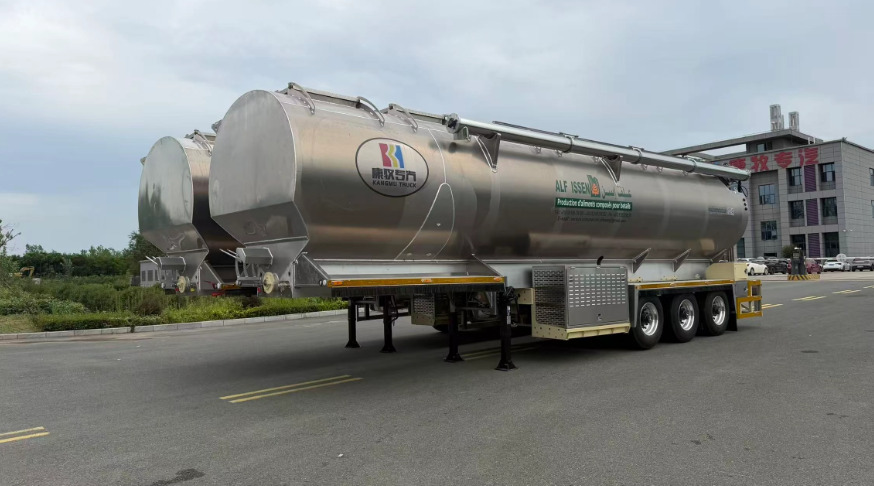
When feed delivery schedules get tight, the difference between a smooth run and a bottleneck often comes down to trailer choice. A 48m³ 7-compartment aluminum alloy bulk feed trailer can handle multiple feed types in one trip without the weight penalty of steel, but only if the supplier gets the details right. From compartment sealing to alloy grade and after-sales support, modern farms need more than a spec sheet. That’s where a supplier like KANGMU TRUCK comes into focus—and where these selection tips can save you from costly trial and error.
Ask for the Alloy Grade Before You Look at Paint
Surface finish tends to steer the conversation. A fresh coat of paint makes almost anything look deliberate, but it tells you nothing about how the metal will hold up under load, heat, or repeated stress. Asking for the alloy grade first shifts attention to the material itself. 6061, 7075, 4130, 304—these numbers carry practical meaning for strength, workability, and corrosion resistance. Paint can be changed in an afternoon; the base alloy cannot.
There is also a trust issue. Sellers often lead with color, gloss, or a refurbished appearance because that is what photographs well. The alloy grade is the unglamorous detail that separates a safe purchase from an expensive mistake. If the answer is vague, delayed, or hidden behind phrases like "aircraft-grade" without a specific designation, treat that as a warning. A legitimate seller will usually know the exact grade and may even have mill certificates or part markings to back it up.
Once the grade is confirmed, paint becomes a secondary question. You might repaint a 5052 aluminum panel without a second thought, but you should think twice before sanding and refinishing a heat-treated part where the original coating was part of the spec. Knowing the alloy helps you choose the right prep, primer, and paint system—or decide that the part should not be painted at all. The order matters: material first, finish second.
Seven Compartments Are Only as Good as Their Seals
A seven-compartment layout promises tidy portions and easy access, but that promise falls apart the moment a single seal starts to lift. Moisture creeps in, powders cake together, and stronger contents begin to trade scents with their neighbours. The real test is not how neatly the dividers sit, but whether the lid and each partition edge keep their grip after repeated opening and closing.
Good seals should feel firm rather than stiff, recover their shape after being pressed, and sit flush without needing force. It is worth checking the corners and hinge area, since those are often the first places to fail. A well-sealed box keeps the seven sections truly separate, so what you packed on Monday still tastes, smells, and measures the way it should by Friday.
Make the Supplier Explain How 48 Cubic Meters Handles Your Feed Types
Don’t let the number sit there as a vague selling point. Ask the supplier to walk through what actually happens when your specific feed mix enters that 48 cubic meter space. If you’re running dry fines, pelleted feed, or sticky molasses-based rations, each behaves differently under pressure, moisture, and discharge. Have them point to the baffle layout, auger pitch, or unloading angle and explain why it won’t bridge, rat-hole, or leave dead stock in the corners.
Push beyond the brochure answer. A 48 cubic meter capacity only matters if the machine can cycle through your least cooperative ingredient without slowing the whole line. Ask how it manages density swings from light chopped roughage to heavy wet by-products, and whether the interior surfaces are matched to the abrasiveness or acidity of what you actually run. If they cannot describe the flow path in plain terms, treat that as a red flag.
Finally, ask what changes when your formula shifts between batches. The goal is not just storage; it is consistent discharge into the next stage. The supplier should be able to tell you how fill level, bridging, and cleanout are handled at 10%, 50%, and 90% capacity for your feed types, not for an ideal material.
Spot the Difference Between a Metal Shop and a Feed Logistics Partner
Walk through a metal shop and the first thing you notice is the noise: grinders biting into steel, the sharp crack of a welder, the clatter of offcuts hitting the floor. Here the work is measured in thousandths of an inch. A bad bend, a misread print, or a dull blade shows up immediately in the finished piece, and nobody can hide a mistake behind a delivery schedule. The tools are heavy, the tolerances are tight, and the result is a physical object you can hold, tap, and inspect.
A feed logistics partner operates in a quieter but no less demanding world. Instead of sparks, there are grain elevators, bulk tankers, transfer augers, and loading sequences that have to be flushed clean between every run. The risks do not always show themselves at the dock. A moisture spike, a trace of leftover supplement, or a delay on a hot afternoon can compromise an entire load days after it leaves the yard. The work depends less on forcing material into shape and more on keeping ingredients stable, traceable, and free from cross-contact.
Put the two side by side and the real contrast is in how failure looks. A metal shop mistake is usually visible at the bench; a feed logistics mistake may surface weeks later in herd performance or a rejected delivery. One trade reshapes steel, the other protects nutrition from origin to bin. That is not a small distinction, and it is not a matter of scale. It is the difference between controlling a physical material and managing a chain of conditions.
Demand a Loaded Test Run on Farm Roads
An empty bed tells you almost nothing about how a truck will behave when it is actually working. Load it to the axle with feed bags, fence posts, water tanks, or whatever you normally haul before you bother judging the suspension. The extra weight changes steering effort, brake fade, and the way the rear end steps out in loose gravel. If the test run happens only with a clean, unladen pickup, you are collecting numbers that will not survive the first real gate crossing.
Farm roads punish assumptions. A loaded truck hits washouts harder, leans into ruts with more momentum, and asks more from tires that already have sidewall cuts from stubble. Make the test route include the worst section you normally avoid: the clay patch by the north pasture, the steep drop into the creek bottom, the corrugated stretch where the sprayer trailer bounces. Drive it at working speed, not parade speed, and listen for the clunks that only show up when the bed is full.
Do not accept a demo that coddles the vehicle. If a dealer or mechanic wants to prove a suspension upgrade, hitch weight rating, or brake package, the load needs to be real and the road needs to be honest. Otherwise you are buying a promise tested on pavement, and pavement never told the truth about a farm track.
Negotiate After-Sale Support Before the Price Talk Starts
Most buyers fixate on the unit price and leave warranty response times, spare parts availability, software updates, and training support as an afterthought. That quietly shifts the real cost back onto you. Asking about after-sale terms before the number on the quote becomes the centerpiece gives you a clearer picture of what the deal actually costs over three or five years, not just on the invoice.
Once the price has been squeezed to the floor, a vendor has little reason to offer faster on-site visits or longer coverage. The negotiation energy is gone, and every service request becomes a favor rather than a contract term. Flip the order: put support expectations on the table early, and let the supplier treat them as conditions for winning the business. The price discussion can still be tough, but the service baseline stays intact.
A practical move is to bring a short list of measurable support requirements to the first serious conversation: response time for critical failures, maintenance windows, replacement part delivery, access to technical staff, and training sessions. Ask the vendor to confirm these in writing before any discount is finalized. That way the price can move, but the terms that keep your operation running do not become the silent casualty of a lower number.
FAQ
Start with your daily feed delivery routes and the number of rations you need to keep separate. The seven compartments give flexibility for different mixes, while the 48m³ volume suits operations that move medium-to-large batches without constantly returning to the loading point.
Ask about the grade and thickness of the aluminum sheets, wall reinforcements, and how the frame is joined. Look for welded structural points that reduce flex, and pay attention to internal bracing around the compartment dividers, as that is often where fatigue shows up first.
The discharge angle, gate seals, and clean-out access decide how cleanly the trailer empties and how easy it is to switch between rations. A well-designed trailer lets you unload one compartment at a time without carryover between feed types.
Ask for examples of similar builds, not only general trailer photos. A capable supplier should be able to talk through past compartment layouts, weight distribution outcomes, and changes they made for specific farm operations.
Look for clear response times, local or shipped replacement parts, and someone who can guide repairs on the frame or discharge components. The manual should cover torque checks, hinge adjustments, and seal replacement intervals, not just basic operation.
Yes. Rooftop loading hatches, inspection ports, custom compartment sizing, camera mounts, and lighting around the discharge area can all reduce labor. Discuss your feed types and unloading locations so the supplier configures the gates and controls to match the daily workflow.
Be careful when quoted lead times seem unusually short or when the salesperson avoids details about aluminum grades, weight ratings, and warranty coverage. If they cannot explain how the seven compartments are sealed or how the trailer behaves when partially loaded, move on.
Conclusion
A trailer that looks clean on a spec sheet can disappoint the moment it meets real feed. Start by asking which aluminum alloy is used, because paint hides more than it reveals on bulk feed trailers. The frame and barrel material should be named outright—6061 or 5083 grades behave differently under twisting farm roads. Seven compartments also mean seven potential leak points, so check the seals around each hopper and discharge gate, not just the ones easy to reach. When a supplier claims 48 cubic meters is enough, press them on how the volume splits across your actual rations: dense pellets, lighter meals, and mineral mixes all settle and discharge differently. If the answer stays vague, walk away. Finally, do not accept a parking-lot demonstration. Load the trailer close to capacity and take it over the uneven routes your trucks actually use, then watch for flex, door movement, and feed bridging inside.
The bigger difference often shows up before the sale closes. A metal shop can weld a box on wheels, but a feed logistics partner knows delivery schedules, moisture control, and how a delayed unload affects your farm. Ask the supplier to explain what happens after delivery: spare parts availability, seal replacement intervals, and whether their team can support you during harvest season when downtime costs the most. Only after those answers feel solid should price enter the conversation. Farms that negotiate after-sale support first tend to own trailers that remain useful for years, while those who choose on sticker price often pay later in repairs and missed feed runs. A 48 cubic meter trailer is a long-term piece of farm infrastructure, so choose the supplier who treats it that way.
Contact Us
Contact Person: Shen Zhikang
Email: [email protected]
Tel/WhatsApp: 8613908668969
Website: https://www.kangmutruck.com/